From the Editor’s Desk
Remaining with the Word
I remember a time from my school and college days when writing was secretive. A notebook tucked beneath a mattress. A letter folded into a book. Writing belonged to silence, to waiting. It carried the assumption that some thoughts needed shelter, slow cooking, evolution, before they could enter the world. Today, the conditions of writing have changed. So have the conditions of living.
The contemporary world asks us to be visible. Continuous public presence has become a value in itself. Experiences are documented while they are being lived. Open any media platform today, social or traditional, and you will find the same scene repeated in different registers: a crowd of images from ongoing events - happy or sad. Happiness and grief, once sheltered by family and community, now enter public life already framed for viewing. The audience is waiting, and so is the camera. The same apparatus that records celebration and mourning increasingly claims the authority to pronounce accusation and verdict before institutions have finished. We encounter the world through screens, feeds, notifications and projections of ourselves. Our attention is solicited while emotions are harvested. Every aspect of life appears available for circulation and consumption.
The way the word spectacle is used here, remembering Guy Debord’s Society of the Spectacle, is not simply to refer to what appears on screens. It refers to the structure of contemporary experience. It is even a way of organizing perception. It rewards speed over reflection, reaction over understanding, certainty over circumspection. It refers as much to what is done to us as to what we do to others and ourselves. It describes how we yield ourselves to brief cycles of rage before moving on to the next sensation. Spectacle is a way of life in which individuals surrender their sovereignty fully aware of the bargain. It packages fear, desire, envy and aspiration into commodities. It persuades us that visibility is significance and market is the condition of our existence. The marketplace enters the home and the heart. The language of advertising enters friendship, politics, education and even intimacy. The self becomes a project of presentation, a performance continually revised before an invisible audience. And that audience is also us. No doubt, the same apparatuses also offer, for some, the only stage available. There are very few who ‘cannot speak’, as it were. But the question remains what is lost when the stage becomes the only room.
The spectacle extends beyond digital culture. Its logic can be found in the concentration of wealth amid widespread precarity; in wars manufactured for profiteering being consumed as images from a safe distance; in the conversion of suffering into content; in the normalization of hatred and violence; in the unapologetic disregard for ecology. National wounds, historical and fictional, are retrospectively rehearsed endlessly. Historical injuries are repackaged and circulated. Hatred acquires the grammar of entertainment. In such a world, language itself begins to suffer. Words and their meanings are disjoined. They become slogans, tags, declarations, branding exercises. A gap exists between what is said and what is meant. Between witnessing and merely looking.
Literature that responds to such phenomena, termed spectacle here, begins from dissatisfaction with that gap. A poem asks us to stay with it. A story asks us to inhabit another consciousness, another’s life. An essay follows a thought further than the headline permits. Literature values complexity and restores texture to experience. To write against the spectacle does not mean turning away from the contemporary world or to mouth some slogans. It does not mean nostalgia for a purer past. The writers gathered in this issue understand that there is no outside from which to observe the present. We inhabit the same networks, the same economies of attention, the same systems of circulation. We breathe the same air. The question these writers explore is how to remain human within them; how to remain with the word.
One answer lies in cultivating forms of attention that slow response, engage complexity and resist consumption. It may lie in language that refuses to become advertising; in works that return us to the body, to memory, to place, to grief, to affection, to wonder, to healing, to caring, to others. Many of the works gathered here resist consumerist logic and insist on staying with human experience. They move toward the fragmentary, the surreal, the mythic. Others remain close to the ordinary and the immediate. Their approaches differ, yet they share a common impulse. To refuse the market’s reckoning.
What survives the spectacle? Perhaps close attention does. Perhaps care. Perhaps the stubborn belief that another person's life cannot be reduced to an image, a profile, a category or a market segment. Literature has always protected that belief. Every serious act of writing begins with the recognition that human experience exceeds its representation. Something remains unsaid, unseen, resistant to capture. Something refuses to become content. To remain with the word is to refuse the speed with which language is consumed and discarded. Yet, I must clearly state, that these are not writings with this manifesto; this is how I insist on reading them.
*
This issue is dedicated to that act of remaining with the word – keeping the shabda and artha joined. To the difficult work of seeing clearly. To language that does not hurry. To writing that seeks, amidst the noise of our age, the still-living pulse of the real. These contributors were invited because their work has long engaged questions raised by the spectacle, though none has written to a prescribed theme. Their responses are diverse, sometimes contradictory, yet all speak urgently to the present.
Manoj Rupda's essay turns inward and discovers that surviving atrocity intact may itself be the wound. Nishi Pulugurtha's journey from the spectacle of the Hornbill Festival to the quiet of Longkhum reveals that even attentive travel carries its own habits of looking. In Samvartha Sahil's essay, a friend's simple act of placing a fallen flower on a railing becomes a gesture of care beyond performance. Smitha Sehgal's essay and poem recover rhythms of attention that contemporary life has eroded, finding dignity in acts of healing that seek no audience.
Several works return us to solitude and interior experience. Udayan Vajpeyi's "Restaurant" follows a woman through the tactile rituals of an afternoon alone. Sucharita Dutta-Asane's "The House" inhabits the uncertain territory where memory outlives disappearance. Kunal Singh's "Immersion" centres on an artwork created not for display but for private devotion, while S. Divakar's "Ishwara" transforms the search for an old school photograph into a meditation on survival, memory and erasure. Other contributors engage more directly with the contemporary machinery of spectacle. Purnima Tammireddy's "Darshan.ai" follows capital's inexorable logic from funeral streaming to grief monetization and digital afterlife. V.K.K. Ramesh's "Koovam" speaks through myth and fable rather than reportage, refusing to reduce ecological devastation to information. The poisoned river remains a living presence, demanding witness rather than consumption.
The poems approach these concerns through compression, juxtaposition and image. Prathibha Nandakumar collides Draupadi with fashion culture and the viral reel. Prafull Shiledar's "Half Digital" distils contemporary existence into a fractured condition of divided flesh, language and attention. Sumana Roy transforms the vocabulary of algorithms, habit loops and social media into something resembling prayer. Kedar Mishra returns us to the body as the ground of feeling, while Kumar Ambuj literalizes the machinery of classification that reduces human complexity to binary choices. Anvar Ali's "Mehbub Express" carries friendship, memory and communal violence along the changing routes of the Indian railway. Nilim Kumar's poems imagine interfaith intimacy and poetic becoming through a deeply human devotional sensibility. Ashwani Kumar's surreal sequence inhabits a world where desire and surveillance become indistinguishable. Saundarya Jain questions the theatricality of devotion and the commerce surrounding faith. Sabarinathan moves between the torture video scrolled past on a screen and the old tree touched in a forest, asking what forms of looking remain possible when attention itself has become a contested space.
*
These works do not share any program. But they are all similarly patient. They do not announce their resistance. They perform it, sentence by sentence, image by image, in the time it takes to read them rather than scroll past them. They trust the reader to do the work of assembly, to hold the fragments together without the glue of explanation. This is what writing against the spectacle looks like: an inhabiting of the present – dense and unhurried.
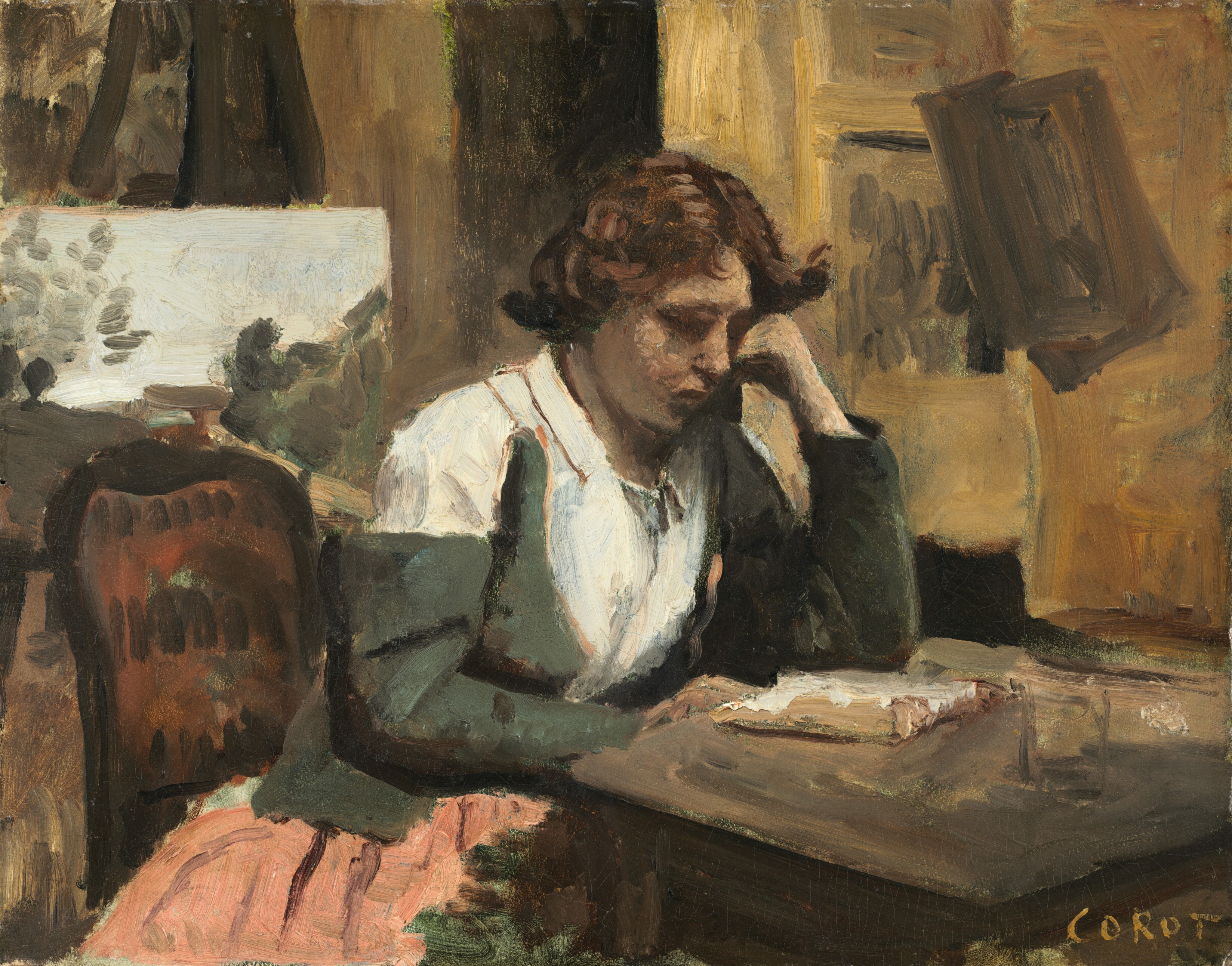
I close this introduction with a single image from Vajpeyi's story: the woman in the restaurant, her book open, her coffee cooling, her cigarette burning down to ash. She is not heroic. She is not even, in any obvious sense, resisting. She is simply present, in a room that asks nothing of her, at a table that does not require her performance. This is the modesty of the gesture, and its power. The spectacle cannot see her. The story can.
*
Kamalakar Bhat
Guest Editor, The Bangalore Review