My Mother’s Widowhood
When Father diedI was ten.My mother was thirty.
Now I am fiftyAnd my mother seventy.
In these past forty yearsHow many coloursHas my rainbow burned through,How many flowers, how many birds,How many evenings dipped in Deepak Raaga,How many mornings wrapped in Meghmallar—I have lived lifeLike colour and fragrance exploding.
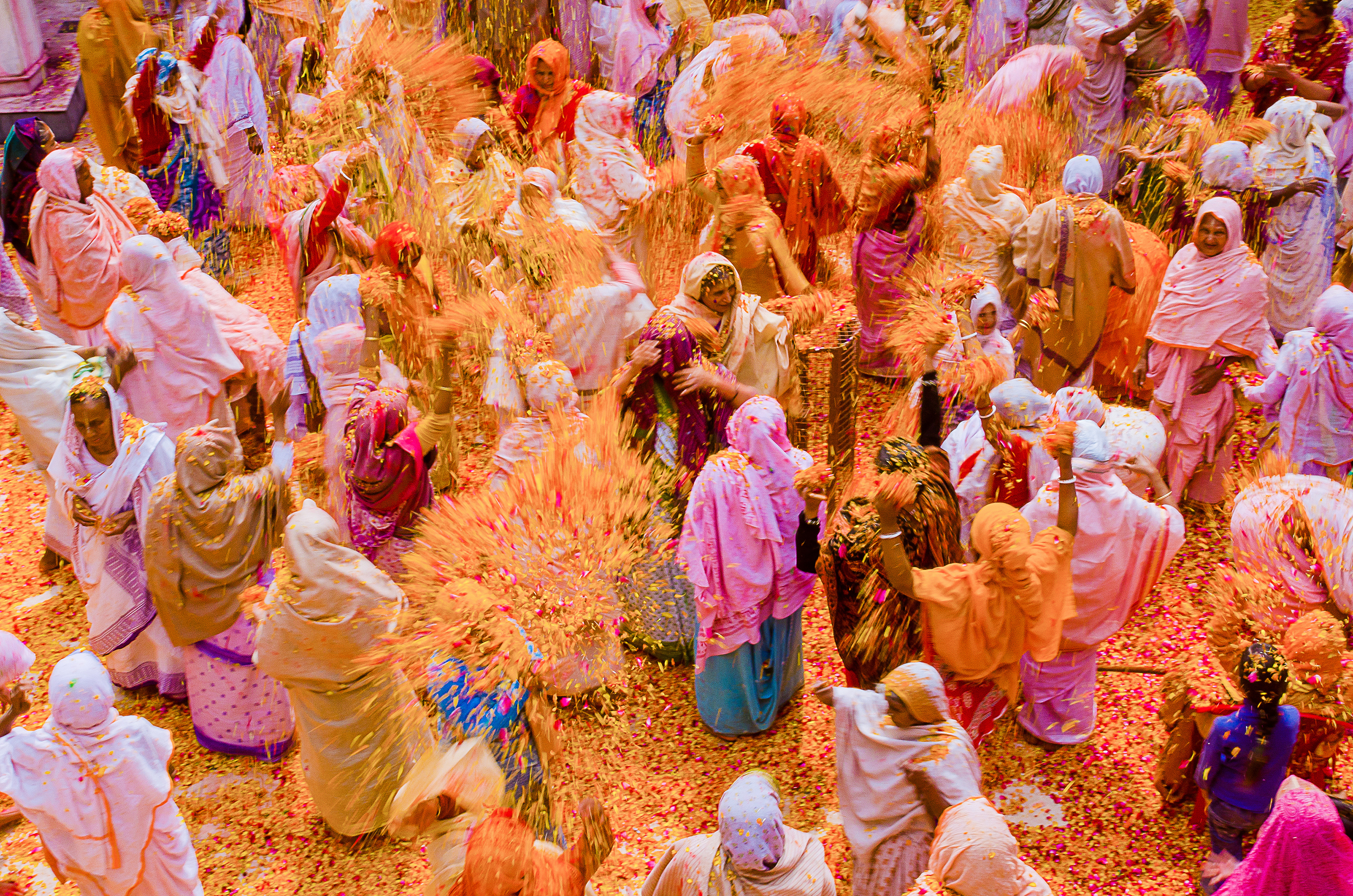
But my mother, for forty years,Has bound herselfIn the white shroud of widowhood.
For my mother these forty years of lifeAre nothing but a plain white sariAnd a string of dried Tulsi beads around her neck.
My mother is afraid even to look at onion or garlic.The smell of asafoetida makes her nose shrink in disgust.
My mother’s lifeIs year-round Habisha, or else nirjala upavas —unceasing fasts, waterless vows.
For who has she performedThis tapasya for forty years?For him who diedIn the full fury of youth?For that bewildered spring?For him who sought loveIn someone else’s eyes?For him who placed me on her headSo she would carry the burden her whole life?
This tapasyaIn memory of one absent man—I cannot understand it.
Sometimes I feel I am the criminal.If I had not existedPerhaps something else would have happened to her.
These forty years of colourMight have turned, instead of white sari,Into a long trail of red wedding silkOr a flame-coloured Bomkai.
If I had not been bornPerhaps taste would still live on my mother’s tongue.Perhaps a son too is a kind of man—One who imprisons womanhood,who locks motherhood in a cage.
My mother saysEverything is fate,Everything is God’s will.
But to me it always feelsLike the devouring will of man—As son, as husband, as father,As fate itself, as God himself—Burning my motherLittle by little, grain by grain.
History of the First Kiss
1History stands amid the crowd.War and death have arrived,Religion and famine,Hymns and death warrants—History stands with them all.
It keeps an unerring ledger of everything:The menu for a king’s banquet,The sheen of leather in a queen’s slippers,The exact length of generals’ swords,The depth of the tank where royal horses drank,And the precise tally of heads cut downOn the main road.
Everything is recorded without fail.
From dinosaur to Princess Diana,From Socrates to Shukru Jani—Each has a place in history.
What remains unwrittenIs an innocent kiss,The quiet dignity of lips that meet with passion.
2
No one had time for kissing.
Gods hurried toward nectar,Demons shunned lips—Too soft, too useless for their claws.
Eunuchs spent their hours chasing scripted lines.Fairies exhausted theirs in ceaseless flight.Hermits, lost in composing treatises on love and sex,Waited thousands of yearsOnly to stride toward moksha.
Those who carved kisses into pyramids and Konark,Etched them on palm leaves and cave walls,Mastered the art of depicting the kissBut never kissed.
3
Yet after slaughtering millions,The demon returned to his haremAnd demanded a kiss from his dead queen.After harsh penance,The great hermitReturned homeAnd saw the shadow of a sinful kissOn his wife’s face.The god, fresh from slaying the demon,Entered his Devi’s abodeAnd found a sea of fierce, radiant kissesAcross her bare skin.
The ten-headed victorRushed back to his queenOnly to discover she had abandonedThe heaviest kiss of the earthInto the river.
4Last night it was you and me,Meeting for the first time.Last night I discovered your true form.Last night we raced in flight,you and I.
Last night your life merged with my death.Last night we—you and I—Became the first man and first womanOf this creation,Giving shape to history’s formless kiss.
The history of the first kissWas writtenSilently, without a word or imageOn the forehead of time.