Many years ago, I had written an article on a topic much like the one I am writing about now, where I had reflected on the many contradictions that exist between a writer’s inner experience and the life they lead, and whatever they write or manage to write. What could be a bigger contradiction than this for a writer that they live their life in a way that doesn’t reflect on what they put down on paper. There could be many reasons for their inability to put down on paper what they have lived and experienced. In my article, I had focussed on two specific causes for this – political authoritarianism and social taboos. These two causes are the main impediments that come in the way of a writer’s freedom of expression.
In the aforementioned essay, titled ‘vastavik duniya aur kalaakaaron ka pratisansar’ (The real world and the counter-world of artistes), I did not mention my own personal creative dilemmas, but I had written about many of the world’s legendary writers and artistes. Among them were writers who never got caught in any kind of creative dilemmas and jumped directly into battle. But there were other writers who, unable to face the harsh realities of their time, got themselves ensnared in creative, ideological and emotional dilemmas and succumbed to depression and self-destruction. During the Nazi regime in Germany when repression and extermination had reached their peak, many intellectuals and writers adopted a neutral stance. A number of such writers later fell prey to depression and many took their own lives. Stefan Zweig is a prominent example. In contrast, many writers sacrificed their lives by joining the International Brigades to liberate Spain. Prominent among them were John Cornford, Ralph Fox and Christopher Caudwell. In our own Indian context, during the struggle for independence, the subsequent rise of Naxalism, and then during the period of Emergency, many writers faced a similar dilemma. This predicament was not restricted to writers in India alone. Around the same time, in many countries of the Third World, in Latin America and Africa, many writers of colour grappled with this painful dilemma of whether to wield the pen or to lay it aside and pick up the rifle or endeavour to do both simultaneously.
One of South Africa’s most gifted young poets, Arthur Nortje, succumbed to this dilemma and committed suicide when he was just twenty-one. Arthur Nortje’s death occurred around the same time when Gorakh Pandey took his own life, here in Uttar Pradesh in India. Around the same time, Carlos Rangel committed suicide in Venezuela. Around the same time Vilas Ghogre committed suicide in Maharashtra. Around the same time Ken Saro-Wiwa, the Nigerian poet was hanged to death. Around the same time, Algerian poet Tahar Djaout and in India, one of the most gifted poets of Punjab, Pash, were killed by militants. There was one single cause behind all these deaths – either they could not remain silent or could not find the means to speak. The death of some writers occurred due to their active involvement in politics and some writers’ lives were destroyed due to the frustration and shame they endured at not being able to become active participants in public life.
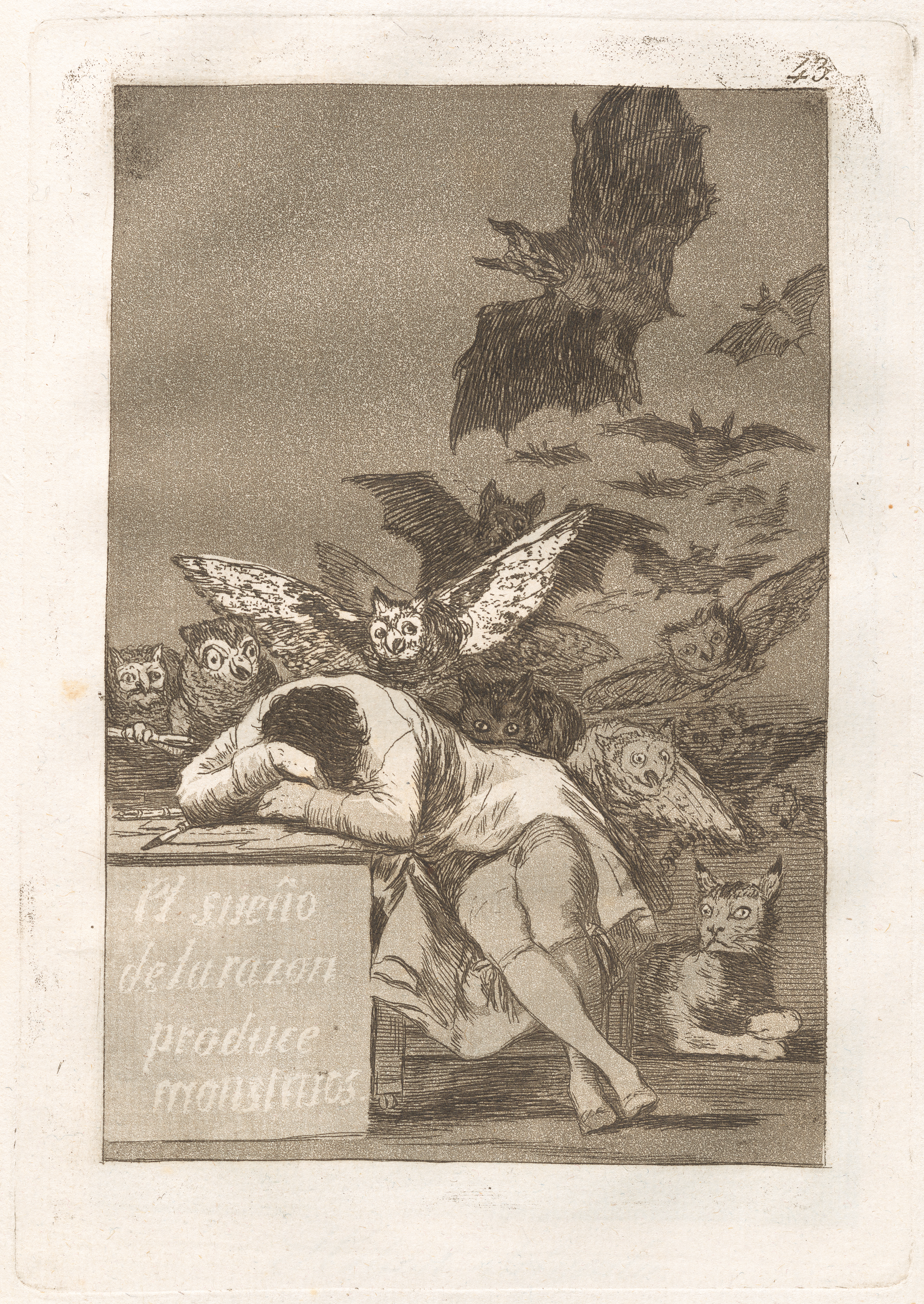
All these writers had come to realise that in the realm of poetry they could imagine firing a bullet wherever they pleased, and send any despot to the gallows. And through metaphors, imagery, and symbols on posters, they could even hang the despot upside down or parade him seated on a donkey, but in reality, they could not even harm a hair on the despot’s body. The real reason behind the conflict in all the countries of the third world is this: no matter how ideologically strong one is, but ultimately one is defenseless. This very defenselessness is what becomes the primary stimulus for their creative dilemma.
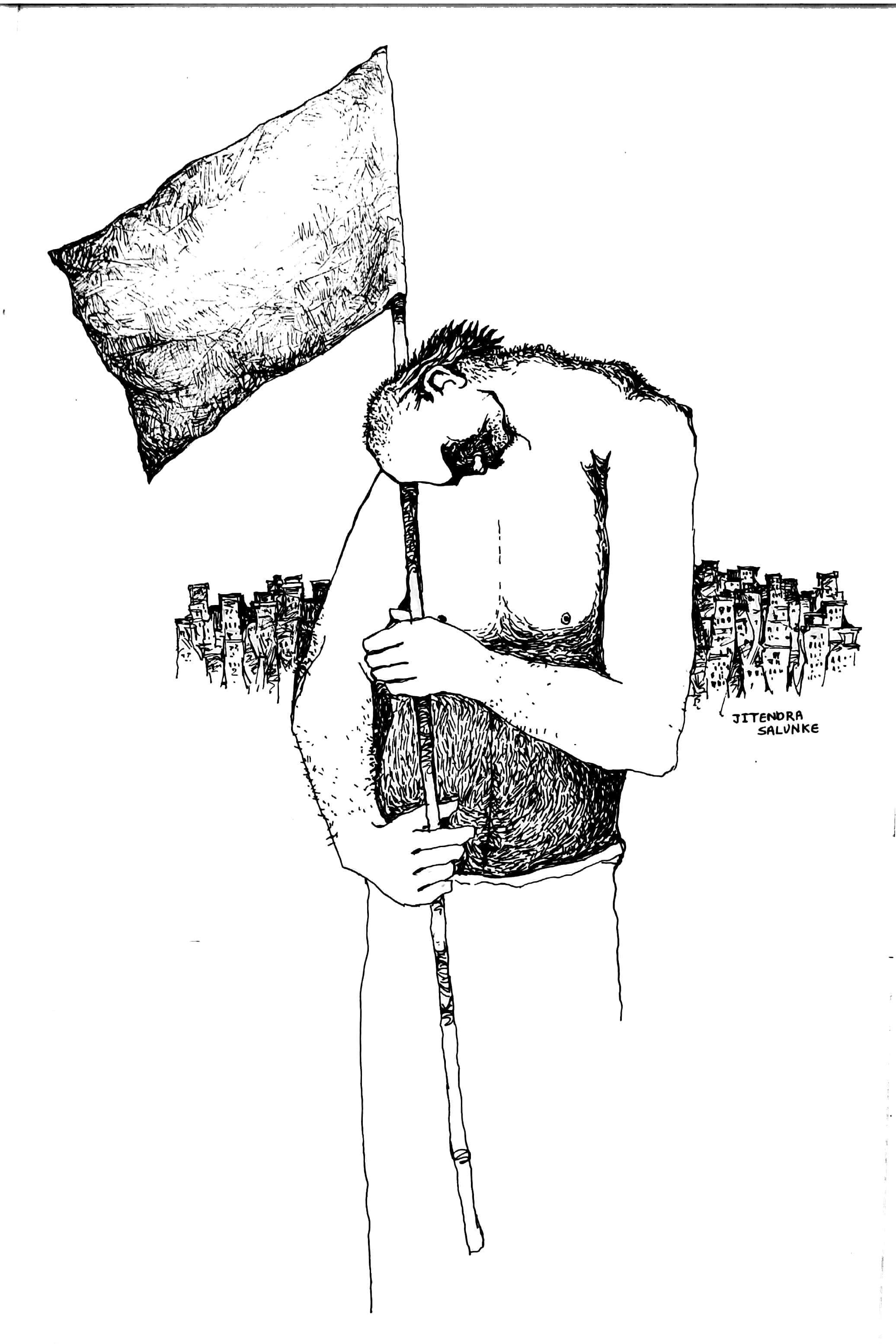
Many of our contemporary poets and writers have to contend with hypertension and nervous depression frequently. Though one cannot refute the fact that these selfsame psychological and intellectual struggles have resulted in these poets and writers creating works of outstanding creative and literary merit, the same struggles have also resulted in neurological disorders among them. Isn’t it strange then that the interactions between a writer’s sensory impulses, vital energies, and emotional currents result in their finest work, and at the same time deprive them of their health? This fate has befallen the greatest of artistes – Saadat Hasan Manto, Ritwik Ghatak, Vladimir Mayakovsky, Stefan Zweig, Ernest Hemingway, Guru Dutt, Suryakant Tripathi Nirala, Muktibodh, Franz Kafka – and innumerable others who after having reached the peak of this internal conflict, after a dazzling period of creativity, either went mad or died from nervous exhaustion or succumbed to alcohol or committed suicide.
If we so wish, we could examine the emotional description and critical analysis of a writer’s creative conflicts based on the analyses of psychologists, but for that we have to first agree on the idea that a writer is not an ordinary human being. A writer is a different sort of creature. His emotions and thoughts exist on a different plane, and all kinds of psychological disruptions may occur at that level; because his mind does not operate in a rational space all the time, and the intricate recesses of his heart and mind can be subjected to all kinds of upheavals, and it is not necessary that all these have to follow some logic all the time. From a psychological point of view, this is a state of heightened agitation or turbulence, characterized by a constant conflict between intense inner sensations and external contradictions. The more a writer sees apparent contradictions in the external world, the more intense his internal emotions become. Not only do these intense emotions throw his mind into disarray, but also inflict intense pain and this pain serves as a catalytic force for the writer. He starts thinking more deeply, and inflicts greater suffering upon himself; for within every creator resides a destructive impulse. This impulse drives him and he desires to destroy all those conditions that are inhumane and monstrous, that are complex and devious. And yet, when he is unable to achieve this, he indirectly ends up harming his own nervous system. His rebellion turns inward. He falls victim to a peculiar sort of ‘reverse-activism.’
In that article, I had presented the idea that, on the whole, the real cause for conflict in a writer is that he desires to shape the chaotic world of reality to match his own vision, because he proceeds with the premise that his creative world is more beautiful, more liberated, more organized, and more humane than the actual world. His mental makeup is more suited to this world and this world derives its form, to a large extent, from the personal psychological tools and mechanisms devised by him. The writer wants to establish his imaginary but exceptionally humane world of ideal possibilities upon the chaos and inhumanity of the real world. The writer believes in immortality and permanence and so, he is filled with sadness at the mere thought of destruction of beauty, despite knowing that everything will ultimately, come to an end, at some place, at some time. But he nevertheless harbours the fervent desire that the objects of his affection remain eternal, and their beauty forever undiminished. He cannot tolerate any kind of control whatsoever. For him, there is no difference between political freedom and personal freedom. Not only does he seek political freedom, he desires social freedom as well. He is aware that social taboos stand like monstrous impediments in the path of love and unrestrained freedom. At the same time, he is also aware that if these social taboos didn’t exist, the edifice of civilisation and culture would collapse like a house of cards. Despite this he is unable to bear the sight of human beings losing their lives due to unfulfilled longing and thirst. He wants to create a sense of harmony between two contradictory forces. Trapped in this mindset, he is never able to rise above this creative inner conflict.
This inner conflict smoulders like a fire within him and keeps raising the writer’s internal temperature. After a time, this very heat becomes his state of being. In a letter to his friend, Ahmad Nadeem Qasmi, Manto had written, “My life is a wall and I keep scratching its plaster with my fingernails. Sometimes I desire to demolish it brick by brick, and sometimes I want to build a new edifice upon its wreckage. I am forever caught in this state of uncertainty. My mind is feverish because of constant work. My regular body temperature is always a degree higher than a normal human being’s. You can gauge the intensity of my inner heat from this.”
The reason Manto said this is because, within every great writer dwells another person, who doesn’t want to accept an ordinary, mediocre existence. That other person wants to live a life according to his own artistic sensibility. He desires flawless perfection.
Upon Guru Dutt’s demise, Waheeda Rehman made a significant observation about his art and his life: “He sought a kind of perfection in his life and in his art that was achievable only in dreams. He was perhaps not willing to accept that flawless perfection cannot be achieved in life and in art. There are some structures in life that are so sturdy that they can’t be broken, and not only that … we can’t change them either.”
Waheeda Rehman must have said this because she knew Guru Dutt from close quarters. She must have sensed the ‘other person’ within Guru Dutt who could not tolerate the imaginary peace and orderliness prevailing in society. As he was unable to find any solutions to this through his art and his life, he remained forever restless. This disquiet was not only taking him towards the pinnacle of creativity, but also towards his death.
There were also some writers who had recognized that ‘other person’ living inside them. Before taking his own life, Mayakovsky had said, “I did not fear this double in politics, nor in poetry, nor out there on the high seas, where I spoke, megaphone in hand, to the ship Nette, but at a little sentimental lake where the nightingale sings, the moon shines down and the boat of love sails, that is where I was shipwrecked. Do not ask me anything else about it. There my double was stronger than I, there he overcame me and did me in, and I felt that if I did not kill the metallic Mayakovsky he would probably go on living as a fragmented man.”
Only a person with a fragmented personality can truly understand what a tormented life a broken person leads. Franz Kafka too experienced something similar. He too writes in his diary, “I am experiencing a kind of mental delirium. It is becoming difficult for me to endure this course of life, because the clocks are not in unison; the inner one runs crazily on at a devilish or demoniac or inhuman pace, and the outer one limps along at its usual speed in the opposite direction. What else can happen but that the inner and outer worlds split apart, and they are splitting apart.”
There are writers like Kafka, Mayakovsky, Manto, Guru Dutt, Ritwik Ghatak and possibly scores of other writers who have paid the price for living life on their own terms. I have presented only a few examples before you.
Nevertheless, these are examples from the world over, but let me come to my own personal experience. When I wrote my article about such self-tormenting writers, I was barely twenty-four years old. Upon reading that article, my senior colleagues, Satyen Kumar and Manzoor Ehtesham, reprimanded me asking me why I needed to get entangled in these matters. Your age is meant for romance, they said. By God’s grace, you have been blessed with a handsome face and the talent for writing stories, why are you entangling yourself in such conflicts and complexities? Go out and exchange glances with a few beautiful girls, learn the art of love, and then write a few memorable and beautiful stories. You need a lifetime of experiences to write articles of this kind. Gather your own experiences first. It is easy to write about the conflicts and dilemmas in other people’s lives, but it is extremely challenging to write about the complexities in one’s own life.
Their words stung me and from then on, I completely stopped prying into the lives of other people. Now I have crossed sixty and in these past years, I haven’t given a moment’s thought to the idea of ‘creative conflicts.’ And yet, after all these years when Priyamvad-ji broached this subject to me, I felt the time had come to engage in some honest self-examination. When I looked deep inside myself, I couldn’t locate even a remote trace of anything that had put me or the writer within me into any kind of conflict. I have indeed written a number of stories that depict psychological instability and stories that feature oppression and atrocities. Some of these stories contain instances of self-inflicted torment and even suicides. But, for all the disturbing events described in my stories, not a single one has troubled me so much personally that I became incapacitated by conflict and was unable to write it down. Why? Was it because the violence and bloodshed happened to someone else, and not to me? Quite possible! The real conflict takes place when something of this sort happens to you and you are unable to write it. When did something like this happen to me? What was that moment or event that impacted my heart and mind so profoundly that the experience of which I could never put down in words?
After a great deal of thinking, I remembered an incident from my childhood. When I was twelve years old, a kitten developed a deep affection towards me. She had separated from her mother and had wandered into my shop. I petted her and caressed her head, and in that single moment, she decided to dedicate her life to me. She grew so fond of me that she couldn’t bear to be away from me even for a second. She would follow me wherever I went. There always was a strange look of yearning for love visible in her eyes. I would hold her on my lap and caress her head, but however much I cuddled her it was never enough for the kitten. When I had to go to school, I would shut the kitten inside a room to prevent her from following me. It was difficult for the kitten to understand that there were stray dogs in the street who would maul it to death. Whatever the cost, all she wanted was my company and she was willing to sacrifice her life for that. Once, when I was crossing the street, she saw me and suddenly started running towards me, and both her hind legs were crushed under the rear wheel of a passing bicycle.
I took the kitten to the veterinary hospital. The doctor bandaged her legs, administered an injection, and also told me that the kitten won’t live much longer. I brought her home and setting aside all my work, started taking care of her. She had absolutely no idea what had happened to her. She continued to follow me around dragging her hind legs. After a few days, her wounds began to give off a foul smell. Her body began to shrivel and she stopped drinking milk too, but the yearning for affection in her eyes did not diminish. My family members urged me to take her away and leave her somewhere as she was literally rotting away while still alive, but I could not bring myself to abandon her. One day, when she was totally exhausted, and she was able to open her eyes with great difficulty only after repeated gentle patting, I panicked and ran to the hospital carrying her. I was agitated and in a hurry and it didn’t occur to me to carry her in a basket or in a bag, so that she stays hidden from the street dogs. But, eventually that’s what happened and some dogs started chasing me. I tried frantically to fend them off and started to run faster, but one dog snatched the kitten from my hands and the other dogs fell upon her and began tearing her apart. When the bystanders managed to chase the dogs away, I picked up the kitten. And when I looked into her eyes, a strange feeling came over me, a feeling that I can never express in words. After that day, I was seized by a frightening silence. I never spoke with anyone for fifteen days; and after those fifteen days of silence I felt I had become a different boy entirely. Something within me had changed permanently. The boy that existed fifteen days ago, that was a different boy altogether. That boy was a tender-hearted boy, but this new boy’s heart had turned to stone. His compassion had died, he has become insensitive now. Now whatever happened before his eyes, it would make no emotional difference to him. He would remain unemotional and write a story about it. But he wouldn’t shed tears, because there was no inner conflict within him.
Is it a good thing for a writer to be so utterly free of dilemma? Is there no difference at all between being free of dilemma and being unkind? If inner conflict is related to emotions and thoughts, then how is it possible for a writer to go on writing while being totally without any inner conflict? And yet, this is precisely what is happening with me. Many times I feel that another person has emerged inside me – an outsider who neither flees from things nor escapes from them, yet he refrains from any sort of interference. He moves through the centre of things as though he cares two hoots about their frightening chaos; as if, to him, they hold no more importance than empty hollow cardboard boxes, tin cans or crumpled plastic bottles, and he would deem it beneath his dignity to even kick them aside.
When I was sixteen years old, I saw seven people being killed before my eyes in an explosion, four of them children. All of them were standing around a balloon-seller, when suddenly his helium-filled gas cylinder exploded. For a brief while, nobody knew what had happened, but when they realised it, they started running away in fear instead of helping the wounded. I saw that the entire street was awash in blood. The bodies of two persons had been blown to pieces. Somebody’s arm and somebody’s leg were lying apart from their bodies. They were writhing in pain. For a while I too stood a distance away from the scene of the accident and watched the wounded people writhing in pain. A while later, I don’t know why, I started walking towards the scene of the accident – without any thought, without any intention. I saw a hand cart on the street. I took hold of the cart with both my hands and pulled it towards the place where people were lying wounded. Without saying anything, without asking anyone I started gathering the scattered severed limbs of the wounded. After depositing a child’s severed hand and the balloon-seller’s severed leg on the cart, I picked up two children and laid them on the cart. One of the kids was conscious and the other was probably unconscious or possibly dead. While I was doing this, six or seven people from the crowd came forward and together they started lifting the wounded and the dead and piling them on to the cart. The shouting crowd of people started pulling the cart and rushed it towards the district hospital. I did not go with the crowd. I went home, changed my clothes and sat down to eat. After finishing my meal, I went to our shop and got so engrossed in my work, as if the accident and I had nothing to do with each other.
A year after this incident, while travelling from Durg to Nagpur in the Nagpur-Chakradharpur Passenger train, I saw a train compartment catch fire. The compartment that caught fire was just one compartment behind the compartment in which I was travelling. When the train stopped at a small station, Musra, almost forty passengers travelling in that compartment had burnt to death. They were burnt so badly that it was impossible to identify even a single corpse. A pregnant woman’s stomach had burned and exploded like a balloon and in the gap between the skin of the stomach and the burnt flesh, her baby’s legs were visible. Forty people died in that accident and all the bodies were buried in a mass grave dug near the railway track. This time too I witnessed the last rites with the same detachment and indifference and an hour later when I boarded the second train, not even the faintest trace of that incident remained in my heart or mind.
What possible connection could something so crude and gory have with a writer’s creative struggle, you might perhaps feel. Actually, my greatest difficulty is that I somehow managed to pass through such incidents superficially, without any feeling, but these incidents steered my writing towards an exaggerated reality. Death never stopped chasing me. I have never been able to write a single story of effortless beauty in my entire life.
I started writing when I turned nineteen and death was the central element in my early stories. I began my literary journey with a funeral procession – death held sway in my early stories like ‘Dafan,’ ‘Zabah,’ ‘Beemar Sapne,’ ‘Khaatma,’ Aatmagasth,’ and ‘Utsav.’ Generally, death is something scary; but I used to deal with it as if it were just a game.
Seven years ago, I had written a novel titled, Kaale Adhyaay. In that novel, the hero when he was just a child had seen with his own eyes, an elephant, bound by chains, being bitten and eaten alive by a pack of wild dogs. He was not the only being to witness this scene, the elephant too was watching itself being eaten. The boy, sitting on a tree, must have seen something in the dying eyes of that elephant and he too must have experienced a feeling that lay beyond the scope of his comprehension. Later, when the boy grew up, the impression of that incident remained etched in his mind, yet he felt nothing. Nothing touched his inner self even as he witnessed several spine-chilling events, he witnessed murders, rapes and massacres, he even witnessed his entire Adivasi community disintegrate; but he was not disturbed in the slightest. It is not that he did not think of those events; he did think, but without being moved.
Before writing that episode about the elephant’s death in the novel, that other person inside me must have already made preparations for it or probably, the hero of that novel is a replica of the other person inside me. Often I make these conjectures, but nothing can be said for sure. I have said at the beginning itself that a writer’s mind is not always rational, and there is always some turmoil happening in his mind that defies logic.
English translation of ‘Meri Rachanatmakata aur Mere Dwandwa.’