

From the Editor’s Desk
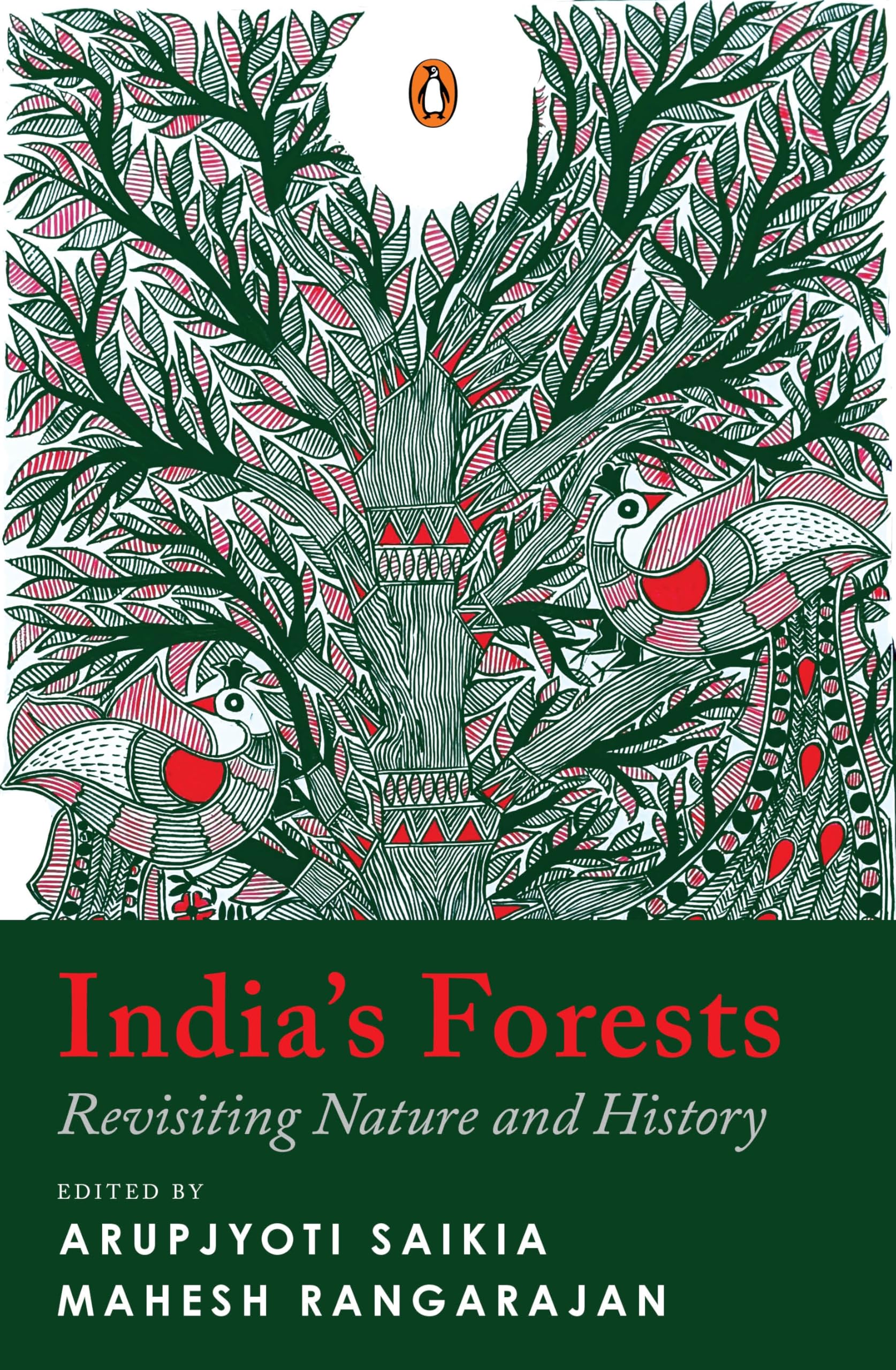
I've been reading India's Forests-Revisiting Nature and History Edited by Arupjyoti Saikia and Mahaesh Rangarajan for the past many weeks, and just finished it in time for this editorial, while also dwelling on the upcoming Van Mahotsav, India's annual tree-planting festival, which is celebrated usually from July 1st to July 7th every year. While this event promotes afforestation and conservation efforts across the country, I couldn't help but wonder whether it actually celebrated forests?
While the dictionary meaning of a forest stands at- 'a dense growth of trees and underbrush covering a large tract', what it means to be an Indian forest is far more complex and multilayered. I grew up in the shade of the pristine Patkai hills in the North east of India, with Blue-Green forests and unending rains. All school holidays began and ended in the endless depth of forests, its mysteries, foliage, birds and secret pools. And yet, as a child my naive eyes had never encountered a forest, as an adivasi might have seen it- a recluse from the shenanigans of a discriminatory urban culture. Turns out that much like the country, our forests are also caste led, gender and capitalism controlled spaces.
The book India’s Forests while an academic exploration from a scholarly lens, also gives us a sense of a forest as a lived entity, that was as much a part of people's cultural and social lives as it is alienated today. There are essays about forests and their characteristics from different parts of India, stories about how these forests were used in ancient times dissecting texts like the Arthashastra, or Ram Chandra Guha’s essay, The Unquiet Woods. But most of all the book nudges its readers towards a thought process, and tries to remind Indians to look at forests as living, breathing, participating entity in their lives as opposed to the rather rigid outlook of treating forestry through a commercial lens or even as a purpose of manufacturing forests as pods that could save us from global warming.
From sacred groves, to the Adivasi's integral equation of friendship with a forest, from highlighting ecological issues to understanding complex sentiments, seeing a forest, or even becoming one, and embracing it-the sentiment feels fresh, purposeful and a peaceful way of co-existing in an increasingly fragile and lonely world without second chances. Time to stretch that hand in friendship, go back to the mothership.
We bring you the June edition of TBR dear readers, ENJOY
Maitreyee Bhattacharjee Chowdhury
Managing Editor, The Bangalore Review