I signed up to do a group tour that was billed as the Hornbill Tour. A group tour is not something that I usually do and this was decided on a whim prompted by the increase in the wobbliness that my knees had recently begun to show. The Hornbill festival and the spectacle that it offers is something that has been on my mind for some time. The festival, I knew, was a curated event, one that was a spectacle of colour and culture. Having seen images of the Hornbill festival in reports and videos I was looking forward to it. What made this trip different was the visit and a look at some villages in the Mokukchung district of Nagaland. That was a beautiful world, a spectacle nevertheless but more of the natural world and of the lived spaces of the lives of ordinary folk. This essay is about one of the three villages that I got to see on this trip – the village of Longkhum.
Kolkata to Jorhat was a short flight and then began a long road journey through the Jorhat district and then into Nagaland. This was my first trip to the state. In parts the road was good, in parts moderately alright and in parts we saw work on in improving them. This was a long journey, of over six hours. The hills, the vales, the small villages that passed by reminded me of most journeys through hills anywhere in India. What made this journey stand out was the beautiful Christmas decorations all along the route – small Christmas trees, some Santas, the white gift boxes packed with red ribbons, and as it got darker the lights that lit up and created a delightful festive feel. Christmas was still over three weeks away and we soon learnt that decorations and carol practice began early in the state. It sure added much to the spectacle of what we got to see.
By the time we reached Mokukchung it was dark and cold. Most shops in the town were shut and we checked into our hotel. We were greeted by the young and very friendly Aali who, that day, was handling things at the reception and at the hotel. She made sure we were settled in well, comfortable for the night. Dinner had been ordered while we were on the road. We had an early dinner and decided to rest after all the journey. As we ate, the sound of carols from somewhere close by, was the lovely background music to our tired souls. The next morning, I was awoken by the sounds of young kids and peered through the window curtain to find a youth hostel bang in front of our hotel. The young boys were all hurrying around, getting ready for their school. They had been at carol practice the night before too. I got ready and decided to venture out to have a look at the place. As I walked out from the hotel towards the road, and the valley beyond it lay to the right. Merin, our local guide, had, by then joined us. Mokukchung, he said, was located on the top of a hill which explained the panoramic views of the town and the hills that we got. It was cold and the sun was shining brightly. As I looked towards the hotel I saw a beautiful tree in full blossom, that was my first sighting of a cherry blossom tree. Merin said we would see many of them as we travelled along Mokukchung district and in several places in Nagaland and at the Hornbill festival too.
After a simple, warm breakfast, we began our ‘sightseeing’ for the day. As we began our ride Merin began to talk. He belonged to the Ao tribe, he said. That was the tribe that lived in the Mokukchung district and that day we would be visiting three Ao villages so that we could have a small glimpse into the lives of the Ao. The sun was shining bright and the hill roads were all coloured with the cherry blossoms. Just a few days before we reached, Merin said that the village of Longkhum had been host to a cherry blossom festival. While we may have missed the festival, we did not miss the beautiful cherry blossoms all along the way and in the village of Longkhum.
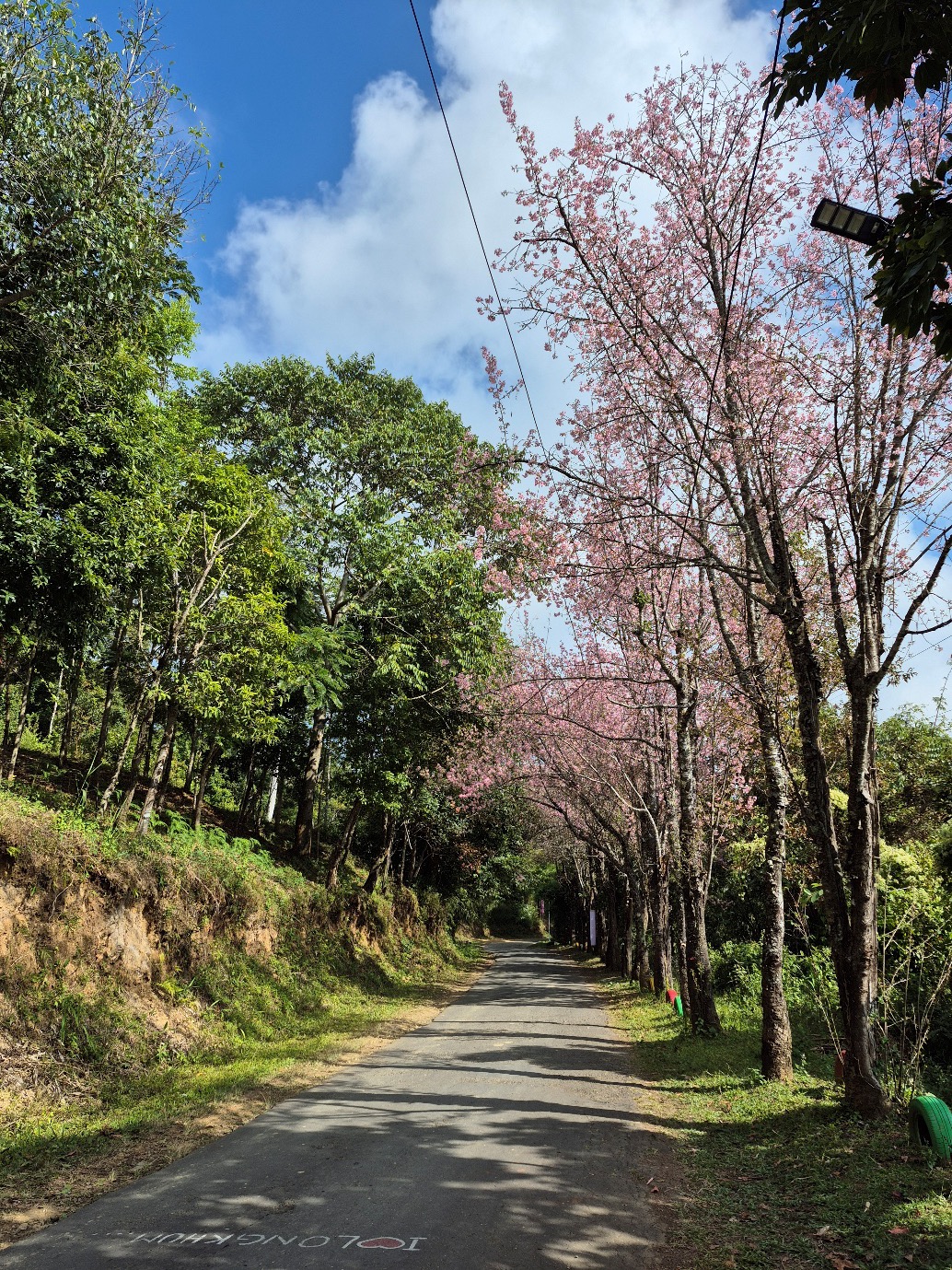
The word ‘long’ in the Ao language meant stone and as one ventures into the village one becomes aware of why the name came about. Longkhum is about 20 kms from the town of Mokukchung and the ride to the village is a delightful one. The sun shining bright in the crisp cold air and the lush green that one encountered on the way filled the lungs with freshness, a smell that lingers and calms.
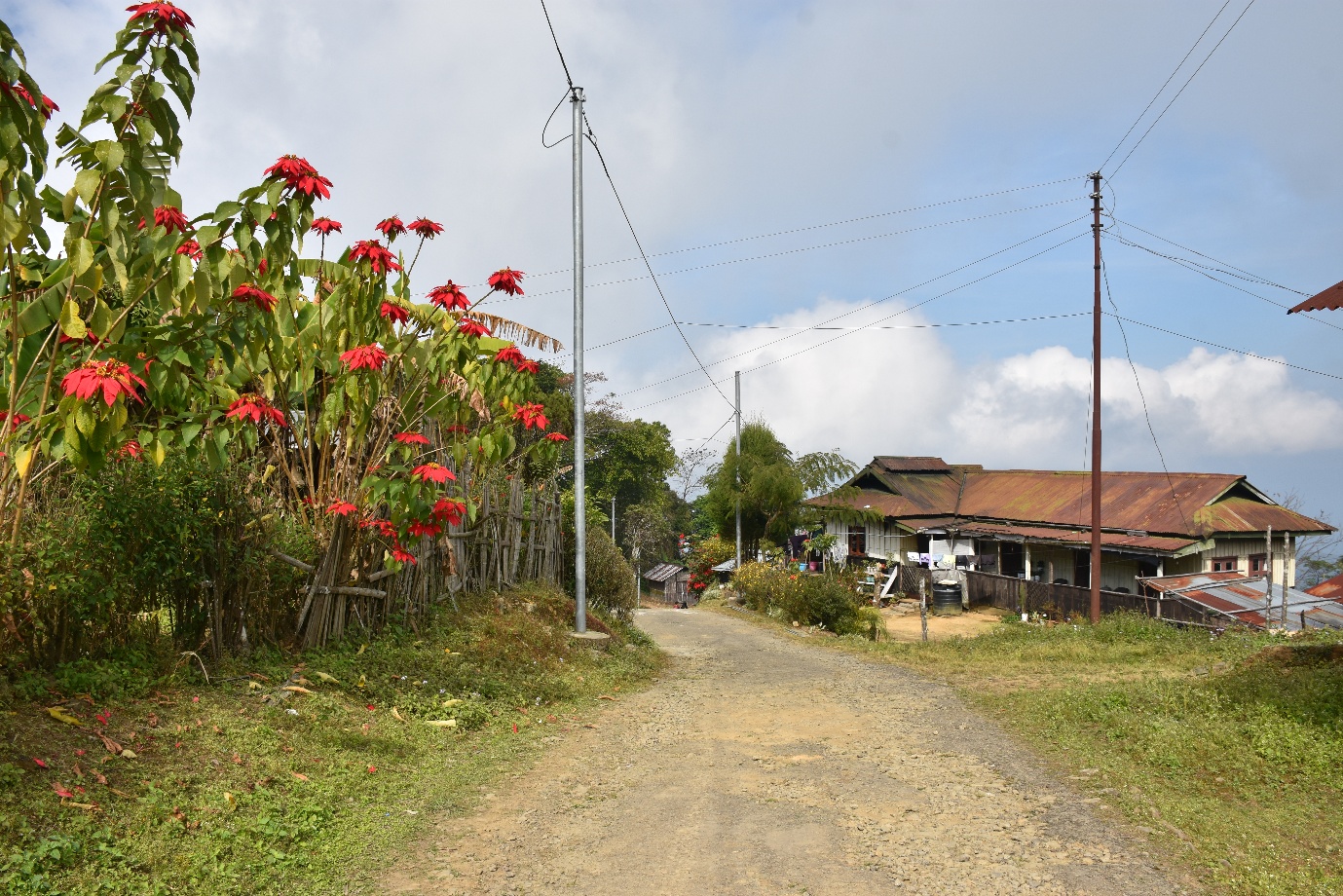
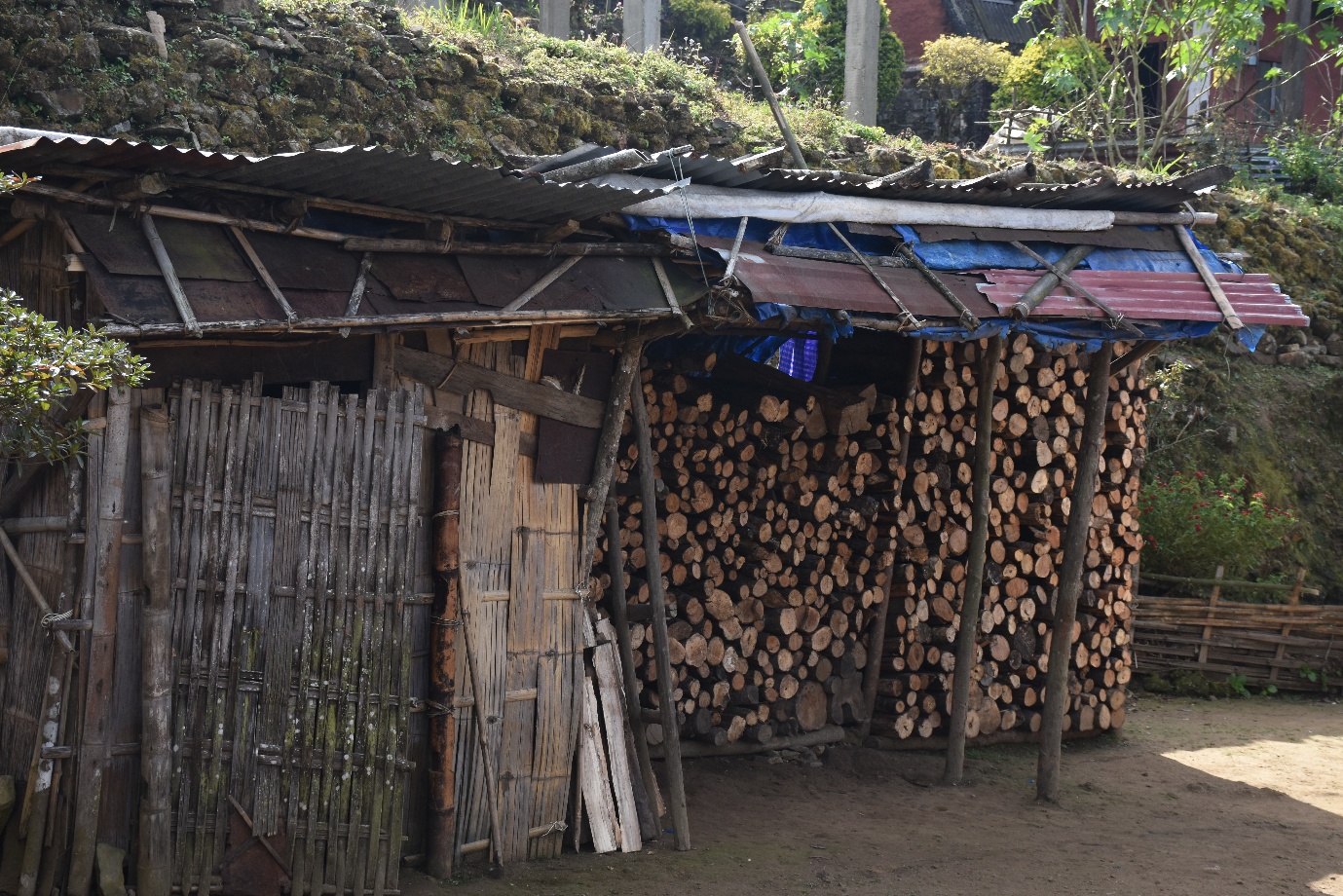
We alighted from the vehicle and walked along the road into the village. Small houses, mostly of tin and wood, line both sides of the lane, each courtyard bright with flowering plants and thick greenery. Wooden logs are piled outside every door, and as we walk a thin chimney becomes just visible behind one of them. A green patch in front of another house holds grain laid out to dry. On a nearby verandah a grandfather sits in his chair; his little grandson, catching us watching him at his play, turns suddenly shy. The wood stocked up was a sign of the harsh winter that is almost there.
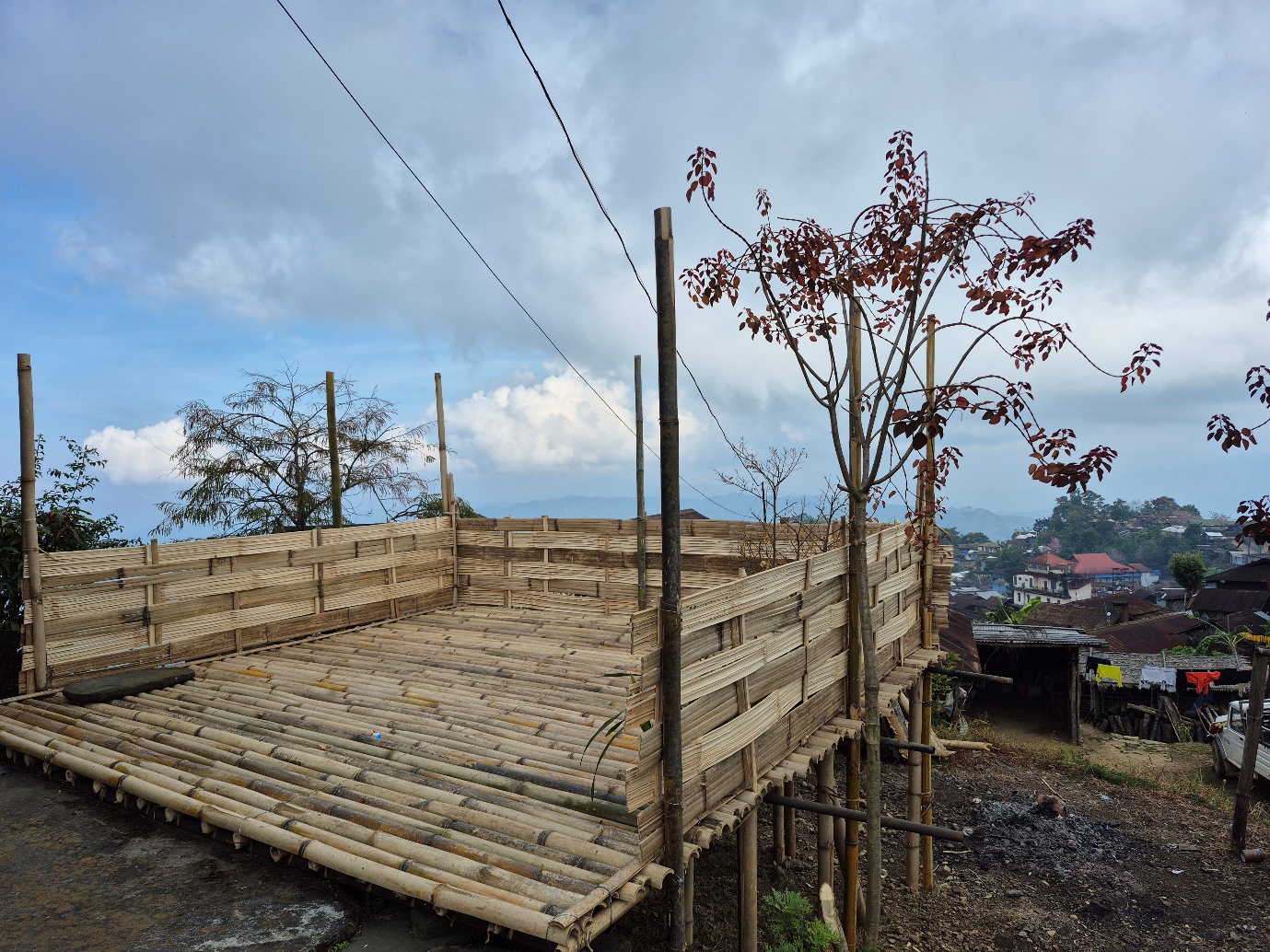
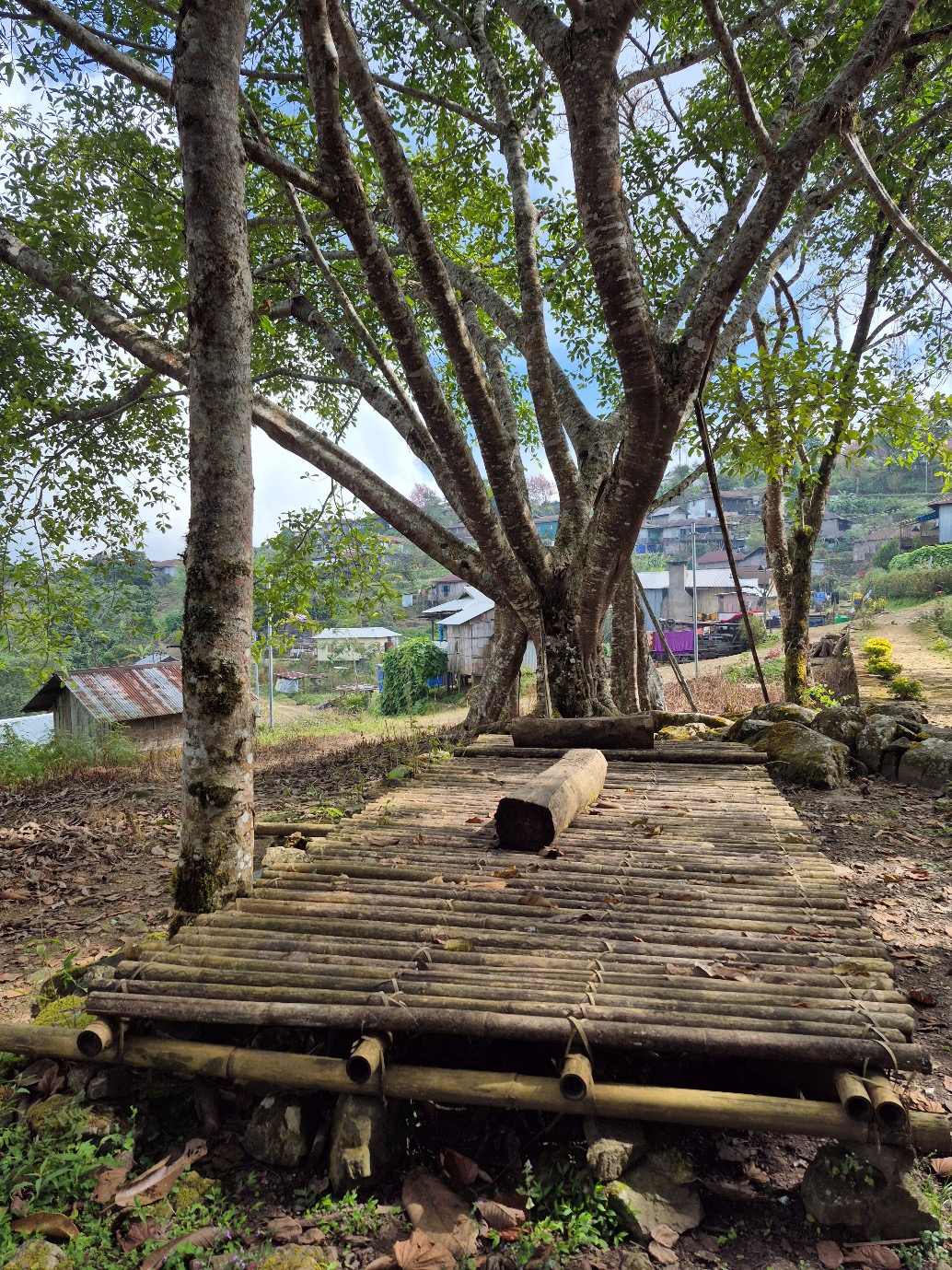
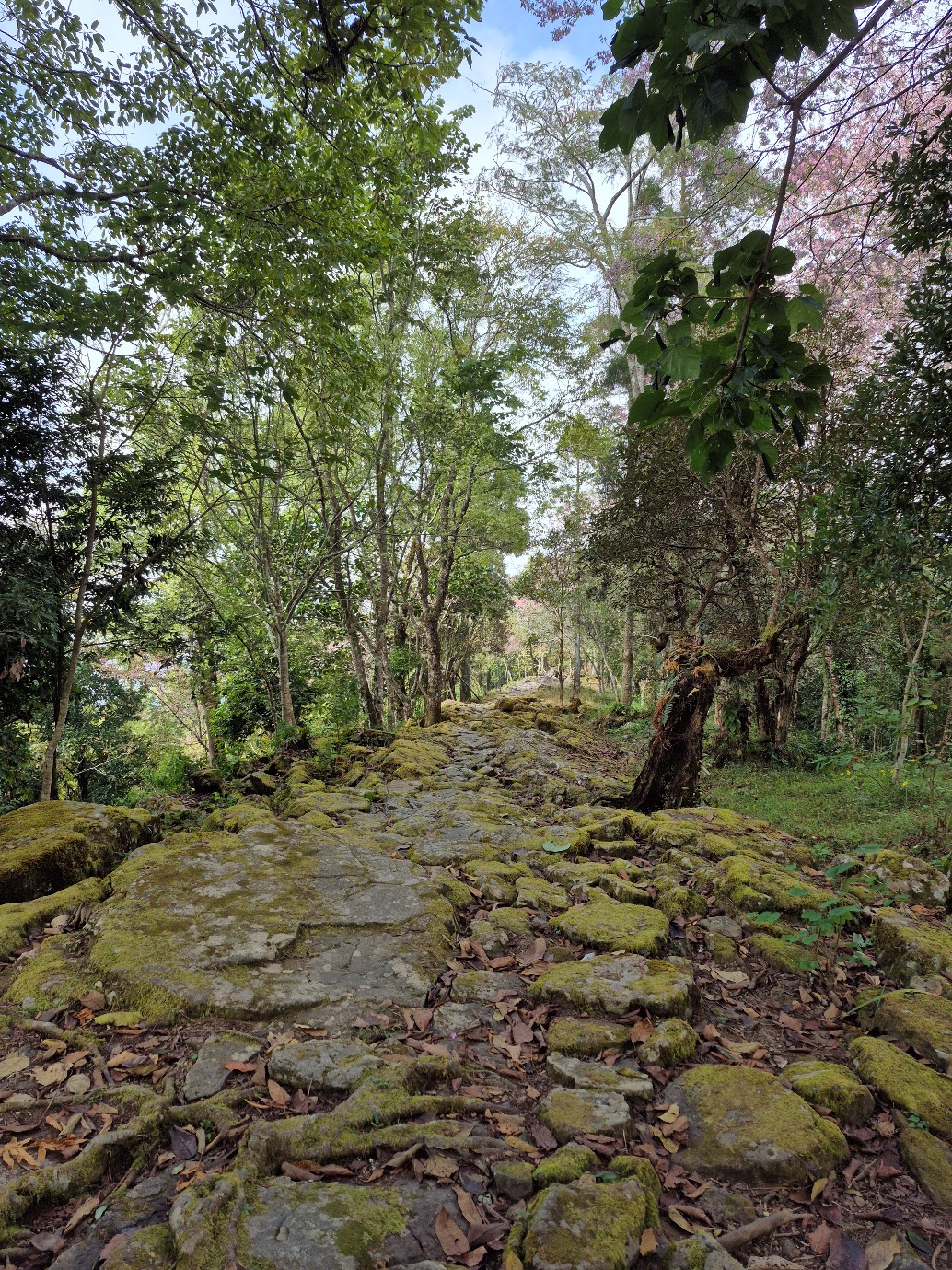
As we walk, we come to a covered shelter, right in front of it is a raised platform made of bamboo. Village folk gathered here to discuss affairs of the village. A little further are several rocks that lead down. They looked as if they had been laid out and one can climb down the rocks to take in the natural views of the place and the valley around. The entire area is a beautiful green with moss on the rocks. This was also referred to as Lunglangba, the ‘stone ladder’. It is a natural stone ridge that wound its way through the forest According to Ao legend this is a sacred site for rituals before and after battle.
According to local legend it was here that Etiben and Jena met in secret. They were young lovers who met here amid the rocks and the green, away from the eyes of folk. This story of Etiben and Jena is another story of ‘star crossed lovers’. Etiben and Jena belonged to the Ao tribe and lived in the village of Mopungchuket. Jena was poor while Etiben belonged to a wealthy family and was known for her beauty. She fell in love with Jina and used to meet him amid the stones in Longkhum. Her family forced her to marry Tenyur. Even after her marriage the star-crossed lovers kept meeting till they were discovered by Tenyur. He beat Etiben till she died and Jina soon died in grief. We heard the story as we walked through the rocks in Longkhum, pausing at times to soak it all in.
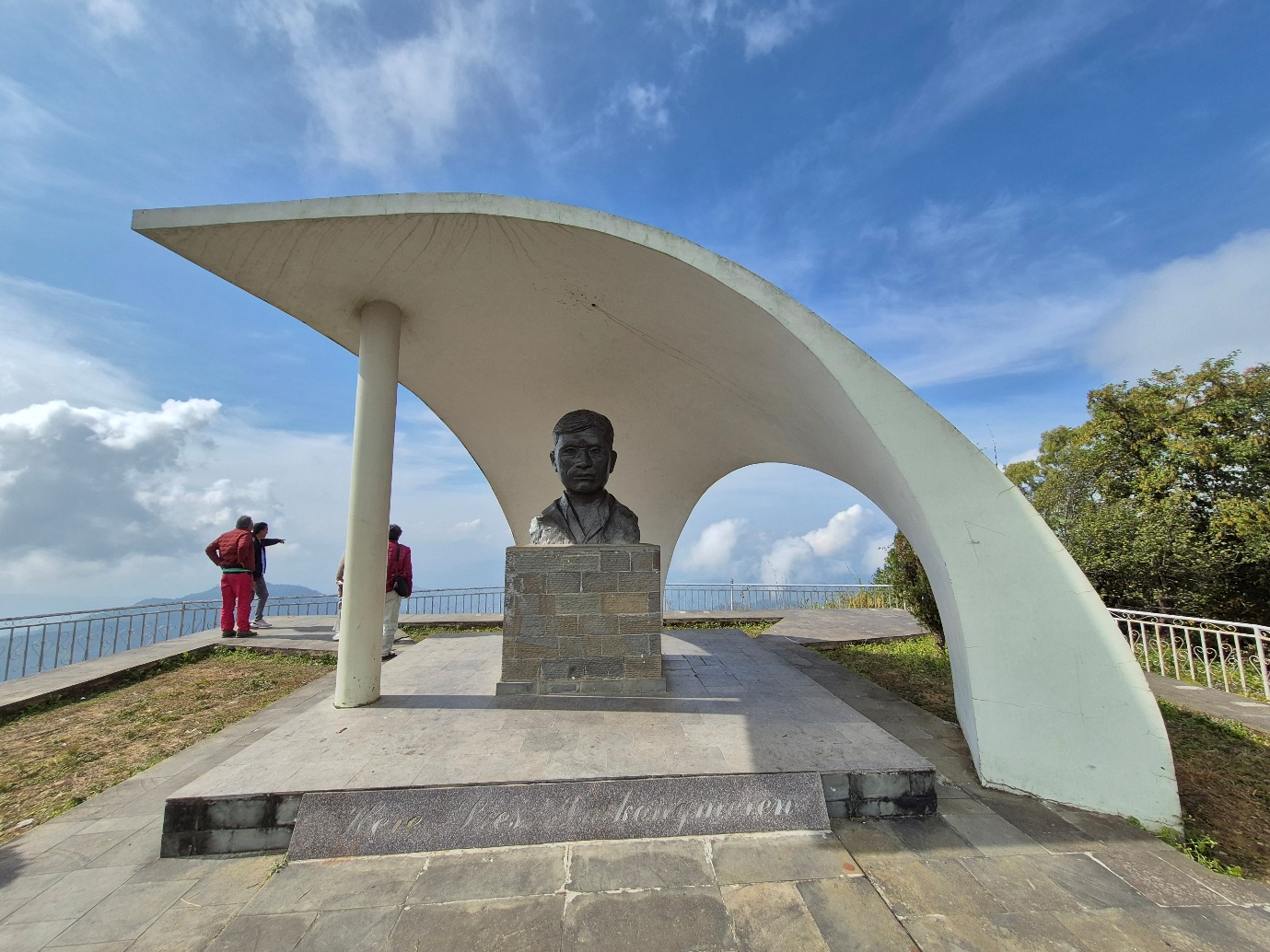
Longkhum is situated at 6,500 feet above sea level and its location and altitude give visitors a vantage point to look at the valleys all around. It is also the largest Ao village. On a hillock in the village is a statue of Imkongmeren, a Naga freedom father and a revered figure in Nagaland. This is also his resting place.
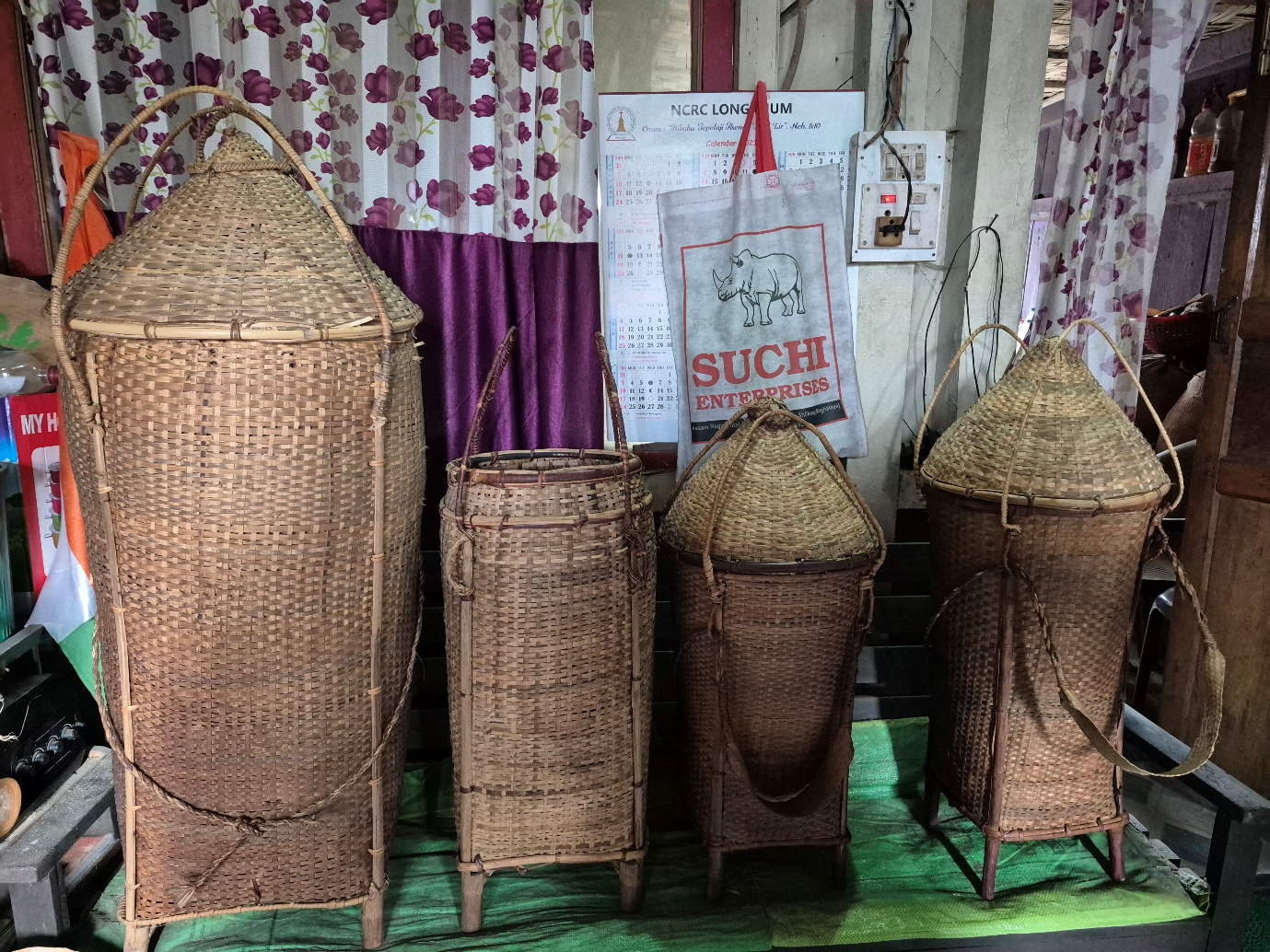
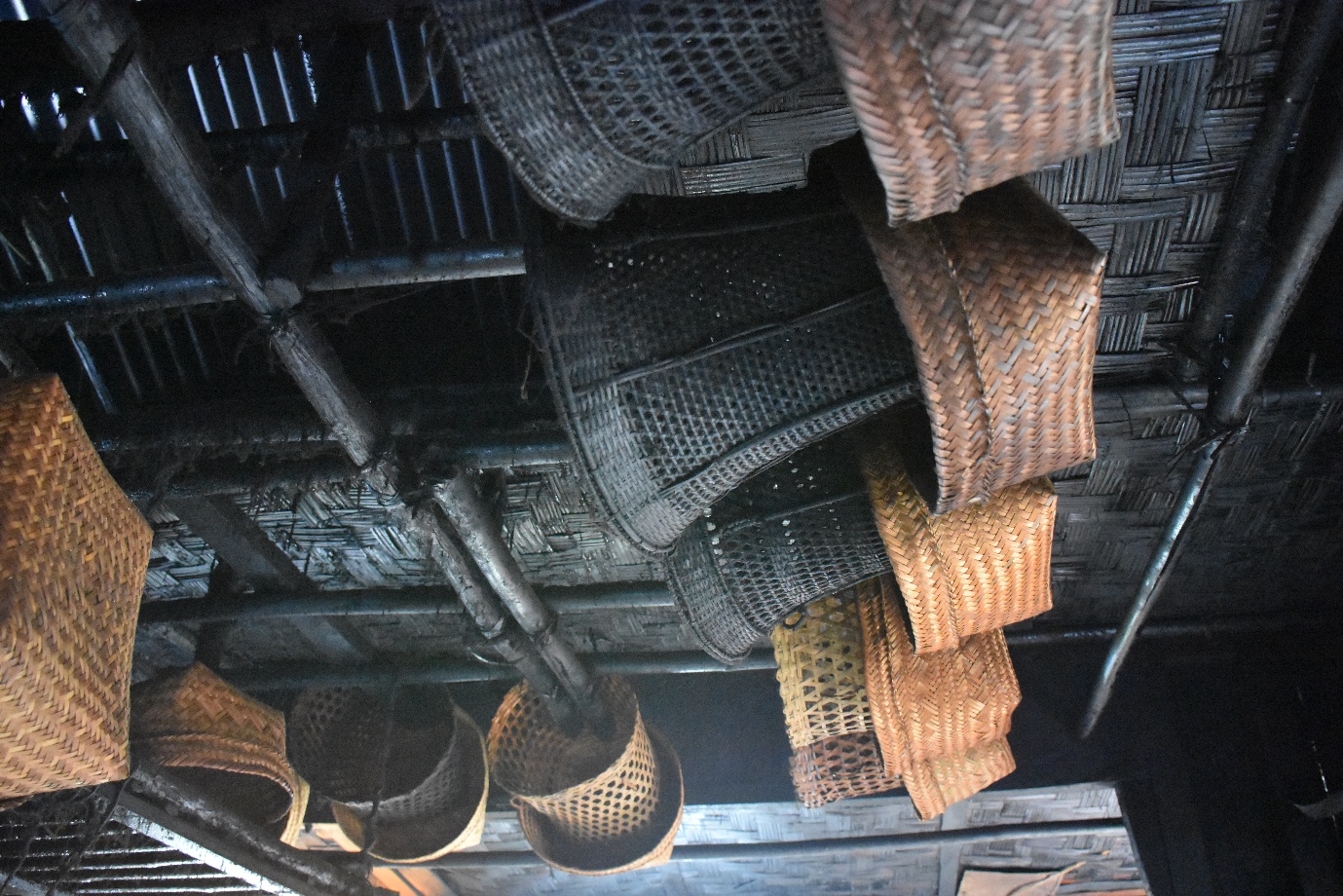
Merin, our guide, had arranged us to visit the home of Attu. She and her husband greeted us as we climbed down the steps to enter into their large wooden kitchen. The fire in the kitchen added to an already generous welcome. Attu’s husband had been a soldier in the Assam rifles regiment and the sitting room had several photographs of his work days and of his family. The elderly couple lived by themselves, their children and grandchildren are all over the state and beyond as well. The large kitchen is the space where they all gather when the children and grandchildren are home. There were several baskets hung in the kitchen, fish and pork are dried and stocked to last for a long time. Attu offered us some tea and we agree. Her husband showed us some of his headgear, the feathers used, the baskets for storing grain – a sense of pride in his heritage and tradition evident.
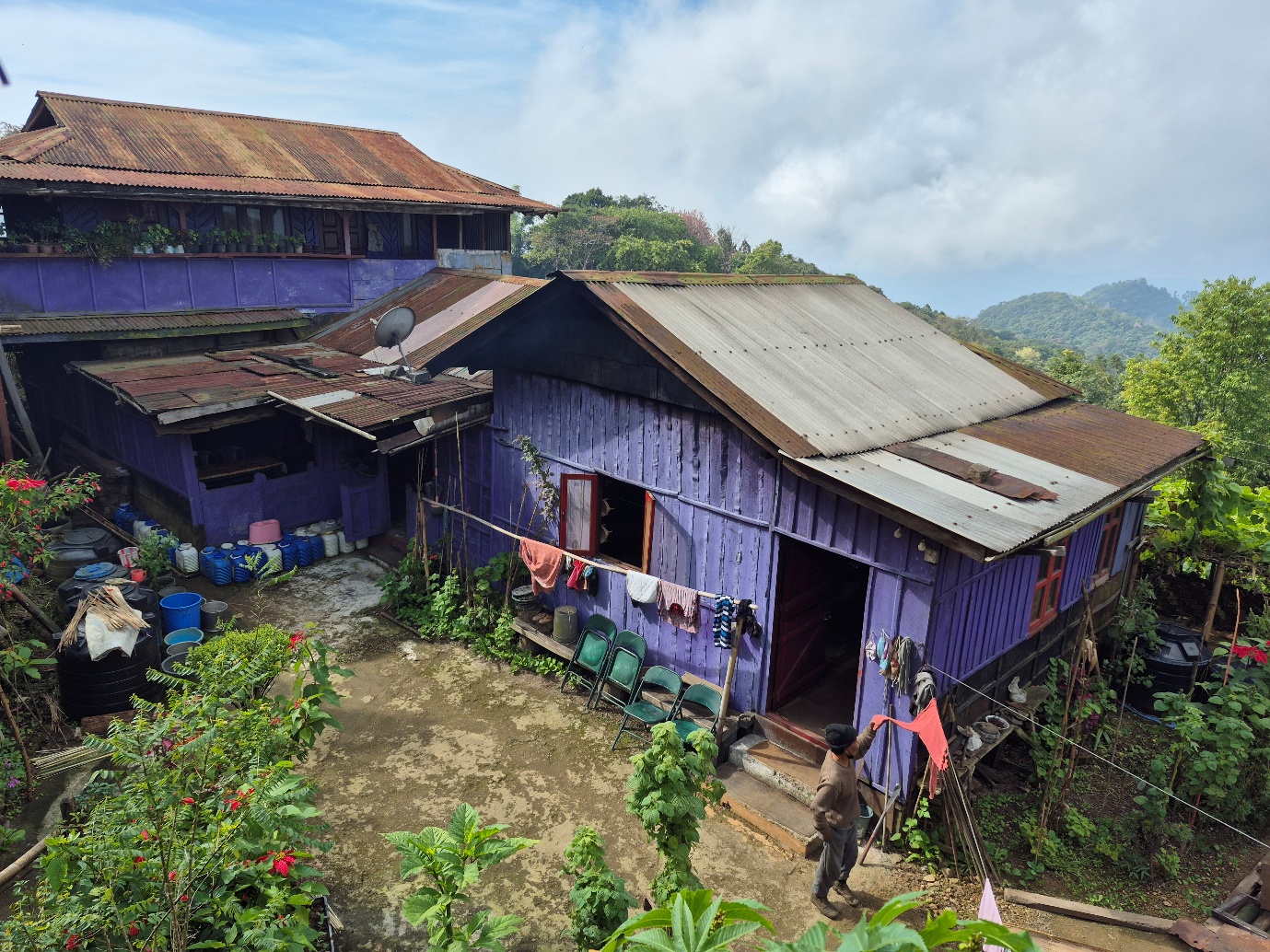
We took leave of them, grateful for being allowed to be part of their world for some time. The language they spoke is called Chungli, Attu says. Her husband told us it has no script of its own and that they use the Roman one to write. We climbed the steps cut into the landscape to come to the road and see a bamboo platform with a bench that has been laid out. Standing there one got to see beautiful vistas. That is a community space to sit and catch up. I look out from there to see the rolling white clouds, clear blue skies, the valley below, the thatched roofs, creepers on some of some, and the elderly couple below waving to us.
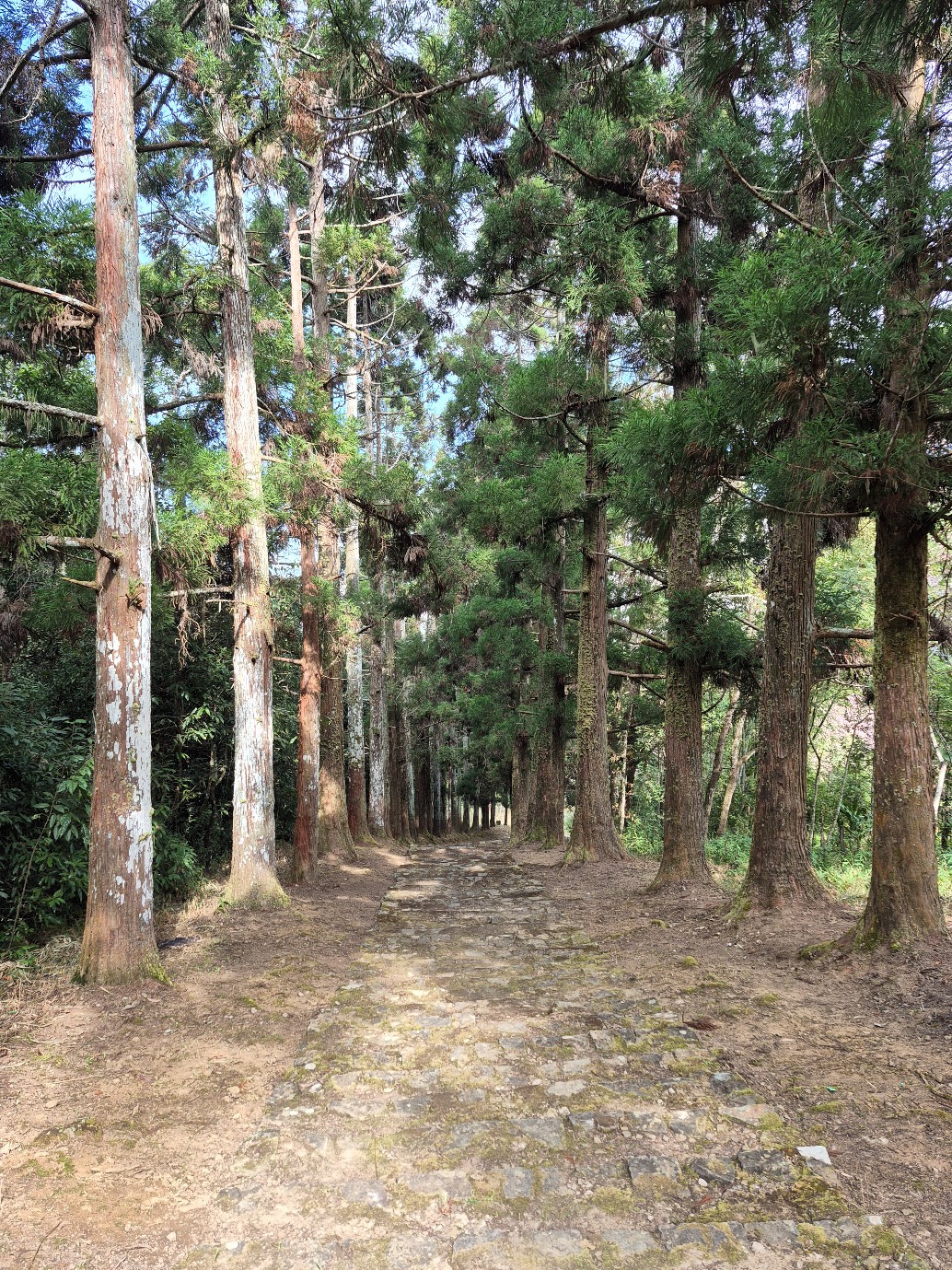
It was time for us to leave and as the car began to move we soon see rows of pine trees on both sides of the road, arrayed. These were not natural to the place and were planted by the British in the early twentieth century. Up the hill to the right, and down the hill to the left are stairs cut into the mountains. These pine-trees-lined stairs provide nice vistas. Longkhum receded into the background but the hills and the vales continued to keep us company.
What remains of Longkhum with me is the wonderful folk, the beautiful cherry blossoms, the sad story of Etiben and Jina, the myriad colours that I saw everywhere in the village and the sense of calm. For me, the outsider, out on a brief visit, Longkhum charmed. It is the spectacle of the place that remains with me I suppose. Here, I was looking at the place, its sights and people as an outsider, taking it all in. It is a traveller’s gaze as I would like to think of it. As I write about the place I am more than ever conscious of this. That makes me wonder: is everything reducible to spectacle, whether curated like the Hornbill Festival or not? Or has my own way of looking at Longkhum turned it into one - crafted, finally, by nothing more than my gaze?