
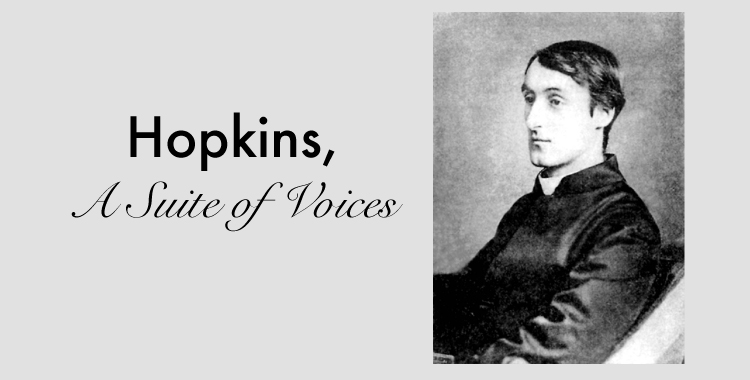
The golden light of inner dawn capturing visions ascendingthe heart spins as the world, the universe, moves throughspace into time, crafting the story that begins with lightas the counterpoint of visible silences unheard in darkness
Landscapes driven by the energy of the material world,the instress of forms speaking as the divine replacesself as center however mysterious and abundant;the half light / dark vacancy of soul, by which the heart longsand the intellect searches, frees the spirit to explore dimensionsfrom grace to the grace of contrition and converging probabilities,until the incomprehensible certainty of knowing God is purposefuland complete. Seeing is believing but touch is the truth, andall things therefore are charged with love . . . if we know how to touch them
Concentric rings of light rising and bringing forth the inscapeof realization and peace; the bird of spirit circling untilawareness yields the prism at the center of consciousness—a point of reference and the purposeful sovereignty of God revealed;All things counter, original, spare, strange call the heart andoverwhelm divisions of the reason in the brute beauty and valourof the unity of indivisible perfection seen in rivers uprighting in the sunand the depth of space understood as absence
* * *
Every age has its false alarms:perpetually born, Hopkins is my voice& in the dialogue between unknowing& form, light shines awoken. Before mea core, a pulsing encore; — wishing toabsolve itself to inscape voiced fourfoldinto the nineteenth century sun & wind.
Absolve me, & you will findvocation, a pursuit that glitters intobeing rather oddly; — as the dawnthe sunset all God’s handiworkis, yes, quaint to the fibre, the dappled timbresof oddness. So, perhaps, thought CoventryPatmore, & I believe in thought, butI believe more in an antique chauntand in an unknown tongue . . .
* * *Mothers lose sons to war and prodigality.A good son, the first to fill her womballured by an antique tongue, a JesuitApologia pro vita suafinds dwelling in God’s sacred heartin strange Cathedrals, imitatio Christi.
In Dublin a young mother cries at the confessional: Father, I believe I’m not good enough.Would you want your young boy to believe that about himself? No! she exclaims.Why not then? Because he is a good boy. I wept and didn’t tell her,
mother dear,would that you had said that.
Three-fold forsakenhived off by superiorsI cry for EnglandI need your touch
Frail health, nature’s beauty—no light, dark tunnel, bitter cupparents’ wrath, no comfort in readingWhitman. Hear my prayer.
God’s silent hand bridges the abyss:Deus, tu conversus vivificabis nos—the inscape of real presence.
In Deutschland Nietzsche finds:One is punished most for one’s virtues.
* * *
It is the dappled things that catch his eyeand hold his heart with splendor—trees lifting majestic branches toward indigo skies,wheat fields bowing down in gold to autumn’s final harvest
The imago dei in all living forms creates the beautythat fills his heart with poignancy; so muchcontrast and separation between eternal grandeurand the fallen world of Goldengrove unleaving
In restless tones, the wind knows his struggles—illusions crack and glaze from heat, from light.In a frieze of tangled motives and needs,his heart grieves the divergences of soul and self
Sorrow’s springs are the same—loss, diminishment, isolation.Yet inward love of the world’s breathsustains the penitent when truth is weighed
From his window, he sees the sunlightbegin its creation of the morningas hills become the edges of infinityagainst a kindled horizon
Where the sky and horizon touch,his faith lies—the impermanent momentand the infinite, becoming light and spirit,as fledged wings carry time forward
* * *
He looks in the mirror-Christ and beholds geniuswith uncustodial eyes enters the Christ mysterythe blight man was born for: an artist unconcededinscape denied for all those star-bright years
Glory be to God for dappled things: to learn to bearthe ache, the suffering of beauty unheard, art unsharedparents absent from the ordination, the longing for anaudience: the instress, the agony of an Achilles heel.
* * *
A slow boat from Hopkins’s mind departs forthe twentieth century. Robert Bridges takes acabin, he walks on deck, feels the oceansalt his lips in the wind, feels his voiceleave, and the way he knows this boat perhapsis a vision. History can have too many labelledjam jars, and strawberry can be peach. “Bringme nectar,” Ezra says, then he shakes it inits alchemical tumbler as the slow boat sailsinto exotic waters. We are closer to Hopkins’sworld than some think, and Ezra knows,when he puts sprung rhythm inhis magician’s black and velvet top hat,and macaws and toucansalight for the sky, we are back to a Jesuitcontemplating a grail of sorts – a chalice o’erbrimming withthe potential of the unknown. Hopkins realised
poetry is a world within worlds within and outside worlds,and the sacred unconscious Hopkins plumbedis his blessing unfathomed by words.
[Authors′ Note:This is a collaborative poem by one American and two Australian poets that explores Gerard Manley Hopkins’s philosophical themes found both in his poetry and in the personal struggles of his inner life. Our appreciation for Hopkins’s poetry and achievements led us to create, in our poem, a tapestry of ideas and images—as well as actual wordings (designated in Italics) from Hopkins’s poems, sermons, and letters. Our hope was to provide insights into Hopkins as a man, a poet, and a Jesuit priest engaged with themes of the search for meaning in life, and thus to convey a sense of the complexity and dynamic beauty of Hopkins’s work. – Christina Murphy, Martha Landman, and Michael Fitzgerald-Clarke. ]