
The island was deadly quiet as those islands usually are undiscovered to the churning wheel of modern day development, and the small wooden structure seemed to sway in the evening breeze as we had dinner. It had been built by native island labor, and designed by two Canadians, who somehow got their government’s AID money to do it. Instead of investing troops and money in armed conflicts in the Middle East, Ottawa preferred the safer, more picturesque Caribbean islands.
You could call it quaint, and it was. The nearby town of Soufriere had a single dusty uneven paved street, with a concrete block deserted branch of Barclay’s Bank sitting complacently there, its officious looking black manager in his white shirt and tie waiting for customers who were few.
The twenty-room hotel sat above a small white sand beach on a verdant palm-covered hillside, and commanded a magnificent view of the calm Leeward channel.
Pip laughed as he noted how slowly the waiter, an ancient grizzled Rastafarian named Waltrude, brought anything to the table, and even then with an ungracious grunt as he laid plates on the wrinkled white linen tablecloth. He wore sandals that somehow stayed on his bare feet even with all the straps broken and dragging, but he was oblivious to that in his shuffling gate with the plates.
“Here you go, boss!” was the only thing he uttered for the entire meal. If you asked for water, or maybe more chutney, he knowingly nodded, and said it again, giving you a smile with purple gums holding two yellowed teeth on top, and a few on the bottom, a bit splayed.
The meal itself was dismal, the meat, mostly tough, the cassava and string beans cooked down into an unrecognizable colorless pulp, but an undaunted Pip had brought his own bottle of Johnnie Walker Red scotch since he and Nick, the hotel owner were friends, so the drinks were plentiful and generous. Pip had a heavy hand when pouring drinks. The whiskey splashes you got at British pubs had always aggravated him, and being a colonial at heart, he hated all those upside down bottles with their ridiculous single shot dispensers you found in England.
“You remember I first came here on the way back from Caracas, and found this place, the hotel, Anse Chastenet,” he reminded me. “Tina thought it was darling!”
“I saw the house, just up the road,” he said, pointing out into the black night, there weren’t street lights anywhere until you got to the capital, Castries, an hour away.
He had called me in San Francisco and told me he had found an old louvered mahogany house overlooking West Bay, and he wanted to buy it. Its owner, according to the hotel, wasn’t seen on the island for a while, and it looked like he had just abandoned the house for some reason. Maybe he was ill, no one seemed to know.
Thought to be a German, all that was known about him was that he had been involved in the import-export business, and was now living in Miami, after twenty or thirty years in the Caribbean. He had built the house in the mid-1980s, the same time that the two Canadian architects had arrived here, and started construction on the hotel with the Ottawa money. Over the years, they had had drinks with him at the hotel two or three times, he mostly stayed to himself, and there didn’t seem to be any house guests, except for a Chinese woman from Trinidad who had stayed with him for several weeks, on two occasions, they remembered.
“He’s a recluse,” Nick, one of the Canadians, had said, “and maybe he’s got a shady past, it wouldn’t surprise me. You get them here.”
“I think he had some business in Trinidad, maybe with Shell, “ he added. “The Chinese woman came down to the beach restaurant twice without him. Didn’t talk to anyone.”
“I saw her, she was maybe thirty-five, nice figure.”
Pip, ever a plodder finally tracked him down, and he agreed to meet. And so, Pip flew there from Chicago for a dinner, and had an inconclusive meeting with Theo. His name was Theo Odenhoven, and he was one of those Dutchmen who had lived outside Holland his whole life, first in Jakarta, and then fifteen years in Curacao, and for a longtime in Trinidad, and then finally Miami. He had built the St. Lucia house as a retirement home, he told Pip, but thought he might be dead before that occurred, coughing repeatedly at the dinner table. Pip had asked about a sale price, but he had just waved his hand, dismissing the whole business, and continued eating.
Sensing a distress sale, Pip kept at him for the next six months with a barrage of letters and telephone calls, and Theo who did seem in decline, at last said he’d consider an offer. The first was refused, the follow-up one as well, and Pip realized he wanted the house more than he had first thought, and he raised the price.
Theo eventually relented, and a deal was done between them.
I first saw the St. Lucia house when they had cleaned it up, chased the goats out of the living room, as Pip said, and got the plumbing to work. He told me he spent half a day pulling a trailing woody vine out of the bathroom toilet bowl that had mysteriously fingered its way down into the pipes.
Janet had left me almost a year before, Pip and I were old friends, and we had been a witness at his marriage to Tina, which had the usual bizarre Pip signature to it.
His first wife Jackie, was a would-be aristocrat, and he always resented the way her royal pretender family looked down their long hooked noses at his London working class roots, disinviting him from the weekend hunting parties, and the country dinner dances.
I knew Jackie through mutual friends and in truth she was the one who introduced me to Pip, whom I immediately liked, actually more than her.
He was fond of referring to her family as ‘when we’s!’ and often did whenever he had an audience after a few drinks, of course out of her earshot.
“You talk to dear old Jackie’s father, Sir Harold, and you know what you get?” he would say.
“I’ll tell you!” he’d snort, with sarcasm on his lips. “Well, Old Boy! when we were in Hong Kong! when we were in Rhodesia! when we had the Raj! or, when we were with Monty! Classic old bore!”
“One of those relics now living in ‘royal’ Tunbridge Wells who writes letters about cricket to the Times!”
He had been married the second time at the apartment of his old girlfriend Harriet who served as a Chicago traffic court judge, and the ceremony had been conducted by another traffic judge, her present lover, with a solemnity not unlike the Vatican, dripping with a set of instructions for a happy marriage from his unctuous lips.
Allan, Harriet’s judicial lover supposedly had a wife convalescing in an unknown mental hospital somewhere, and when not hearing DUI or speeding cases, he worked as a volunteer on New Mexico Indian reservations. From that humbling experience, he now generously regaled himself in southwest style turquoise and silver jewelry, and had become a self appointed spokesman for native American causes.
His tirade on the sanctity of marriage, was so filled with parables, that Pip looked at Harriet with rolling eyes, suggesting she bump him, and have him get on with the ceremony itself. Pip and his soon-to-be wife had already lived together for the past three or four years, following her second divorce and subsequent move to Chicago. I thought the whole thing painfully sanctimonious, and even as a failed Catholic, it had the feel of a bad Hollywood film.
Years later, I was to learn that following Operation Greyhound, the indictment of twenty-two sitting Chicago judges, many in the labyrinth of its traffic and small claims courts, Allan had been named for bribe-taking. Two days after the announcement, he had taken his old Army service revolver and his medals from the Korean War into the sauna at the Lake Shore Drive apartment building where he lived, and fatally shot himself.
Most of the money taken for fixing traffic tickets were small, the average kickback maybe fifteen hundred dollars. Allan had been a fool to the very end.
Pip had a meeting in Caracas for a week, and after I’d been in St. Lucia with them for four days, he took a taxi to the airport on the other side of the island and was gone.
Tina was always a good sport, a loquacious woman, but sometimes we found ourselves with little to say to one another.
The morning after he left I walked down the road the quarter mile to the Anse Chastenet beach, getting there long before it got unbearably hot. I took a fast swim in the ocean and then stretched out with eyes closed for a half sleep I felt coming on, an offshore breeze drying me off. I heard footsteps in the sand next to me and heard a ‘hello’ and looked up to see Tina in a string bikini carrying a beach bag and towel.
She spread out the large Navy blue towel next to me, and put the beach bag between us, then reached into the canvas bag and showed me a trashy Sidney Sheldon novel which she knew I’d abhor, and smiled. She said anything for a moment, pushing her bare feet in the sand and turning over small hot white piles, and then walked to the water’s edge and had the surf around her bare feet. She walked slowly back to the towel, looked at me, my arm over my eyes, and took off her bikini top, throwing it gently on the towel. This early in the morning there were only the two of us on the small hotel beach.
An instant later she was running in the soft sand to the water, and with knees high in the air, into the surf where she dived into an oncoming breaking wave, and disappeared. I watched her closely as she swam in the sea, and a few minutes later she trudged back to the towels, red hair soaked and stuck to her head, and white breasts heaving. She stretched out on the towel on her stomach, and turned to me, reaching in her beach bag for a pair of sunglasses.
“I hope a bare breast doesn’t upset you!” she said laughing.
“No,” I said, “I like it!”
“Good!” she said and then turned her head away from me, and tried to sleep.
They had a hired a cook for the time they were at the house, a local girl who shopped at the open air market, and prepared dinner. We usually had a light snack at the beach cabana at the hotel, with old Waltrude grilling burgers and tending bar.
Tina liked a gin and tonic for lunch, and we had generally one or two bottles of wine with dinner, starting before the meal was served, she liked to drink. She had grown up in one of the little steel towns surrounding Pittsburgh, and found her way to Cleveland, New York and eventually Chicago in the retail clothing business. She met Pip through a girlfriend who had known him and thought they’d enjoy each other. They both were volunteers at Chicago’s Lincoln Park zoo, and Pip particularly loved working with wild animals, from his days exploring the Venezuelan jungle where he’d been involved in early government conservancy efforts. With the wealth from their offshore oil, the Venezuelan government had made efforts to save its Amazon basin rainforest, made world famous by the crash of bush pilot Jimmy Angel, and the discovery of Angel Falls. Pip had helped them create a wildlife fund.
After Tina’s display on the beach earlier, I had just tried to keep our relationship friendly as always, and in truth, I did find her attractive, as did most men, but we returned to our comfortable evening conversations over dinner and drinks. Two days passed as before.
She had been married to Pip now for almost five years, and for one of them I’d been living on the West Coast and hardly saw them, maybe for a hastily planned dinner if I flew into Chicago, and had an extra day. We had missed one another on the beach, I had gone fishing which I love to do anywhere in the world I’m at, with one of the local native fisherman, who was suffering from a hangover all day long. So many of the St. Lucians I’d surprisingly observed are among the world’s worst fishermen. I had watched them the last two evenings with Tina before dinner, casting nets out and pulling nothing in, maybe a piece of flotsam, or an old boot, it was uncanny. I had wrongly believed that if you lived in an island nation, you would master the bounty of the sea somehow.
So we had drinks tonight and continued our vigil with the natives and the nets.
“Don’t they ever catch anything?” she said, turning to me. “I haven’t seen it. And you can’t buy fish in town either. It’s crazy, we’re on a goddamn island, c’mon.”
She held out her hand to take my empty drink and I handed the glass to her and she disappeared into the living room where they’d set up a bar.
Tina for a redhead, tanned well, and she loved the sun, so she always looked like she belonged outdoors. She was wearing a black and yellow pattern African Masai wrap, and a halter, and went barefooted in the house. She came back with the drink, and by then the sun was at the bottom of the horizon so there was an orange light above the sea.
“You know, Janet always acted so strange around me,” she said for no real reason, looking out at the sunset.
“She knew Jackie, that’s all,” I answered, “you know how women get.”
“No, how do they get? Tell me?” she said, fingering the edge of her glass.
“Everything’s supposed to last forever, that stuff,” I said.
“Oh, the other woman, I see,” she said, and sighed. “She thought Pip was playing around, huh? With me!”
“It doesn’t matter,” I added, wanting to change the subject, and just then Louise, the cook, came out to announce dinner.
We ate leisurely and talked about the West Coast, where she lived for a few years, and why we both like San Francisco, compared to Los Angeles, or San Diego.
Afterward, she wanted to show me what Pip had done with a side garden he was working on, he had transplanted fifteen varieties of flowering plants native to the island, and he eventually wanted to have a garden with all the St. Lucia flowers, which would be in the hundreds. He’d studied horticulture as an avocation, and was one of the first people I knew of, who could keep a Chicago apartment freshened with orchids in the bitter winters.
“This yellow flower, is called Josephine’s Passion,” she told me, picking a blossom, “did you know she lived on the island, before she went to France, and met Napoleon? So, the flower is named after her, sweet, don’t you think?” and she put the sprig in her hair.
“It’s still early, I want to show you something! Let’s get the car”, she said, slipping on a pair of sandals, and grabbing her purse with the car keys. They generally rented a car at the airport, so they could take day trips, buy groceries, and explore the island. Out front in the driveway was a small orange Datsun, a little beaten up, it appeared, but it started right up.
“Jesus, this lefty side driving”, she complained, as she let out the clutch, and we jerked into the narrow road. She drove fast and took the turns in the windy road a little wide, I thought, sometimes getting the wheel on the shoulder.
We drove for fifteen minutes through the town and up on the side of one of the Pitons, the two volcanic peaks framing the Bay.
Finally we drove through an ancient metal gate, and up to a tiny frame building that looked to be part of the mountainside. We stopped in front and she motioned me to follow her into the building. She handed a tiny black man, a roll of bills, and he gave us two pewter candelabra, each lit with four candles each. Then we walked outside up through an arbor into a little chamber inside the mountain, where there were a half dozen wooden doors.
I carried one of the lighted candelabras and followed sheepishly, wondering where exactly we were going, and what we were planned to do, since I had no idea.
“This last one, that’s her chamber,” she said to me, and opened the door. I followed her in and saw a small wooden room with a pool and benches.
“OK, we’ll undress here, and take the candles inside with us. Take off your clothes!” she told me.
“What do you mean?” I asked, confused.
“The clothes, all off, naked!” she urged, “you’re a big boy, hurry up!”
“Wait a minute! Tina!” I protested.
By then she had taken off the wrap and the halter and opened the other door.
“Off, now!” she said, “you’ll see!”
So I took my shirt and pants off, but kept on my underwear, and picked up the lit candles and followed her inside.
What I saw looking around me was a grotto carved out of the stone mountain and a hot spring gradually filling a large circular pool. There were three steps that led into the water, and she had put her candelabra on a rock ledge.
“Pants off, and in,” she said, “this is Josephine’s sulfur bath.”
“She came here as a young girl, this was her chamber, the Empress of France,” Tina said as she stood into the water to her chest.
This is insane I thought to myself, but then I decided to go along with it, turned my back and slipped off my shorts, and backed into the warm water.
As I stepped into the water its warmness enveloped me with a pleasant shock, and I slowly let it calm my tense body. It had a vague smell of sulfur, and I could see the uneven rocky bottom, where I could stand on the tip of my toes holding my head above the surface. The grotto had been scooped out of the base of Gros Piton most likely by African slaves when Josephine’s planter family were on the island.
In 1750, there had been a slave rebellion, and renegade bands of slaves hid in the thickly wooded Pitons, but by that time, Josephine and her family where in Haiti, and then Europe. This was the last island shrine built for the teenage Empress, where she had bathed, the figure of a woman that French court painter Jacques David made immortal.
Old rusted iron slave made hooks for robes hung on the plank wall on the far side of the room, and a long wooden bench had built into an alcove reached by rocky steps. On it I imagined the young Josephine once sat while she combed her wet hair, perhaps dreaming of the conquest of Europe, and the pageantry of Versailles.
Tina was laughing and splashing around, and she floated on her back hair floating in the water like the Sargasso Sea.
The story of the young Josephine Bonaparte was an interesting tale, and she told me the whole thing from start to finish, and then when we’d been in the water for maybe twenty minutes she moved toward me, her body pinning me against one of the walls.
Josephine had affairs throughout her life, she confessed, while the great man Napoleon remained mostly indifferent to love, his deepest passion was war, but whenever he was victorious on the battlefield, soil awash with blood, he sought her arms, traveling many miles, day and night, horses dying underneath him.
She took me by the hand and led me to the narrow alcove and she kissed me gently pulling me down next to her warm and wet on the bench, and then it happened.
I liked to think it was all her doing, but I was responsible too. Pip was a distant thought.
We spent another hour at the baths and then drove back to the house, and that night she came into my bed.
The next morning she wanted to sleep late, so I took my coffee out on the terrace, with thought of the betrayal on mind, but put that aside, and decided to go to the beach early, shouting to her as I was heading out the door. She didn’t come down to that morning, and I finally went back to the house in the early afternoon. Louise was there preparing for the evening meal, and told me that Tina had taken the car into town for some shopping.
“Madame gone to do the shop!” she announced in her patois accent, a dialect based on a back and forth history of French and English colonial masters, arriving at some middle ground.
She didn’t like people in her kitchen, as she told me, and she motioned me out the door with her hand. Her youngest brother Terry acted as house gardener, and also caretaker when Pip and Tina weren’t there, sleeping in a makeshift basement room.
Tina called Louise, or Mabel, the other native young woman who sometimes worked at the house, their ‘servants’, a term she had picked up from Pip who in his colonial way believed that, and on her lips and his too, it had always sounded laughable.
They always brought an extra large suitcase with them to St. Lucia, filled with frozen foods Tina wanted, ‘Lean Cuisines’ and turtle sundaes for her desserts, a strange contradiction in my mind but not hers, but for the most part, they loved the curries these women made, meat cooked with succulent island fruit, mangoes, papaya, or bananas.
The rest of the afternoon was replaying the night before, and wondering what we would say to one another this evening, Pip would be back either tomorrow night, or the next one, he wasn’t sure, in his last telephone call.
About six I heard her drive up, and she carried some wicker baskets she’d bought into the house, and nothing of discomfort, or guilt, marked her manner. She showered, dressed for our casual dinner, and then we continued as before, first with drinks on the terrace, and then at dinner.
Afterward, I brought up what happened, and she leaned over, and kissed me, and said, “Yes, it was wonderful, thank you.”
I tried to steer the conversation to my complicit behavior with a friend’s wife, and she responded by bringing out a Ouija board for amusement.
“Let’s see what the future holds for us, shall we?” she said.
“I don’t feel like playing games, after what happened, please,” I pleaded.
“This isn’t a game!,” she warned me, and put the board and the pointer on the coffee table next to the couch.
“First, drinks,” she said, “you do that!” motioning me to the bar. I got up and made the drinks, and returned putting them both on the table.
“We need to know what will happen!” she said, looking directly at me.
The stars and the ancients have so many answers we need, she told me, the paranormal becomes normal, everyday life.
“I lived in a house once, built right after the spread of the Mexican missions northward in the arid hills outside Escondido, and over the years it had been the location for four suicides, three murders, and a lot of alcoholic and drug madness,” she went on. “Hah, my ex- husband fell off the end of the earth there, on his goddamn head! He drank himself out of one of the large San Diego law firms, filled with ex-Navy officers, and dedicated right wingers like himself.
“He had visions of another world, usually after his fourth scotch! He had had a very detailed descriptions of this other world, and it was inhabited with a populace which included creatures from other solar systems. I thought he’d watched too much Star Trek!”
He wasn’t an idiot, she said, he’d gone to Yale, and his father had been a Navy admiral, and they were a landed family on his mother’s side with large farms near Fresno, all pretty solid people who’d spent three generations in California.
“Where is he now? I asked.
“He took a small boat out of San Diego Harbor, and he was never seen again!” she said with some sadness on her face. “It washed up on the beach at Encinitas on the north coast a week later, but without him on it.
“Oh” I uttered, not knowing what to say next. I looked at her for a long while. “OK, what do I have to do with this game?”
“It’s not a game!” she said.
“Somebody made this, the board, look!” I said holding up the top of the box.
“This ritual is very old, before Christ,” she said, “don’t you believe in the spirit world?”
“No,” I answered, and looked at her beautiful face, lost in its classic lines for a moment. “I don’t believe in God either.”
“Don’t be a fool, there’s so much outside of what you know, some writer, bah!” she said, and laughed.
I held up my hands and shrugged in surrender, and asked her to go on with how the board worked, what it did, exactly.
“We should only ask it for one thing, something important to each of us”, she warned me, “ so don’t be flippant!”
I nodded that I’d go along with whatever she said.
She smiled at me, and we started. She held the pointer gently in her hands with its magnifying glass circle, and then put it down on the tan colored board with the printed alphabet.
Oddly enough, I had remembered Ouija boards from old black and white movies with séances, usually set in Victorian England drawing rooms, where a Gypsy Madame somebody was able to contact Lord Elgin’s late wife in the next world, and coax her permission for him to marry his teenage scullery maid.
“We’ll ask the Ouija, where we’ll be in the future” she instructed, and handed me the pointer.
“You go first,” she urged.
I held the plastic pointer with its glass eye firmly, and it slowly but unconsciously moved my hand first to the letter, C, on the board, and then with aimless movement, it took me to an, H and then quickly, to an, I.
“What the hell does that mean?” I asked.
“You’re coming back to Chicago, that’s what!” she said calmly. ‘Chi’ was the well-known abbreviation for Chicago.
“That’s nuts!” I exclaimed, “I’ve got two book contracts out West!”
“The board doesn’t lie!” she warned me, and took the pointer from me.
I got up to make myself another drink, and held out my hand and she gave me half empty glass with its melted ice.
You could always count on Pip to have a well-stocked bar. He had four bottles of scotch, plenty of rum, dark and light, Jamaican and Puerto Rican, and three bottles of gin. We were both drinking gin and tonic, so I quickly made the drinks, and returned to the game, as I thought of it.
She was holding the Ouija pointer against her forehead, with her eyes shut, when I sat down with the drinks, and didn’t open them for a time.
“You must believe, or it won’t work,” she said, “I believe!”
She asked the same question of the Ouija, as she called him, or it, and the pointer first took her hand to an, S on the board, and then it moved her hand to a, D, I thought, but it was clearly an, E, and finally she ended on an, A.
“Aha, looks like I’m going to take a cruise, I’ve been wanting to do the old Queen Elizabeth for years now, we could go see Pip’s nasty old mother, what a treat!”
We had a couple more drinks, and she told me she wanted to sleep alone tonight, and Pip would be back tomorrow for sure.
He did come in early, and we all had dinner together, and as usual, he was full of stories about the shady Venezuelans, Chavez and his corrupt ministers, and how dangerous Caracas had become. We had a lot of laughs, honest laughter, and I went to bed, and mostly slept, full of guilt for what I done.
The next day we all went to the beach, spent the day, and then had another lively dinner, and then the morning after, a taxi took me to the airport and back to Miami, and eventually to the West Coast.
I hadn’t been there for three days I don’t think, when I got a call from another Chicago friend who knew I had been in St. Lucia, and asked me if I had heard what happened.
“No, what do you mean?” I answered, sensing something distasteful, something connected to what I’d done.
“Well! Tina wanted to do a crazy nude swim with Pip one night, so they went down to the beach, and were splashing around like kids, they weren’t that far out, and she dived underwater to grab his butt, and never came back up.” he said.
“What?” I said shocked, my mouth suddenly dry.
“Must have been an undertow, there’s one at the other end of the beach, by the rocks,” he pointed out. “But never that close to the beach.”
“The sea just took her out,” he said, “what a horrible thing to happen!”
“Sea,” I repeated, and looked out my window at the blue Pacific, not hearing what else he was saying.
“Yeah, they never found her, they looked for three days,” he finally said, “a damn shame.”
And then the line was dead.
***
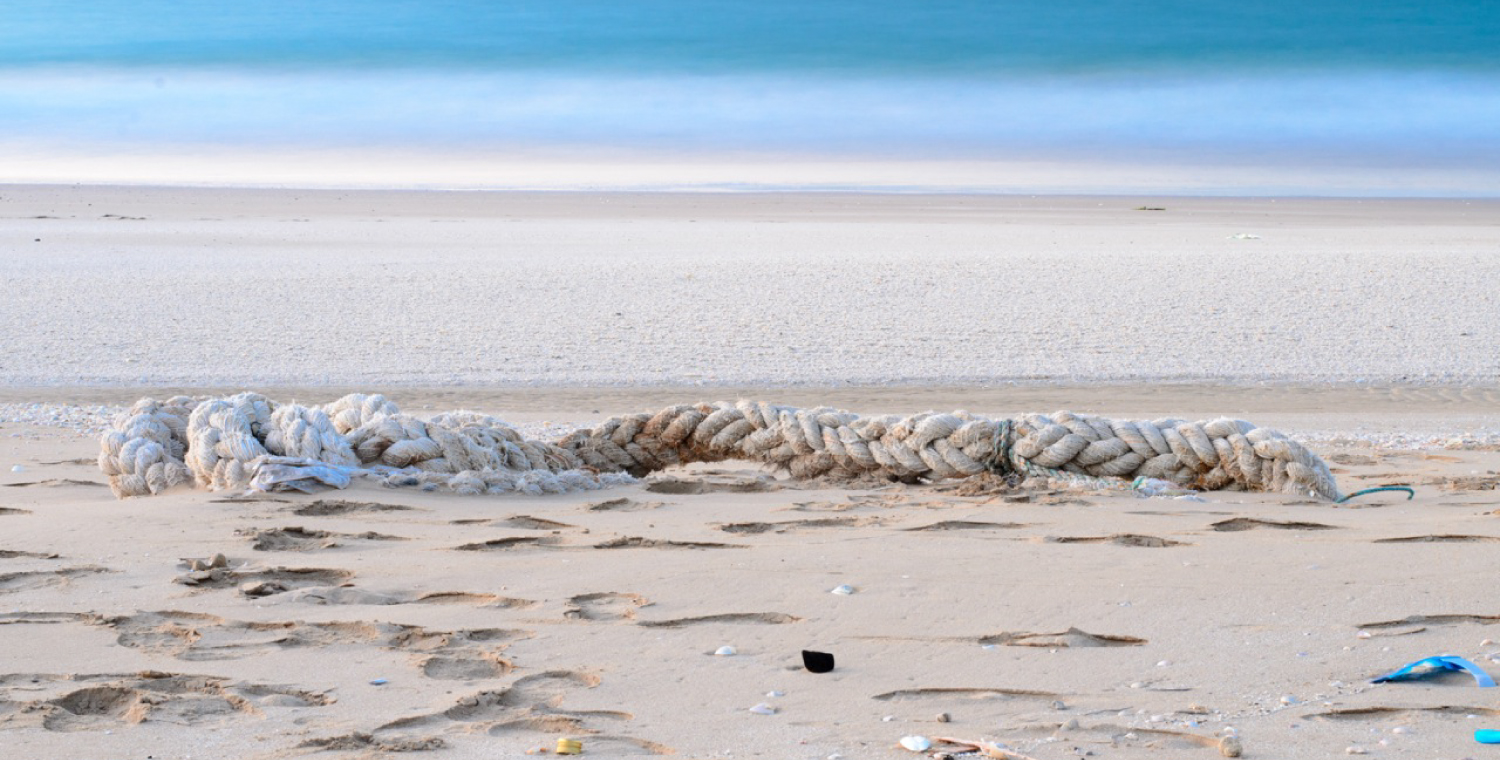
Photograph Courtesy: Sharbeen Sarash © All Rights Reserved