
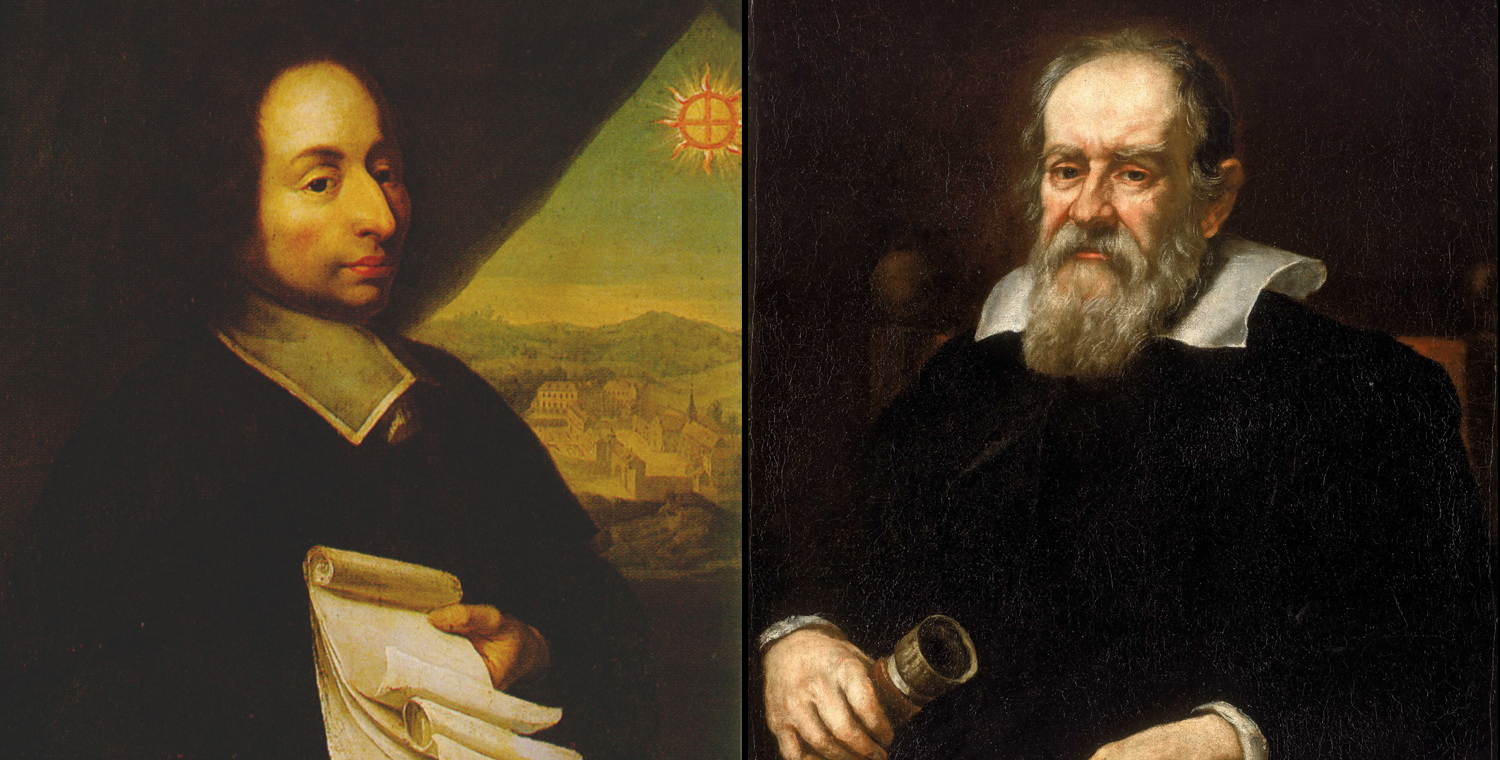
The history of philosophical persecution is an odd reflection on the human personality. In Pensées, Blaise Pascal asks man to “hate self”. This call for self-loathing is repeated and discussed at length throughout his work. It is rooted in an understanding of the physical world as low and corrupt. “Man is nothing compared to the infinite”, he writes. Human beings are low, he concludes, because they are finite. Their relationship with God/infinity is their only source of salvation. Pascal outlines an unsubstantiated graded hierarchy with God on top, nature at the bottom and man dwindling in between – at some mystical half-way point somewhere between heaven and hell. For these ideas, Pascal was never persecuted.
Not all thinkers share the same luxurious fate though. Just over one thousand years ago, and 701 years before the birth of Pascal, in Baghdad, a wrinkled old man was chopped to pieces for claiming “ana al-haq” – I am the truth. Like Pascal, the great Sufi saint, Mansoor al-Hallaj, had a strong faith in God. Like Pascal, he spoke at length about the relationship between man and God. Unlike Pascal, he claimed that God and man (creation and created) were one. He drew no dividing line between man and his maker (or anything else for that matter). For this, he was brutally punished. The difference between Hallaj’s devotion and that of Pascal might seem trivial. However, they have deep philosophical and practical purport.
Hallaj is part of a long line of philosophers who paid a considerable price for their thoughts: Socrates was forced to drink hemlock. Jesus Christ died on the cross. Voltaire spent his life in and out of exile. M. K. Gandhi was assassinated. Henry David Thoreau was put behind bars. Even Albert Einstein, for his dabbling interest in philosophy, was made a constant object of surveillance by the CIA. Life has never been easy for the probing philosopher.
However, these personalities have more in common than the mere habit of critical thinking. Each, in a different way, put forward a thesis of absolute egalitarianism: Hallaj argued that God and man are equal. Socrates held that all human beings have an equal capacity for reason. Christ held that all human beings are one and have an equal chance at salvation. Gandhi determined that Hindus and Muslims in South Asia are one people. Voltaire, followed more forcefully by Thoreau, argued that all men possess the right to equal treatment under the law. Einstein argued that the rich and the poor must have equal power and equal access to resources. These men were not murderers, rapists, or even cult leaders. Still, each was met with the fiercest punishment society had to offer.
Pascal’s contemporary, Galileo Galilei, for example, was tried by the inquisition for heresy and forced to spend the end of his life under house arrest for a tract of ideas that challenged the preeminent position of man in the natural world. Unlike Pascal, Galilei’s views were deeply challenging to the contemporary order which depended upon the thesis of man’s superiority over nature. Pascal’s thesis was directly responding to the breakdown of the authority of the Catholic church, which figures like Galilei made possible.
Why are egalitarian arguments this dangerous?
The imagination of difference facilitates power and hierarchy, while the acceptance of any form of equality or unity defies power and order. Pascal grounds his work in self-hate. This self-hate functions as an efficient mechanism of fracture, which forms a foundation for difference and thereby hierarchy. Ultimately, Pascal is setting the grounds for a top-down order by arbitrarily etching order onto the blank canvas of metaphysics. His ideas present no challenge to authority. Galilei, on the other hand, by positing an earth that revolves around the sun and making demands for objective observation of the world beyond invented orders, offers a direct attack on the building blocks of authority and hierarchy.
This is what makes Galilei, Hallaj and their fellow egalitarians so dangerous to the status quo: in their successful questioning of arbitrary differentiation, they are implicated in a direct challenge of power and authority – at all levels. This does not mean that they simply pit themselves against the established institutions of authority. More subversively, they find themselves pitted against contemporary stereotypes and prejudices of the human mind that find comfort in the assumption of difference. These stereotypes, though ignorant, are often convenient.
Stereotypes and prejudice offer some sort of illusory reassurance and validation – both for oppressed and oppressor. They allow people to assume that those who serve, serve for a reason, and those who lead, lead for a reason. As Gandhi argued, the average British citizen could live with the imperialism of her state because she was convinced that those who were being colonized were less. A plethora of arguments, including the “White Man’s Burden,” were put forward to facilitate this assumption. Similarly, the assumption that women are weaker, or somehow more vulnerable than men, has had a significant impact on what people can and cannot assume or justify in the condition and treatment of women.
These stereotypes, based on graded differentiation are invented through the construction of arbitrary value and then preserved by social ritual. Standards of femininity and masculinity are invented and then validated and ranked through standards of clothing, tastes, conduct and physical constitution.
The caste “system” in general and “untouchability” in particular serve as, perhaps, the most extreme example of how social ritual is used to preserve and protect false hierarchy. Today, as a result of the success of the mythology of caste, most members of the Indian elite have little awareness of the millions of men and women in this country who are charged with cleaning sewers, making leather and weaving cloth. Though, each and every member of Indian society is deeply aware of the spurious (though still shockingly prevalent) ideas that lead to this unforgivable chasm in humanity. Here too, there is a fundamental metaphysics of difference, founded in an arbitrary theorization of nature that fuels hierarchy and thereby allows for the justification of violence, subjugation and inequity.
The reason why such theory is encouraged is that the imagination of difference, through the generation of spurious philosophy, allows for conquest that does not tax the conscience. Oppression stems from metaphysics of difference. Such imaginings are dangerous–the ultimate cost of rigor is a price paid by all humanity; people are forced to accept invented categories that infect natural functions of logic and reason.
In the natural world, universal rules of difference can only be assumed or accepted under duress. They cannot be deduced or demonstrated. Additionally, all comparisons used to systemize difference are elusive. There are infinite points of comparison within an object, or between sets of objects. The logic of comparisons is never fixed. It can be constantly challenged and altered. Scales of comparison are also invented, and often driven by utilitarian or political concerns. The assumption of any kind of categorical difference lacks rigor.
Human beings have yet to shake the basic anxiety that comes with ignorance. We do not know, so we pretend to know. The gesture of authority is ultimately a gesture of pretense. Is there really any substantive motivation that allows Pascal to assume that the natural world is low and corrupt? Or to imagine a specific kind of God that invents such a world? Even if this choice can be justified, surely in a world of as diverse as ours, one will have to admit this choice remains one amongst many.
The power of egalitarian arguments or arguments that posit unity is that they form the starting point for all thinking. When you wipe the ontological slate clean, you get equality. Despite the variety of life, it is difficult to deny that there is something that all of nature shares in common. Even Pascal would not deny this and therefore must concede that a proportion of man partakes in the natural world. Any step further than this seems like conjecture.
Accepting an egalitarian argument means accepting the fact that we choose our order. It is not pre-constructed for us. The world does not come with a detailed handbook that instructs, for example, men are lower than God, man is distinct from nature, people should be graded by income and profession or by sexual organs. We are born to the world, and we supply and adopt our own values and interpretations. Even if there were some primordial order, we have no way of being sure of what it might look like.
Still, people insist on conjecture because egalitarian arguments are daunting and uncomfortable. They force the individual to accept a basic threshold of ignorance and uncertainty. Science has changed this in many ways because, as many contemporary scientists suggest, science thrives on uncertainty. For this reason, fewer philosophers die brutal deaths in the current era. However, the relation between science and uncertainty would also explain the phenomenon of religious fundamentalism, the global war on terror and the increasing rift between science and religion. Religion, in its demand for certainty, is perhaps the new ground for philosophical persecution.
However, this is not satisfying because the fundamental problem that motivated the persecution of philosophers remains: the human inability to take responsibility. If we are all equal, then from our carnivorous diets to the persistence of human poverty, we remain accountable for all our human ills. There is no logic that can save us from the trace of our own violence. We must either pick non-violence or delusion. If we pick neither, insanity might be the only natural conclusion. Science, while it thrives on uncertainty, is no help in this matter, as it is forever tempted to theorize a force or a chemical as the cause of everything, including human action. We are far away from Pascal and closer to Galileo, but no further away from blinding dogma. One step forward and two steps back.
The argument for equality ultimately means taking responsibility. Taking responsibility requires a basic degree of maturity. Certainly, in its short span of existence, humanity has matured and therefore egalitarian arguments have made some progress. However, there is a long road ahead, filled with growing pains. On this path, the past serves as an important reminder of the manner in which fear and ignorance lead to the persecution of exactly those figures who stand to teach us the most.