

Jazz City brings India-Bangladesh relations back in focus at a tricky time in history
The Bangladesh Liberation War of 1971, oddly, has never really been a major subject of interest for Indian filmmakers. Especially filmmakers from West Bengal. Most of what has been made, JP Dutta’s Border, for example, or Amrit Sagar’s 1971 or Meghna Gulzar’s Raazi, are concerned with India’s western border. The story in Bangladesh, understandably, is very different.
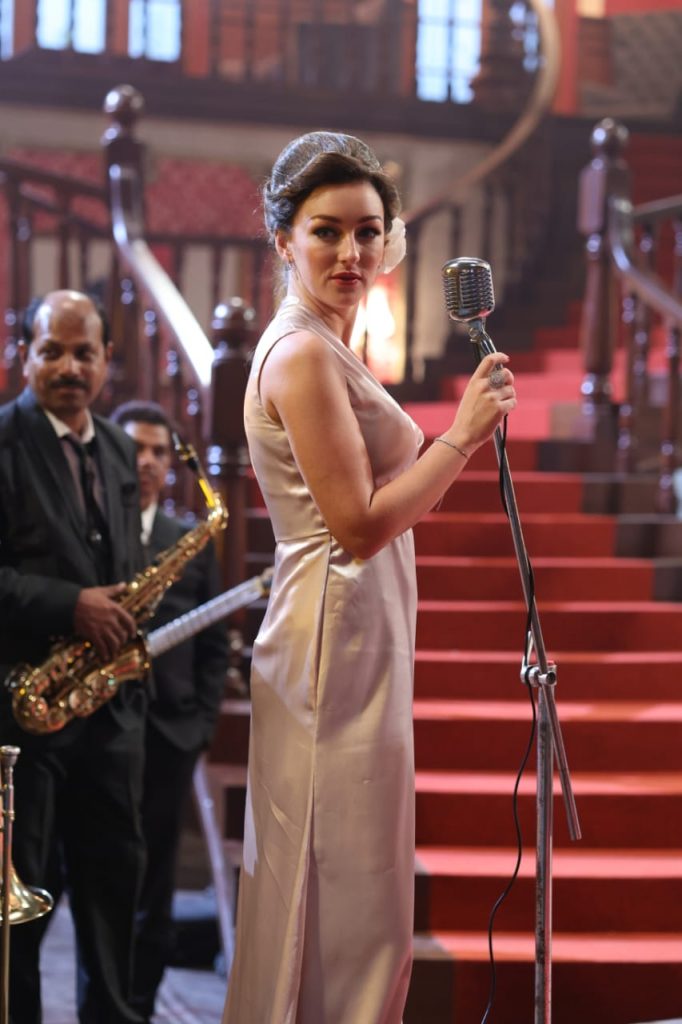
Soumik Sen’s Jazz City, not a film but a ten-episode series—the first season is out, the second is awaited—fills that gap to an extent. Not as a documentary-style retelling, but an entertaining thriller set primarily in a jazz bar in a posh Kolkata neighbourhood with characters you come to really care for, but always with the war front and centre of the narrative. The reviews have been positive. And that it brings the 1971 war as well as the citizenship issue in West Bengal into focus, the first directly and the second indirectly, at a curious time in history with an ambitious and culturally aware tale is what makes it important.
I am sure you started planning Jazz City a while ago, but was it meant to be out now, with the Special Intensive Revision (SIR) becoming such a contentious issue in West Bengal ahead of the elections in late April?
Absolutely not. I had been working on the story and the pre-production for seven years or so. So no, I certainly don’t have that sort of foresight.
It’s also curious that I wrote certain things without knowing that they had happened. For example, there is a character in the show, of a filmmaker, who is murdered. There was really a filmmaker in Bangladesh, quite a legend there, called Ziaur Raihan, who moved to Calcutta and worked for the liberation and then disappeared. He documented the genocide. He is a huge name there. But I had no clue about him. I wrote the character without any knowledge of Raihan.
Why do you think the 1971 war, especially the events in Bangladesh, has never interested Indian filmmakers much?
Yes, we have only seen the 1971 war through the lens of the western border of India. Most recently, there was Ikkis, but that is largely about a tank battle. Everything is about the western border. Which is true of Indian films vis-à-vis Partition as well. This is because the Bombay film industry is primarily a Punjabi-run industry. Think about JP Dutta. And fair play to him. Bengali filmmakers have largely stayed away from the subject. And I don’t know why that is so. I have asked that question myself. But at least now I have made a start.
Why haven’t war films been made in Bengal… maybe budget has been an issue. Bengali films are not made with the kind of budgets you need for a war movie. But even that can be worked around. I recall Ritwik Ghatak’s Durbar Goti Padma, but that was a short film. Not anything else by filmmakers from West Bengal. Though Partition and the refugee crisis have been dealt with to an extent.
Was the subject one that you have wanted to work with for a while?
I was born and brought up in Kolkata, in Park Street actually, and grew up around jazz and rock, being taught by Jesuit priests in school. And till the age of forty, I had no clue that the largest genocide in south-east Asia had taken place less than a hundred-or-so kilometres from where I grew up. People were giving up their lives to protect their language. Till 1971, Bangla was a language, and after 1971, it became a nation. And we had nothing of this in our school history books. Maybe because of political reasons, we just chose not to talk about it.
I can’t tell you why this is so. Maybe it just opens up old wounds for people—let’s look at a new tomorrow, not talk about the past. But whatever the reason might be, it’s criminal to not talk about 1971 in India. I am not talking about Bangladesh, which celebrates the liberation war in every way possible. But India. And it is perhaps India’s most famous achievement on the battlefield.
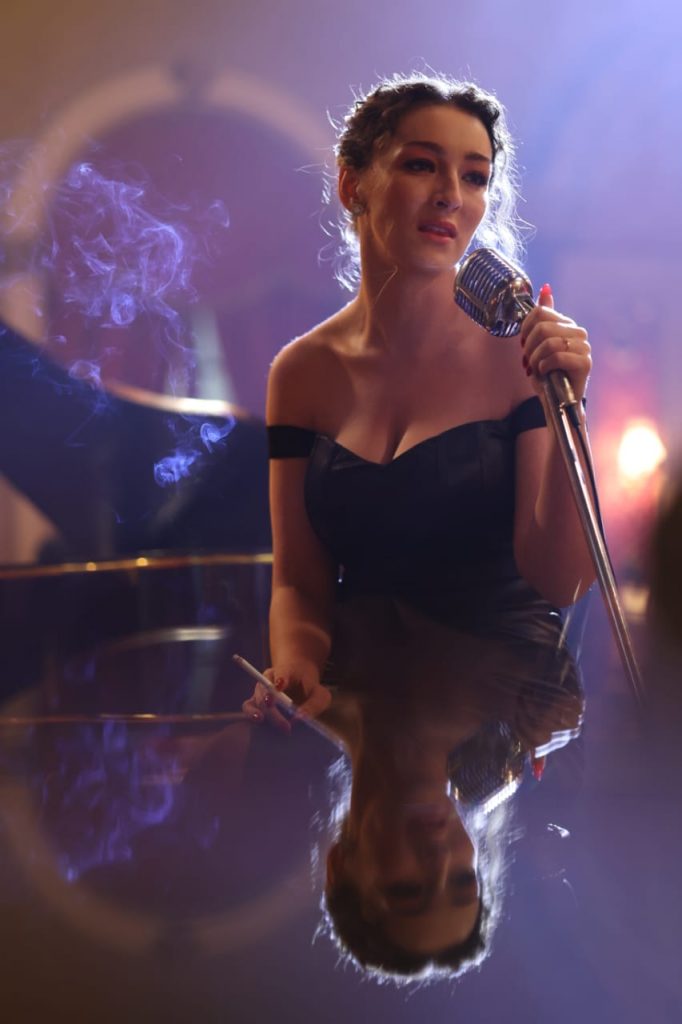
So all of that, plus my love for jazz, and music in general… this is the project I have been closest to when it comes to my home and my mother and my motherland. Mahalaya was close to home too, and Bengalis relate to it, it’s part of our culture. But Jazz City is who I am. It’s disgraceful that I was oblivious to the genocide just across the border, the mass rape and the killings. All we know is that there was a battle and we won it.
Could there have been a political motive—I can’t say what—to not talk too much about the war of liberation?
There could be a reason that could be political, which I don’t want to get into because I don’t know enough. Perhaps if you don’t talk about Operation Searchlight, if you don’t talk about the genocide, it keeps a certain narrative alive.
The relations between India and Pakistan, you mean?
I don’t know, I can’t say. But there could very well have been a strong reason to not explore in depth a story that completely vilifies a neighbouring nation. So, maybe, you’re told to kind of take it easy.
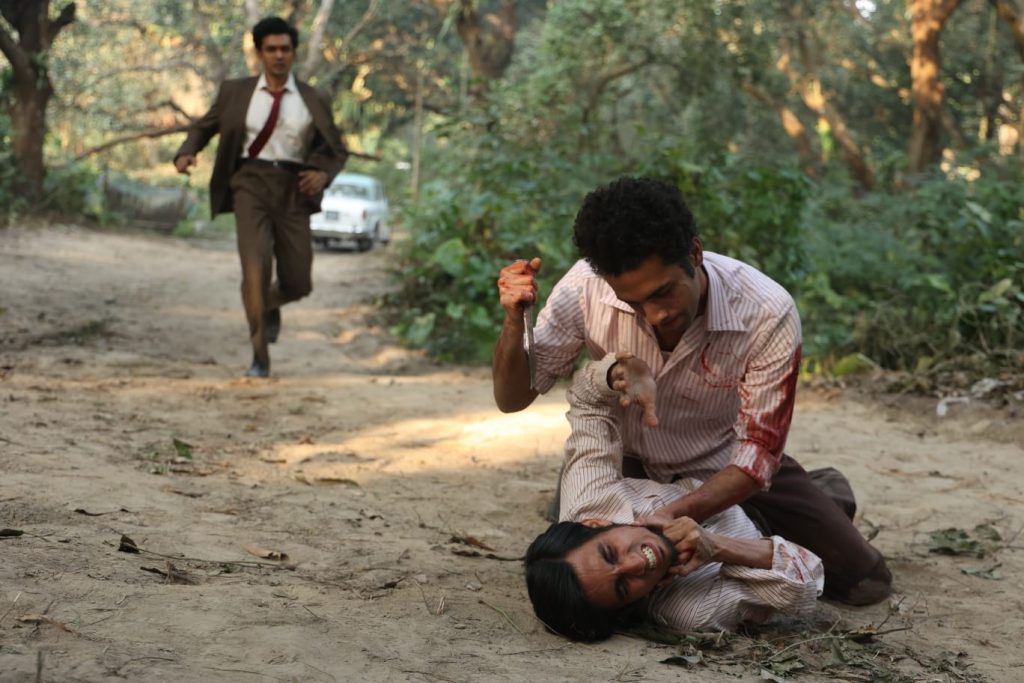
It’s interesting you should say that. Because, in India today, it’s fashionable, and perhaps beneficial, for filmmakers to paint Pakistan as the ultimate villain. And this film does that too, in a different way and in a different context. At the same time, our liberal sympathies are often with Pakistan. Where do you stand in that spectrum?
Okay, so let me start with a story. I understand the love the film has got in Bangladesh, they have loved Arifin (Shuvo, the Bangladeshi actor who plays the lead in Jazz City) and even among viewers in West Bengal. But there is a Pakistani film producer who reached out to me on social media to say that he loved the show. That was surprising. They know what they did. Yes. But there has been no formal apology from Pakistan for what happened. The word ‘genocide’ has never been said. Officially, there has been radio silence from Pakistan. [Ed: Parvez Musharraf, on a 2002 visit to Bangladesh, had said he “deeply regretted” what had happened.]
And my politics vis-à-vis Pakistan is very, very clear. It is there in two lines in Jazz City: “Pakistan is not a country with an army. It’s an army with a country.” It is a country whose entire military budget is a functionality of being a constant threat to India. And the politics is essentially a fallout of the economics. For a very long time, India has tried to be friendly and, you know, certain governments have come and said, you know, let’s trade. And let’s exchange culture and all of that. And it’s not worked.
There have been films about 1971 that look at it as a battle of equals. India versus Pakistan, both sides kill each other and all that. While that might be true for 1965, while that might even be true of the Kargil War, it is not true for 1971. In 1971, India helped liberate a nation, helped a majority come out of the clutches of a genocidal and feudal minority. I have a problem with that. Because you cannot make a film on the 1971 war without recounting what happened during Operation Searchlight. Read. Read Susan Brown Miller’s book (Against Our Will: Men, Women and Rape, 1975). There is so much in Bangla.
Imran Khan, in fact, had made a national address in 2023 about Operation Searchlight and how the details were kept away from the people and had only resurfaced much later in the Indian media. That speech is available to watch on YouTube.
And, just a matter of detail, the painting that you see behind General Hanif is actually a replica of a painting by Adolf Hitler. So now, that’s a detail that is for me to know. Audience doesn’t need to know. I just thought it adds to the context, and you tell the actor concerned, and it makes a difference.
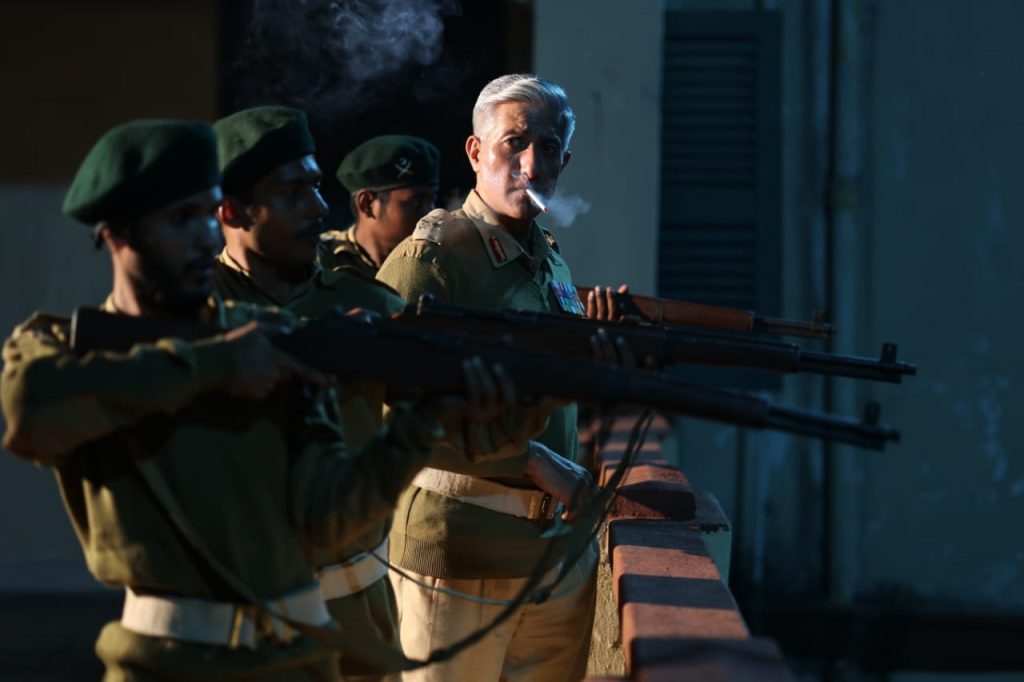
Coming to the film itself, was it always meant to be an entertainer, a thriller?
See, I knew the politics had to be in the foreground. That’s how it begins. And then it sets you a context. But it is also the story of somebody like me: unaware. Which is Jimmy Roy. Going from happy hour to happy hour—weekend guys, right, who really don’t want to know what’s happening. Social media these days. We are literally the same, just from another time. Desensitised. We see images of the genocide in Gaza, but does it stop us from shopping for a buy-one-get-one-free? That’s our reality.
But if there is an opportunity to tell people that this is what happened… well, this is what it was. Of course, you draw people in with entertainment. And then, if it’s possible, through music and through the narrative and the story, if it touches people at a certain level, Bengalis more than others, then it’s enough.
The music, especially, really appealed to me. The jazz bits seemed to find in nicely with the mood. And there were the beautiful renditions of well-known Bengali songs.
All the jazz is original. A bunch of composers have composed it: Deeptarko, Srinjay Banerjee, Amyt Dutta, Shrea Suresh, Anurag Naidu, Sebastian Andrade and myself. I’ve written all the songs, they’re all original. Songs which talk about Calcutta, songs which are intrinsic to the narrative, like ‘What’s His Name’, which talks about melodies. And of course, ‘City of Jazz’, the two versions of it. So, yeah, that’s the jazz bit. And, of course, working with maestros like the ones that I’ve named brings a range of different feels to the soundtrack, which was intentional.
The Bangla part of the music is all produced and created by Arka Mukherjee. There’s no bigger musical genius than him in the city. That is completely his. He has, you know, chosen most of the voices, be it Krishti or Taishi Nandi. Arka himself has sung. The ‘Ekushe February’ song, I wanted it to be in a manner which has not been done, so it’s sung in Spanish and German and Nepali and Urdu. The Bengali film song ‘Hoyto Tomari Jonnyo’ had come out in 1969. So there was an opportunity to kind of weave that in into the time that we were speaking of.
I want to talk about the song ‘Eka mor gaaner tori’ and Krishni’s aalap, which are both on the same raag. It was intentionally meant to be that one song triggers the other stuff. All these songs have their own spaces and they’re all specific to what they’re talking about. These were consciously written the way they are.
And the reception has largely been positive. Does it count as a success for you?
I think that depends on how you define success. It has reached the target audience and is loved by every Bengali that I know. So that is success. This is a niche show. And now it’s there, right? It’s not going away. People will keep discovering it. And I know that this will be looked upon as a ground-breaking work.
And there must be voices from Bangladesh asking: why is India telling our story? But I am from Calcutta and I am from India and this is my land. So this is the way I can tell the story with all my honesty. People in Bangladesh might say they would have preferred to see the perspective from Bangladesh. But, just like Letters from Iwo Jima, this tells the story from both perspectives. It has the Bangladesh perspective. But then it wouldn’t be Jazz City if it wasn’t the Calcutta perspective and the Park Street perspective.
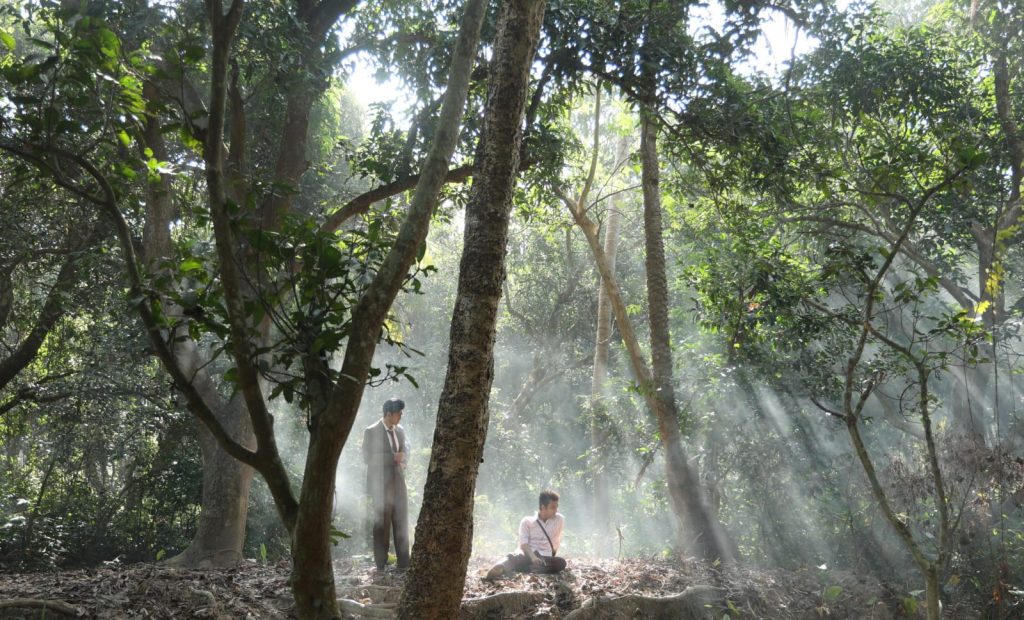
We touched upon this briefly earlier—how historically accurate is it?
It’s not meant to be a documentary, but a lot of the incidents are true. For example, the scene of burning the screen in a Calcutta theatre… because Dev Anand was starring in a film [Prem Pujari, 1970] which had the Chinese as the villains. Students coming and burning the screen saying it’s anti-Mao propaganda did happen. And I have mapped it to exactly the time when it happened. The assassination attempt on Mujib [Mujibur Rahman, in 1969 and 1970], and all these things are accurate.
It’s a little like A Tale of Two Cities, right? The history is there, and it pretty much follows the right chronology. We know of the Agartala Conspiracy Case [in 1968]; we know of Cyclone Bhola in 1970; we know of Mujib winning the 1970 election by whatever margin [167 to Zulfiqar Ali Bhutto’s 86, an absolute majority], and then of course leading up to Operation Searchlight. The idea of a man shooting the genocide and the tape getting destroyed was my imagination. I get to know after the show has been made that it is actually fact. How crazy is that?
And it is deeply personal. It is my mother’s story—of course, her family had moved to Calcutta from Khulna many years ago, and my biggest regret is that she couldn’t watch Jazz City; I lost her one month into the production. But her voice is there. In Episode Three, when there’s a voice playing on the radio, that voice is my mother singing to me—she sent it on WhatsApp. So that was special.