
From the Editor’s Desk
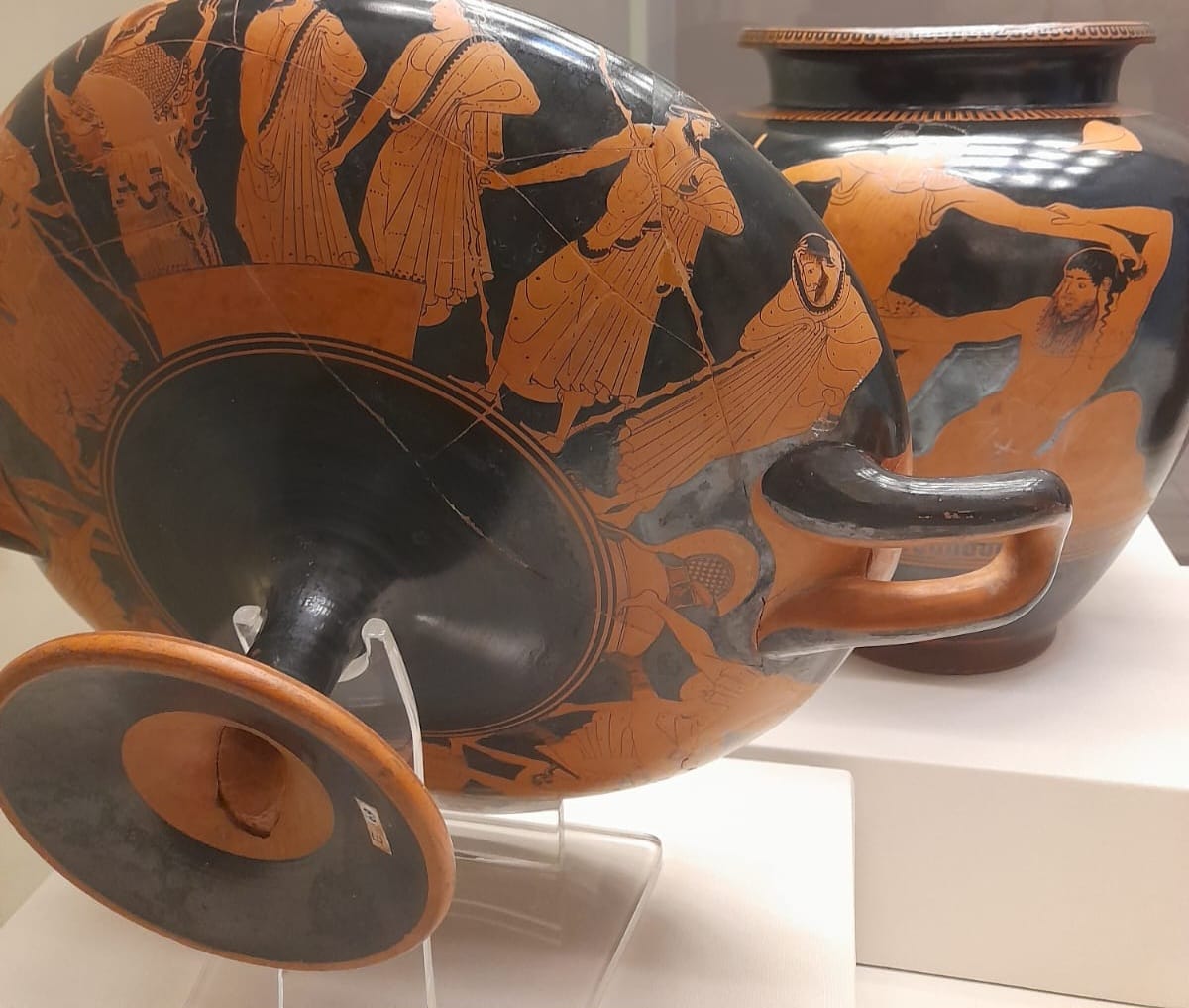
I read “Ode on a Grecian Urn” by John Keats in my school text books. That was decades ago, into a now-hoary past. But the image – of circularity, of individuality and collectiveness, of fragmentariness and completion – has stayed with me. The stories on these urns and amphoras, or on pillars seen in ancient Hindu temples, have continuity beyond the images apparent to the eyes. One has to go round the urn or the pillar, to see that the images are connected, not disparate, though each panel might tell its own story. And yet, they do not tell the whole story, only flashes of the life and of the people and of a time …
“Ye cannot live for yourselves; a thousand fibers connect you with your fellowmen, and among those fibers, as along sympathetic threads, run your actions as causes, and return to you as effects,” said Henry Melville, in a sermon in 1855.
It may be a cliché to say that the world is but a speck floating in the cosmos, too insignificant in the larger scheme of things, yet that is the only speck that holds us all together. We forget it too quickly, too often, too devastatingly. We forget that the dust winds of the Sahara are closely connected with the rainforest in Amazon. That increasing deforestation in the tropics have a connection with melting polar ice. We forget that the flames of hatred in one part of a country engulf the soul of entire nations. Or that the pardoning of rape in one corner of the world is the humiliation and abuse of victims in every corner and breath of the rest of the world. That dreams that take shape in one mind have the power to change the course of human history.
Bringing together a collection of stories from writers across the world in a literary magazine that publishes stories every alternate month, seems to be a presumptuous act. To string together diverse stories that were not meant to come together within the digital pages of a particular issue. And yet, as I read these stories, they seem to speak to me in a way that holds them together, lends them a kind of continuity. And so, this special issue where they speak to one another, through one another, conveying that sense of the ‘connectedness of everything’.
These stories are thematically and stylistically different, but as stories do, they cover a range of human situations and emotions. Many of them carry an underlying tone of something missing that needs only a healing touch to make it complete; of the redemptive power of love, whether eternal or ephemeral. Of compassion that rescues and revives. Of the fantastical and the magical. Of self-discovery and realization.
In “Promises, Power and Pain” , a man steps into his wife’s shoes and learns, for the first time, what it takes to care for his specially-abled child – parenting, the needs of children, the pressures and the uncertainties. “Strawberry Juice” , is a modern tale, a sinister take on shooting, mayhem, and bloodshed told through the eyes of a rabbit in a school classroom. In “The Purple Ceiling” , a woman, once a prostitute in war-torn times, finds herself overwhelmed by a singer’s confession on television about how she had inspired the most popular song he had written, by the realization that she had been loved in one of the darkest phases in her life.
In “Tracks” , three characters, disturbed in their life and mind, come to one another’s rescue through simple acts of compassion. A brother and sister die in a bomb blast in “Witness” . Their lives as they lived under their father’s oppressive thumb is both flashback and reconciliation as the sister falls to her death. In “Cigarettes and Practical Pumps” , preconceived biases and other presumptions determine how the characters behave, not their inner compulsions or who they actually are. But connect the dots, and we see the real individuals, their inner struggles.
“Antipodal Sundays” is an almost fantastical tale about the world as not on a journey of destruction but as being connected in ways we do not realize, as of cousins joined at the hip through climate and weather and feelings, and bodily responses.
Each story continues beyond these pages into a world they help us imagine, beckoning us into the known and the unknown, creating a mosaic of lived-ness. It is not possible to list all the stories here, but there is no hierarchy in this choice of a few. Just the compulsions and restrictions of the editorial that should not distract from the stories themselves.
And so, let me end with these words from one of the stories:
We hope you’ll dig your heels into these stories, dear readers. Walk in their shoes, let them remind you that writers, readers, characters, places, events, emotions, reactions, responses …. Well, the simple fact: We’re all connected.
Sucharita Dutta-Asane
Fiction Editor, The Bangalore Review