

Sonja walks down the aisle, a rack of queen/king sheets on hangers on one side, curtains on the other. A huge stuffed teddy bear flops over the top of the rack. Its embroidered paws slump low over a set of maroon sheets. She pauses two paces down at a single slate-blue curtain panel, thin ruched fabric with a lustrous almost-shine. The fluorescent bulbs suspended from the ceiling cast a thin light over everything, but she knows the panel will glow during a photoshoot. She holds two fluffy pillows in the crook of her arm, musty with a floral overtone. Looking closer, the blue curtain panel isn’t a good color match after all. A small stain mars the edge near the hem. She examines the yellow tag attached to the price tag: This article contains secondhand material consisting of contents unknown. Sanitized by TVI Savers Inc #5109. She catches herself in a full-length mirror leaning against the wall at the end of the aisle. The pillows hugged to her chest cover most of her torso. A halo of frizz has escaped her headband. Even indoors, she cannot tame her hair in this summer’s heat.
She shuffles down the aisle, sizing up which curtains might double as props or something photographers can find another use for during a shoot. Some panels, she might hang on the wall. Her studio would benefit from having an abundance of fabric to complement the props already there.
***
Fleur walks down the last textiles aisle between throw blankets and shelves of small single-purpose kitchen appliances: a cake-pop maker, quesadilla maker, hardboiled egg cooker, mini waffle iron. A hand-lettered sign over the appliances reads Tested & Sold As Is. She fingers the blankets, uncertain what coziness she is looking for but certain she will find it. The county senior living apartment where her grandmother now lives is perpetually chilly. The building-controlled air and heat blow weakly from large vents on each room’s ceiling.
Green price tags and yellow tags with text she does not read dangle in a neat row from the bottom of each blanket. She moves down the aisle, sizing up colors and textures.
A shiny gold dress hangs over a nubby plaid blanket, a cast-off by another shopper who chose between bedding and an evening gown. Fleur snatches the dress as though a crowd were after it, although she is alone in the aisle. It is stretchy, a one-size-fits-all that smells of a distant basement. The dress is a sign. She loops it over her purse. A photography studio twenty minutes from home is looking for models. Models wanted, paid photo shoots, fine art nudes and glamor, a new event series, the ad said. She’d searched Google for fine art nudes, the images coming back like something from a museum or a coffee table book. The models were naked but their bodies formed art rather than sex. Google said glamor photography meant soft lighting, boudoir, Playboy. Another link brought up a movie still of Marilyn Monroe in a gold lamè dress. The exact misplaced dress that she needs in the exact aisle where she’s browsing is a sign that she should audition. She had a few reservations about trying out, but they’ve disappeared. The dress has made the decision for her. If modeling goes well, she will surprise her grandmother with a seat on the senior center’s rented bus for a day trip to play the slots in Atlantic City.
***
Luca walks in the aisle between children’s bikes and sporting goods. He wears a safety-yellow vest with the word STAFF printed in red letters across the back. He turns a corner, discovers a boy taking things off a shelf and dropping them into a careless pile: a battered Louisville Slugger, plastic football, two ping-pong paddles wrapped in a net and sealed with tape, a soccer ball. The boy has a smear of something on the front of his shirt. No mother or older sibling browses nearby. The boy kicks the soccer ball down the aisle into women’s blouses. An electric bass rhythm booms from someone testing a speaker three aisles over in electronics.
Luca sighs and brushes bangs in need of a trim out of his face. The boy chases after the ball and disappears into the women’s section. Luca scoops the pile with both hands, returns the items to the shelf. Sporting goods are not organized like the aisles of books or neat shelves of sold-as-is kitchenware. His favorite is the expanse of clear glass, an amalgam of candy dishes and holiday serving bowls. He heads toward the front of the store where there are fewer disastrous racks to organize. He will open another cash register. Someone else will straighten the aisles. He often marvels at how someone once newly purchased each item in the store. There are people out there who purchase everything new.
***
Sonja’s foot brushes something hidden beneath the curtain panels. The iridescent champagne corner of an ottoman peeks out from beneath velvet blackout drapes. She moves it into the aisle with her foot. It is the ideal studio prop: she would not decorate her home in such a stylized way, but it is the perfect accent piece for someone to perch upon for a photoshoot. She scoops it up with her free arm. and backtracks to the slate-blue curtain panel. The stain near the edge is small enough to ignore. She shifts the pillows and considers the scenes she can create with these items against the newly painted tan wall in her largest studio.
The scenes I can create, she thinks with the flash-frozen image of a long-ago director in her mind. She once stood among a line of desperate women auditioning for an off-Broadway production of Chicago, identical in black fishnets and low-heeled T-strap dance shoes. Pick me, love me, I’ll do anything. She did not get the part. Instead, she came away wanting to be the one holding the clipboard. She wanted to be the one to pick, the one to dole out acceptance, the one in charge. Opening a studio fit the bill, and it took her out of fishnets.
***
Fleur’s fingers rest on a blanket’s fold: emerald, sunshine, tangerine, cream, brown. She slides the blanket off the hanger. A peacock head and half of a fanned tail are visible, bordered by earthen brown. Something blooms within her chest. She unfolds its flowing length, voluminous and coarse against her bare arms, and drapes it over the rack to take it in. The blanket is childhood in her grandmother’s old city apartment where the trash chute smelled like sweetly rotting fruit. A circle of peacocks faces the center, bordered by elegant brown curlicues. A similar blanket lay folded over the back of her grandmother’s mission-style couch as they watched TV together after school on the days when they waited for Fleur’s mother’s work visa to be approved. It is a piece of her grandmother’s country sold in bodegas for the homesick. She will bring this blanket to her grandmother’s county senior living apartment. They will sit beneath it together on the mission-style couch from Fleur’s childhood, watching reruns because Fleur’s grandmother does not have cable, a bowl of Doritos between them and a Diet Dr. Pepper on each of the couch’s armrests, still waiting for Fleur’s mother’s work visa to be approved.
***
Sonja now pushes a cart overflowing with the ottoman, the pillows, the slate-blue curtain panel, and a comforter the shade of a wild fox. With the pillows beneath her arm, carrying everything and browsing without a cart had been cumbersome. She passes the blankets and kitchen appliances. An attractive woman stands at the end of the aisle nearest Sonja, a swath of gold fabric hanging from her purse. The woman refolds a colorful blanket. Sonja catches a glimpse of peacocks, spread tails in a circle, the striking color palette she recognizes from somewhere she cannot place. “It’s beautiful,” she says to the woman. Sonja glances at the gold fabric, the spaghetti straps. She could be collecting models for future events. However, in her yoga pants from Target, she is far from a model scout. She says nothing.
“Thank you. I remember this kind of blanket from childhood. I’m surprised something like this ended up here.”
“Same. This one hardly even looks used,” Sonja responds, gesturing to the wild fox in her cart. “Yours either. They’re both like new.” The two women smile close-lipped while nodding in the way one can end a conversation with a stranger without words.
Sonja adds up the cost of the comforter, the pillows, whatever else for the set she’s designing that might catch her eye as she moves toward the line at the registers. Studio business slows in the summer when photographers shoot outside for free. With three tickets to the modeling photo event left to sell and a razor-thin margin, she’s made only enough to pay the model, cover these props, and get refreshments for the photographers.
At the register she tells the cashier she’s organizing a photoshoot event as an explanation for the fur comforter and the fluffy pillows in the dead of summer. “Do you like photography?” she asks. She is not above mentioning models to men she encounters in the wild. Anyone might own a camera. Rent has increased. Groceries cost more than they did last summer. It doesn’t hurt to ask.
“I like photography,” the cashier says in a low voice. He straightens his safety-yellow vest.
“Awesome,” she says, smiling. He is a potential ticket sale, a potential studio client. “There’s a group shooting a model at my studio on the 20th. I’m starting a whole series with different curated sets and different models. That’s what this stuff is for.” She strokes the wild fox’s fur. “What do you shoot?”
“I used to shoot portraits,” he says, brushing his bangs out of his eyes.
“What do you shoot now?” she asks. He scans a fluffy white pillow and moves it down the belt to make room for the blanket.
“Nothing,” he says. “My camera was stolen.”
“Are you getting another one? You’ve got to check out my studio, let me give you my card.” She digs in her purse for a card. He could get a camera. He could fill a small gap during her slowest season. He examines the card. “Put it in your pocket,” she says. He tucks it into the pocket of his safety-yellow vest. Sonja pays, stuffs the expanses of fluff and fur back into the cart. They do not provide bags here.
Whenever he buys a camera, he will know her studio is out there. Everyone is a potential client. She will manage her studio clients who shoot portrait and families, and have nothing to do with models. She will build sets and hire models, set up the lighting, and advertise this new series where the only thing the photographer has to do is press the shutter. And when photographers gravitate back to studios in the fall and winter, it is in this way that she will keep the studio afloat. Maybe the cashier will be one of them.
***
Luca does not mention last winter to the woman, when his roommate disappeared with his laptop, camera, and the documents necessary to steal his identity. With a drained bank account and a retail clerk’s paycheck, he has not been able to replace either of the three or even see a way to do so.
He stands behind the Small Electronics counter before closing. A woman wanders over, head bent to examine the items in one of the glass display cases. A blanket is neatly folded over one arm, topped by a gold dress. She is beautiful. Luca stares at her, hoping she will look up.
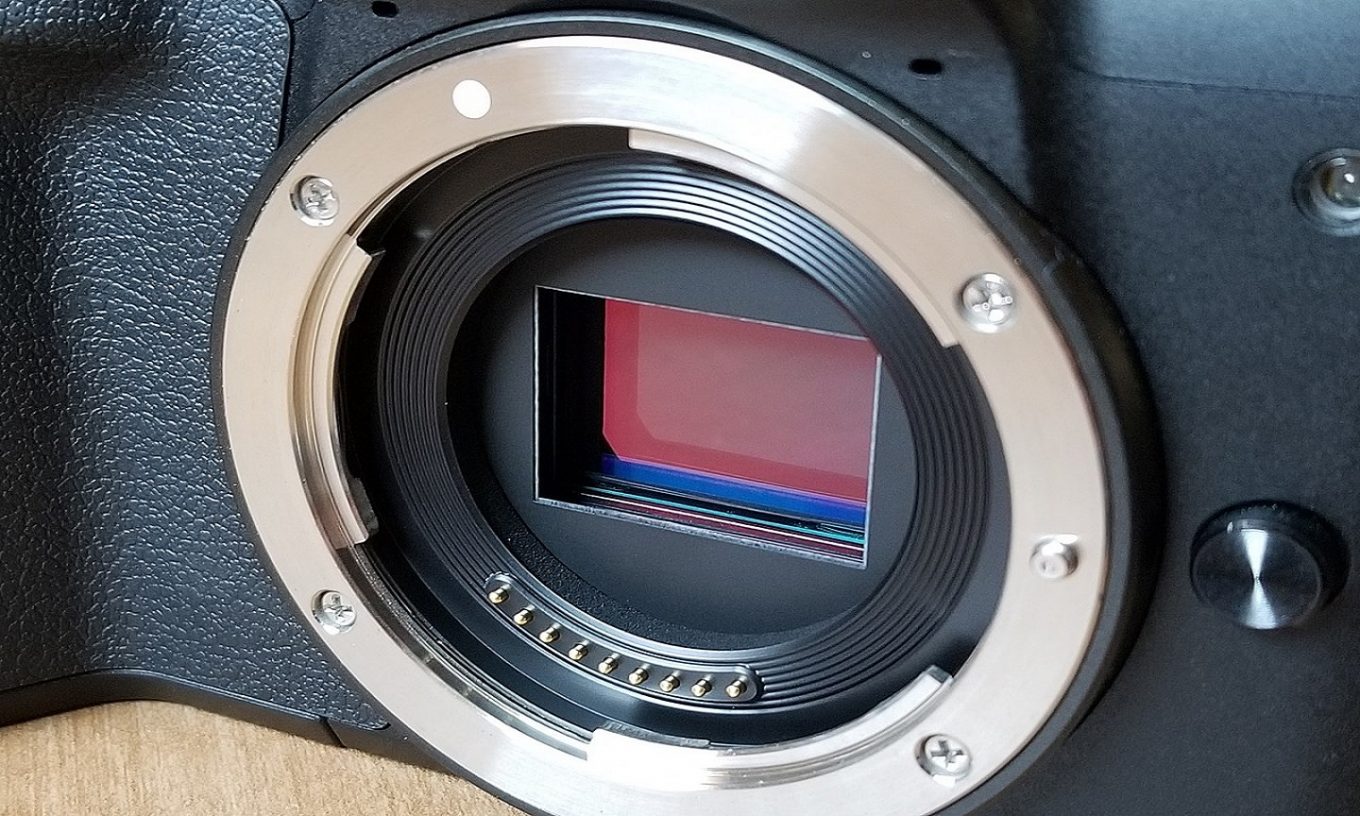
A slim mirrorless camera sits in the center of a display case among camera lenses and larger DSLR cameras. Technology has vastly improved since this camera came out. Working photographers would replace it with something with more megapixels and a better lens. They’d write off the donation on their taxes. This mirrorless camera is out of reach with his paycheck, but it is not out of reach with his fingers. He imagines shooting the woman with the gold dress who walked away without asking to see anything in the cases. After closing, he slips the camera into his cargo pants pocket. He transfers the business card to the same pocket. He will practice. And then when he is confident with his new mirrorless camera, he will take the bus across town to inquire about the new model series at the studio owned by the woman with the wild fox blanket.