
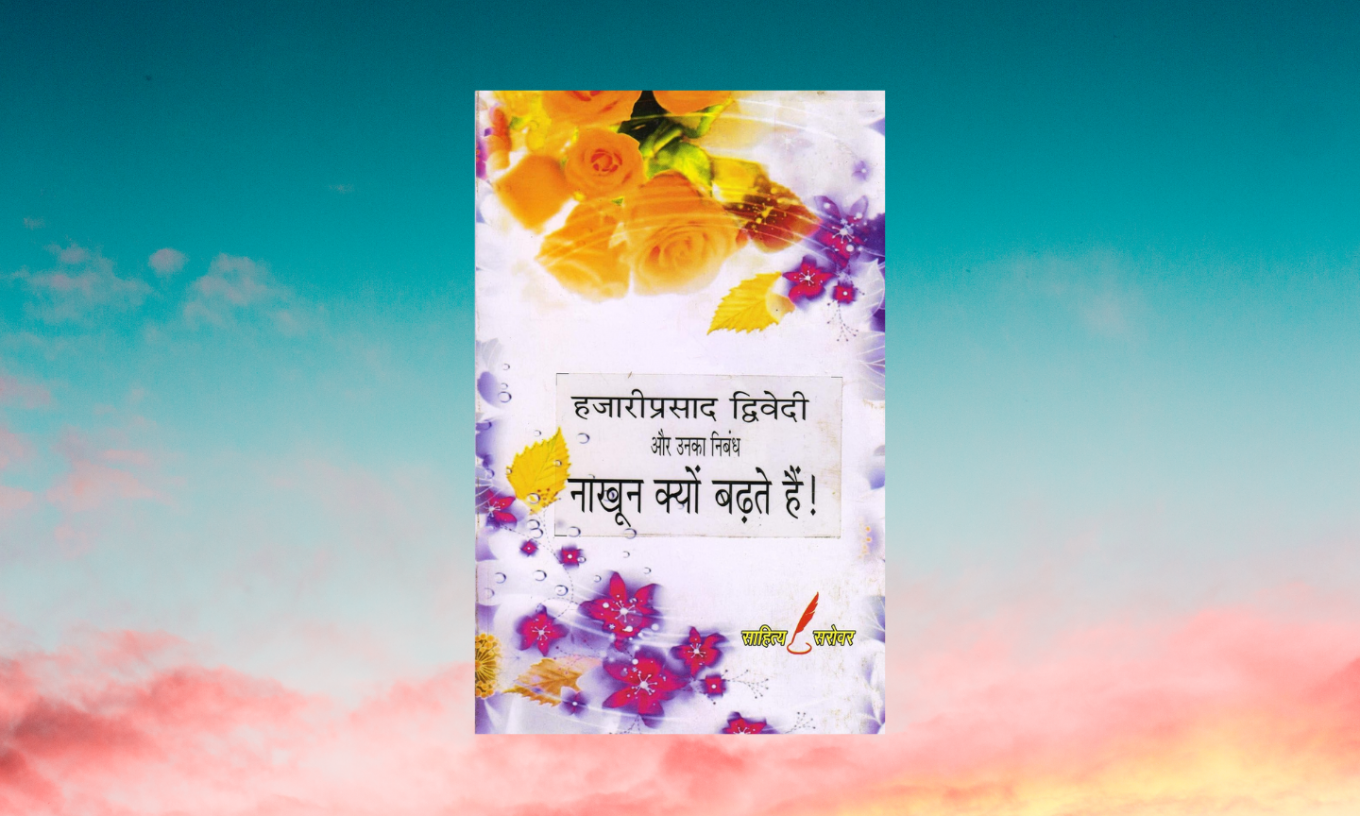
Sometimes children ask questions that puzzle their parents. At such times, the clueless parents feel uncomfortable. When my little daughter asked me the other day why nails grow, I was nonplussed. Every other day our nails grow, yet if kids do not trim their nails their parents scold them. But no one knows why such ominous things grow. Pare them, and they quietly accept their ordeal. But like burglars, once freed they sprout again. So, at the end of the day, the question remains as to why nails grow at all?
It’s a question that’s a few million years old, back to those times when man was a barbarian. At that time, he needed claws to protect himself. In truth, his nails were his only weapon. He had to defend himself against his opponents and overpower them. He had teeth too, but they were secondary to his nails. Nails were thus an essential part of his body.
Then, gradually, man began to take refuge in things outside of his body. He put stones and branches of trees to use. (Lord Ram’s Vanarsena had similar weapons). Man also made weapons from bones. Of these, the most powerful and historic were thunderbolts of the king of the gods, made from the bones of Dadhichi Rishi.
Man progressed further. He made weapons out of metal. Those who had metal weapons achieved victory. The king of the gods had to seek help from human kings, for the latter possessed metal weapons. Demons were highly artful, but they did not have metal weapons. Perhaps, they didn’t even have horses. The Aryans had both horses and metal weapons, and so they were victorious.
Then history speedily moved forward. The Nagas were defeated, and so were Suparna, Yaksha, Gandharv, and all other demons. Metal weapons won the race.
History progressed. Everyone knows to what depths guns, cartridges, cannons, bombs and bomb-dropping aircraft have dragged history. Nail-possessing humans moved forward trusting atom bombs. However, their nails continued to grow. Nature does not allow human beings to relinquish their inbuilt weapons. Even now, it reminds human beings that you cannot allow yourself to ignore your nails. You are the same prehistoric creature of a million years ago, dependent on teeth, dependent on nails. You walk and graze the surface of the earth just like other animals.
I ask, perturbed, why man scolds his kids for not trimming their nails. One day some million years ago he was probably admonishing them for cutting their nails. But nature has kept our nails alive. And man continues to prune them. The wretched things grow because they’re blind to the fact that human beings have invented weapons a million times stronger than them. I feel, now that mankind hates its nails, it cannot bear to have any reminder of the savage in itself. But does our savagery end with amputating our nails? If anything, it’s on the rise. In human history, hasn’t the Hiroshima attack happened again and again? This is its latest manifestation. Sometimes, when I see man’s nails, I grow despondent. They are a symbol of the animal in man. No matter how often you subvert man’s animality, it fails to die.
Some thousand years ago, man started using his nails for purposes of beauty. Vatsayan’s Kamasutra teaches us that two thousand years ago the people of India took pains to groom their nails. The art of paring nails was regarded as amusement. People shaped their nails like triangles, circles, half-moons or a set of teeth. Those days, nails were put to godknows what use by the intemperate. They scrubbed their nails with wax and red-coloured dye to beautify them. The people of the Goud community loved long nails, while those of the South favored trimmed nails. Individual fashions varied according to place and time. Yet I cannot forget, even if I wish to, that India has never let primitive values trigger our fall.
Zoologists are of the firm belief that knowledge about the human body is still inadequate. Like the mind, the body too has developed instincts which function involuntarily. The growth of nails is one such instinct, hair growth is another, the growth of teeth is a third, and the blinking of eyes is a fourth. In reality, natural instincts are the same as unconscious memories. If man reflects on the wilful workings of the mind, body and speech, it will aid his understanding of his true nature. But who thinks about it? Thinking aside, he does not even realize that the proclivity of the nails to grow is proof of his carnality. Whereas the predisposition to cut his nails is proof of his humanity. And if animal instincts still lie within man, although he has ditched animality, he cannot progress. He will have to look for another route.
My mind asks, in what direction is man headed—in that of animality or humanity? Does he want to multiply his use of weapons or diminish them? My naïve daughter’s question to humanity is whether it knows why nails grow? Obviously, this is proof of our carnality. Yet, do you know why newer and newer weapons are making their appearance? Isn’t this a symbol of the animal in us?
I don’t believe we must cling to whatever is old and ancient in our culture. The attachment to the past is not universally desirable. A monkey that holds its dead baby to its breast cannot be man’s ideal. At the same time, I cannot envisage being intoxicated by new ideas and forfeiting our originality. Kalidas has said that everything old isn’t gold and everything new isn’t goo. Wise folk weigh both the old and the new and embrace what’s best. Fools dance to the tune of others. So, we must weigh the pros and cons and choose from our inherited store of knowledge. What can be more valuable?
How is man different from animals? He eats, sleeps and reproduces, just like animals. Still, he is different from animals. He has self-control. He shares the joys and sorrows of fellow human beings. He has faith, perseverance and a spirit of self-sacrifice. These are self-imposed restrictions man has placed on himself. That is why he doesn’t regard warfare as his ideal. He regards violent, ill-tempered people as indiscriminate, and bad thoughts, words and deeds as worthy of condemnation. This isn’t the religion of any caste or community. It’s the religion of the universal man. In the Mahabharat, therefore, disinterested involvement, truth and freedom from anger are regarded as common ideals. Gautam Buddha has rightly said that the humanity of mankind lies in the fact that it sees the joys and sorrows of all with the same compassion. This self-restraint is what makes humanity human.
And yet, the growth of nails surprises me. Ignorance overwhelms human beings and we struggle to dispel it.
An old man used to say, don’t look without, look within. Rid your mind of violence, falsehood, anger and hatred. Slog away for mankind. Don’t yearn to rest. Think of love, not self-indulgence. And he said, love is the greatest emotion of all, for it is within us. Impulsive behaviour is the way of animals.
Don’t know if they liked the words of the old man or not, but they shot him dead. The instinct that causes our nails to grow was thus strengthened.
A day may come when man’s nails stop growing. Zoologists believe that unwanted appendages in man’s body shall wither away, like his tail. At that point, man’s animality will also vanish. May be at that point he will stop using weapons of mass destruction. Till then, however, it is imperative to teach kids that the growing of nails is a symbol of man’s carnality, and to arrest their growth is the outcome of his humanity. To be human is to exercise restraint.
There is a difference between victory and accomplishment. Weapons of destruction may bring victory, but true accomplishment lies in surrender. The growth of nails is symbolic of victory. Cutting them symbolizes surrender.
Let nails grow. But let them not grow unchecked.
***
Translator Bios:
R. Raj Rao is an internationally known writer who stands out for his radical portrayal of queer love in his novels, poetry, plays and non-fiction. His novel The Boyfriend is widely regarded as India’s first full-fledged gay novel. His work has won him awards, nominations and fellowships to the UK, USA, Canada and Germany among other countries. His fiction has also been translated into European languages. Rao has been a professor of literature for nearly half a century.
Babar Ali Sayyad is a Hindi poet and PhD scholar at Savitribai Phule Pune University. His research topic is the Hindi Ghazal. He has read papers at conferences in Maharashtra and Kerala, and currently teaches Hindi at Don Bosco College in Pune.