
Witness
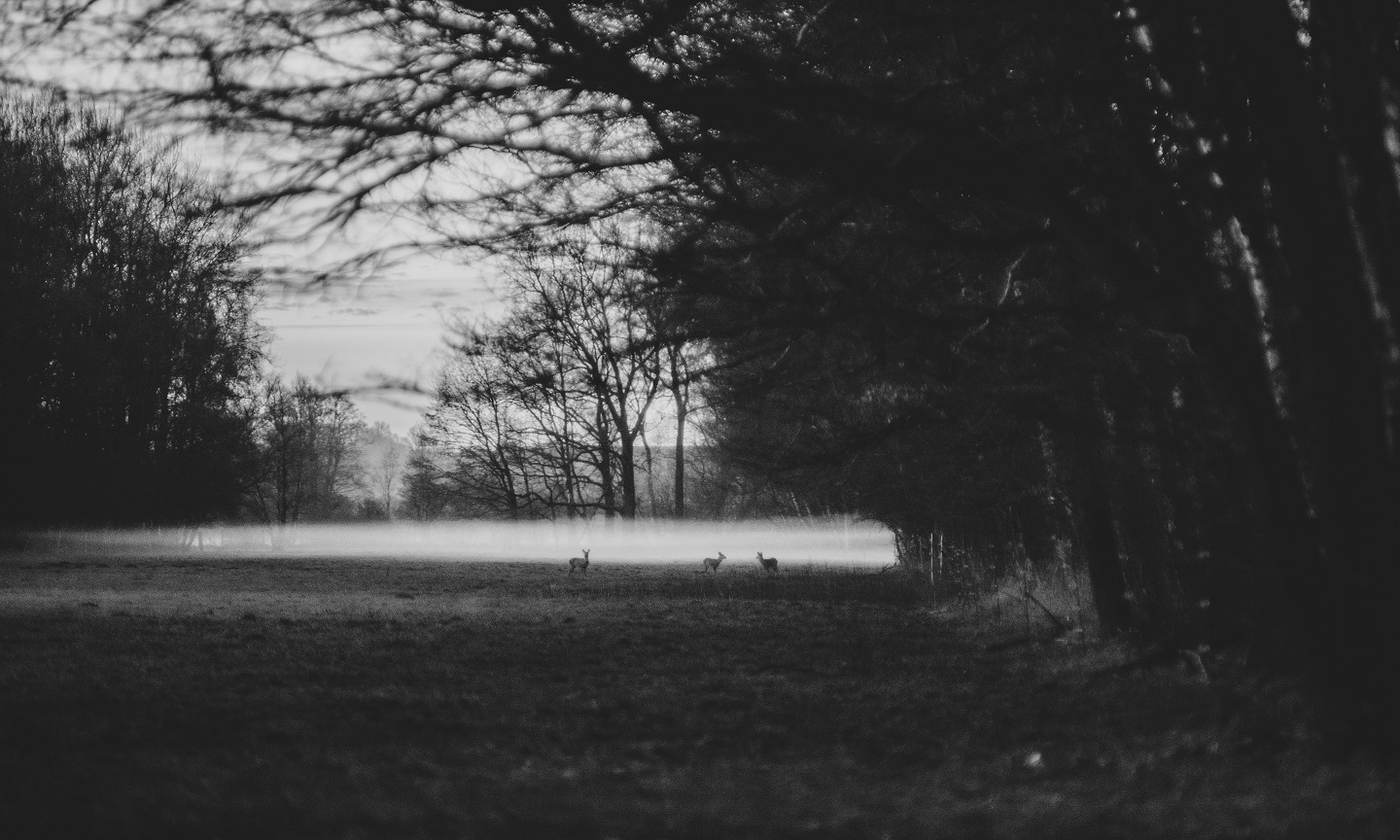
I put myself in the place of John Cleaveland,whose art I’ve seen online, oil on panel: wheat andwater, field and stone and shifting cloud. A tree line,say, divides new grass and faded ground from bright,expansive sky; but darker greens and blues conjoinshadows, leaves and sky much as a tree itselfdigs deep in earth and yet releases spent breathsheavenward. My friend posts her photoof Cleaveland’s studio—the screens, paints, applicatorsused to render images both more and lessthan real. It isn’t essence captured here—for whocan tell what the essence of a shadow is?—but light on molecules infused with vision deep enoughto get to the heart not so much of thingsas of itself, inviting the viewer in. But is there, then,an end to art if no one attends? If a tree falls in the woods,or I write a poem about a fallen tree and no onereads, is the falling any less? Trees, after all, fall every day,soundless except to SARS-infected deer that mightbe better off without humankind to watchas they twist their stalky necksand prepare to run.
***
Natural History(After Reading Lewis and Clark’s Journal)
Drawn by simple curiosity, wild creatures at the forest’s edgewitnessed the unusual ascension of men from the river oncethe longboat spun its prow and scraped its keel across the stones.
They were not deer, such as the men had known in Virginia orVermont, but antelope whose haunches flashed when the heaveof portage brought the men too near. The men believed
they were something they needed to kill, not just for foodor for the pleasure of pursuit, but from a need to supplement,with drawings of anatomy and habitat, the mapping of a
northwest passage to the sea. They lusted after elk and buffaloeven as they sought the source of America’s great vein,kissing the ground along the Great Divide and expecting a
falling vision on the other side of the hill (though met, in fact,with rough terrain, they vowed they’d yet outwit the Spanish kingin spite of tier upon tier of peak and precipice, of winter closing in).
One of them, it’s said, went crazy with despair. Only loyaltymade the pieces of himself cohere: notations in his book, diagramsof les petits chiens and thoughts on how to flood their holes
and capture one alive to send to Jefferson. Perhaps, that night atGrinder’s Stand, when the “sweet evening” failed to soothe his soul,Lewis thought of Oregon and the blank Pacific whose horizon
he had scanned for cargo ships that did not come. Perhapshe’d known all winter long but had watched anyway,carving his name in the trunks of trees and feeling the dread
of home: the blind spring rising on the mountainside,the melt’s uncovering of bones. Protracted restin settled country, cleared of every darkness but his own.
Photo by lost design on Unsplash