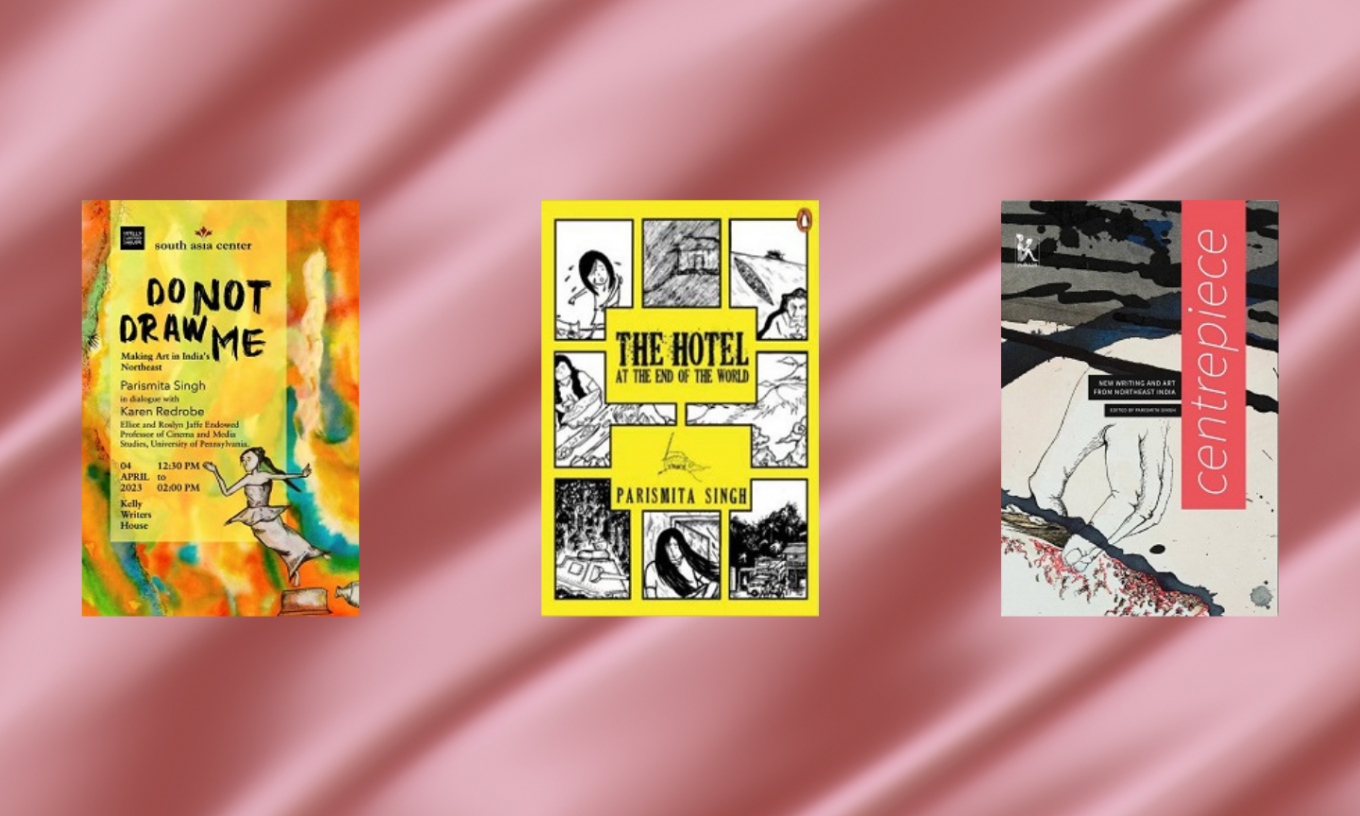
TBR: In the past few years, graphic novels, and the comic way of storytelling has gained popularity. Do you think this way of narrating a story has an added dimension, and that it allows the storyteller more scope in terms of expression?
There does seem to be more interest in graphic novels in the last few years. At its most basic, comics are a narrative built out of image and/or text. humans have been telling stories through figures and mark making for a long time. One can stretch the lineage of graphic storytelling from the prehistoric art of Bhimbetka caves to a young person making picture stories in their maths note book during class. And then, of course, the same medium can be used to narrate a superhero story or an examination of a philosophical concept or a non-fiction account of war. The elements remain the same: the text, the image, and then, it is what you choose to do with that. That fact that it is a form that still finds itself in the fringes of publishing also gives it the power to be more subversive and experimental.
TBR: How or why did you choose to express yourself through graphic novels?
The truth is that I have worked across mediums. When I was starting out, I felt very strongly about the comic books format and possibly, saw myself as a comic book artist. But in the last few years, I have worked with prose, with the shorter essay and visual art formats, and other forms. I have circled back to graphic novels now, and it does feel like a bit of a re discovery – working my way back into the text and image format. One’s craft is shaped by so many influences, its hard to say, why and how I choose to work with it. But even after all these years, graphic novels still seem to retain this feeling of an intermediary space, a faultline, an in-betweenness that is very exciting.
TBR: A common perception for graphic novels once upon a time was that they mostly cater to a young readership, but your work harbours on culture, ethnicity and politics amongst other things- areas that both adults and young minds can partake of. Your comments on this?
I haven’t thought enough about this. The young readership space is quite vibrant too. I do understand the nervousness around these divisions. I have all these comics lying around the house that can be quite mature, and not for kids at all.
Other than theme, perhaps, it’s also a question of pace?
Children seem to enjoy the break neck speed of the narrative, that so many popular children’s comics employ.
TBR: Much of your work tackles local issues related to Assam. How does the land and its dynamics seep into your work?
I live here. And I suppose, it’s natural to have the landscape of your day to day lives have an effect on your work.
TBR: The Eastern parts of the world have a unique history of oral stories, as well as a tradition of depicting issues through cartoons and sketches. As children many of us grew up with sketches of Panchatantra, or Amar Chitra Katha, or even Phantom. Have your childhood influences also been of a similar nature?
I did read comics and enjoyed them. But they were not the most defining influence from my childhood.
The oral storytelling yes – I think that has been an important influence. Who can resist a good story? Whether it is in childhood, listening to a tale by the light of a kerosene lamp with the rain beating down, or in waiting, while you sit in a crowded Sumo taxi as it slowly fill ups with passengers in a border town.
TBR: Which book or project of yours would you say has been the most satisfying, or the most ambitious?
Each one. Each project feels like the most urgent, important work when it is being conceived or worked at. I find that something like an all encompassing devotion and obsession is necessary for a work, otherwise it would be impossible to go through with it. There are projects that have fallen by the wayside, because sometimes, the spirit flags, one loses the rhythm or life gets in the way. Every book feels like a miracle when it is done. Because it is time taken out of the world and its pressures and the other necessary work of life.
TBR: What are the areas that make you pick up the pen and sketch, which are the stories that you feel must be told?
I mostly try to avoid work. Especially projects that I sense will suck you in, and leave you bereft of everything else. No good ever comes out of that. I try to steer clear of these stories that will compel a telling. Unless, I absolutely can’t get away from it, I don’t begin a new work.
But I do like my sketchbook. I live the exercise, the time/space negation of the act of sketching. While travelling or at home, or in meetings I like to be able to pick up a pen and sketch. But that kind of art-making is very different from the rigour of working on a specific story.
TBR: Are children perceptive as readers? Tell us about your experience of writing for children vis a vis writing for adults.
Children are much more forthcoming with their questions and opinions about books, and yes, their love for a story. This makes it a pleasure to actually have your writing go out into the world, and see its reception.
Writing for adults probably has less pressure, because it is easier to shrug off criticism that comes from an adult. If a child were to not like a book I made and tell me so, I think that would be far tougher to deal with.
TBR: Any forthcoming projects that you might want to talk about?
I am working on a graphic novel project about women, myths, beasts, vegetables and cloth.