
On his drive towards the east side of the Big Island, Benjamin had crossed over mountains and watched the colors grow from brown to green. Slowly, as if reluctantly permitted by a disgruntled windswept guard, there appeared grass and then trees and then finally an all-out crescendo of photosynthesis. How could this be the same body of land?
He had turned right when the road left him no option and soon, he saw low lying houses set back from the road. It seemed that at any moment the tangle of vines and trees would overtake these intrusions, that all of this verdant life would strangle the houses that insulted the curves of the jungle with their right-angled gutters and flat tin roofs. The only clearing revealed a fairy-tale church, a white wooden steeple that rose above neatly cut grass and a view of the ocean behind it. Until that church, Benjamin had not even known that he had reached the coast.
The air was humid, the sun passing lazily behind blue-gray clouds. Rain kept falling, but as soon as Benjamin had located the windshield wipers on the rental car, the sun came crashing through. Absurdly, and in a way that made him smile, he thought, not for the first time, that there ought to be monkeys in these trees.
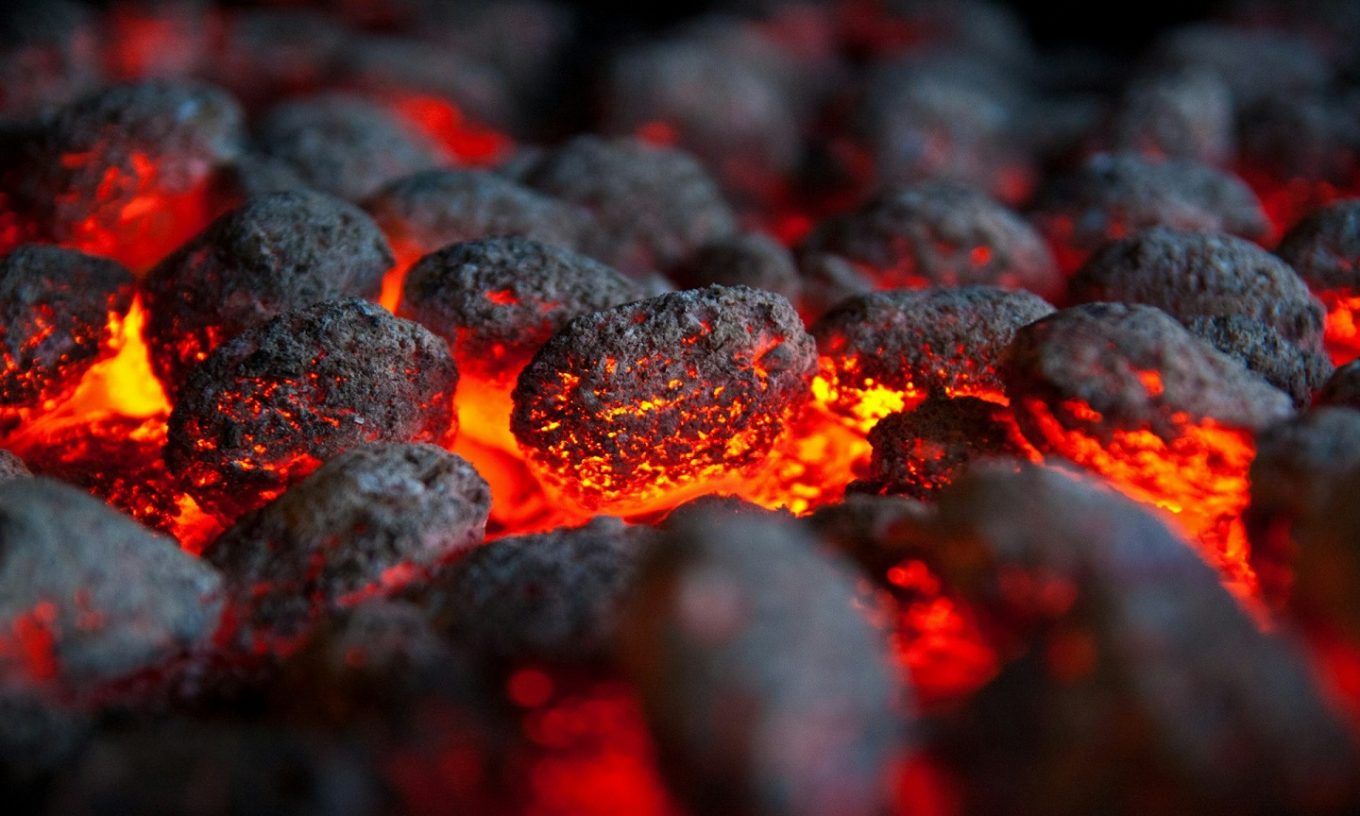
He had been reading the night before about the tumultuous events of 2018 that had occurred just south of where he was driving. At that time, a series of tremors had grown from irritation to rage, the final quake registering a vengeful 6.9, and then the earth had opened up. Molten rock had languidly swallowed more than twenty-five suburban homes, but there had been, amazingly, no deaths. Only sadness and destruction, the dissolution of savings, the transformation of affordable middle class living into a graveyard of irregularly shaped valleys as the lava had cooled or surrendered its steam to the sea.
Green Lake, aptly named at the time for the vibrant hues through which Benjamin was now driving, had absorbed the full force of the plodding lava’s destruction. Magma had poured through forested slopes, igniting palm trees, turning vines to ash. Melted earth reached the banks of Green Lake and had, just like that, evaporated the entire body of water in less than a few hours. A freshwater deposit had thus been consigned to photographs alone.
Eventually the road ended, depositing Benjamin and his rental car onto a barren and empty parking area. It was then that he went for the walk. He could hear the Pacific as he stumbled across the Martian landscape, but he couldn’t see any signs of a beach. The waves of lava had buckled before yielding, forming steep ridges that rose up to Benjamin’s right, blocking visual access to the crashing waves that sounded no more than ten feet from his path.
He began to imagine what once must have seemed a near-perfect symbiosis of middle-class habitation. He conjured neatly built houses, trampolines with taut safety nets, green grass that was regularly mown, the occasional above ground pool. He created this scene in his head as he watched the heat rise off of the rocks, smiling at imagined parents who sat happily on modest porches and sipped lemonade or beer. Before the eruption, life had been at it again, performing its magic, masking all that is dreadfully inevitable with an ancient and necessary salve of ignorance and optimism. The people who had lived here simply could not or would not allow themselves to believe that the earth might someday swallow their homes.
That was when Benjamin had stooped to pick up the rock. He didn’t at the time have any reason to do this. He could have kept on walking. Whether he had picked up the rock or not at the time made no difference, and this was what Benjamin could not reconcile.
He had conceived of his trip to Hawaii as a brief vacation, an escape from the damp cold of winter. The pandemic had lessened, and that never ending period of surgical masks and disinfectant seemed, under the Hawaiian sun, more like a made for TV movie. Indeed, there had been both film and television dramas already produced. He pondered with puerile irritation that there had yet to be a dramatization of his own story. It had certainly made local news in Hawaii, but no one on the mainland had noticed. A life had stopped living, a heart had stopped beating, a family had mourned. It happened every day and all of the time. A pandemic was a rare thing, but a lost life, even one inadvertently taken…that was routine. No story here. Just the reliable turning of an oblivious planet.
Benjamin had been walking across what he had believed was, but for his own footsteps, lifeless earth when he had noticed with delight that a proud green plant rose defiantly from between the cracks of hardened lava. Life was returning. It was finding a way, as it always did, and this, Benjamin thought, was marvelous. This wasteland that was once teeming with living things would not be a wasteland forever. There were plants growing between deadened ridges. He just hadn’t been looking closely enough.
He remembered singing an old song, and it pained him now that he couldn’t recall the tune. He knew that he might have interspersed his singing with whistling, because it had been his habit to whistle melodies when he could not recall all of the lyrics. This was how carefree Benjamin had been, and it was this feeling, this utter lack of concern for anything other than his good fortune to be alive and strolling in the warmth of the Pacific sun, that contrasted so powerfully, so cruelly, with the following few months.
How could he have known?
He had picked up a rock and tossed it from one hand to the other before flinging it with just enough force to neatly clear the top of the ridge that separated him from the ocean. Had he thrown it to prove a point? If a brazen plant could push aside rocks and wind and declared that it would someday grow high enough to see all of the waves of the ocean, then perhaps he intended the stone as friendly competition. Look, I can toss this rock higher than you will ever grow. A pleasant rivalry. Nothing more.
After tossing the stone he had reversed direction and returned to his family. They were at that moment sunbathing on the western edge of the island. Nothing more happened for the next few hours. Those were the last uncaring moments of his life, the last minutes where he had not felt the weight of chance and the stifling misfortune of shame.
At the restaurant that night, the television over the bar told the story of a young man who had died tragically for reasons unknown. He had told his girlfriend that he was going for a walk, and he had traversed his usual path alongside the ocean that had played lullabies for him until his house had been eaten by the 2018 eruption. Friends had gone looking when he had failed to return home, and it was his brother who had found him, his life already taken by the pounding surf, his body drenched with the warm pulsing waves of the rhythmic Pacific Ocean. It wasn’t until the perfunctory ambulance ride that the paramedics noticed the crack in his skull. The police were not ruling out foul play, but it was clear from the confounded interviews with his grieving friends and family that no possible motives could be conjured. Who would do such a thing? How could this happen?
Benjamin had thought all night about the newscast. There was no way to know for certain. Johnny could have tripped. He might have fallen and hit his head, lost consciousness, drowned simply. Unconnected to Benjamin. A tragic death for certain, but perhaps it had nothing to do with Benjamin and the rock he had thrown. Perhaps Benjamin could sleep with his conscience clean of culpability.
The next morning, however, his panicked thoughts continued. He called the police, taking care not to reveal his name. What time had Johnny been walking? Where, exactly, had his death occurred? Benjamin’s heart sunk as the chronology fell into place. The sounds of the ocean had been loud. It was entirely possible that each had not heard the other. Or perhaps a wayward breeze had carried the sounds of Benjamin’s singing and whistling towards Johnny’s amused and pondering ears. Benjamin could picture Johnny stopping, cocking his head like a bird, listening to whatever lost song Benjamin had been humming, and it was then, perhaps, that the rock had come lazily over the jagged black rocks and interrupted Johnny’s innocent life. Benjamin reflected with little relief that even if it was Benjamin’s actions that had led to Johnny’s fractured skull, the injury would not with any certainty have killed him. It would be the loss of consciousness and the relentless, pulsing ocean that would have neatly done the trick. Those same waves that had snuffed out molten lava would have quickly filled Johnny’s lungs with water. Benjamin knew for certain that he had thrown a rock, and he knew also that Johnny had died. Why couldn’t he let those events sit disconnected? Why tell the police that he had tossed the rock? What purpose did this serve?
The police asked him “to come down the station”. Those were their exact words, as if spoken on a television show, as if there were a script for this kind of thing. Benjamin had told his family only that he was going for a drive, and then later, upon returning to the hotel room, he announced that he would need an attorney. His wife had been stunned, his children frightened.
And still Benjamin found that he could not let it sit. He felt a selfish responsibility to make himself known to Johnny’s family. They listened at first eagerly and then furiously to Benjamin’s confession. There had been a slammed door, then threats to call the police if he refused to stop ringing the doorbell.
It was shame, therefore, that Benjamin felt most poignantly. It was as if his carefree whistling on that oceanside walk had trigged a cosmic test. What right did he have to happiness when an innocent life was soon to be ended?
Later that day the district attorney called to inform him that he was to be charged with involuntary manslaughter. Benjamin accepted a court appointed attorney even though he could have afforded to pay. There had been a trial, and the jury had been quick to acquit. The judge had expressed condolences to Johnny’s family and had warned Benjamin to remember that his actions had consequences. He was free to go, and though his attorney warned him that a civil suit was likely, there was no reason for him to stay on the island. Though Benjamin could not be certain, he got the distinct impression that the attorney wanted him to leave.
Perhaps it was as simple as the banality of legal definitions. Not guilty had been the verdict. The rejection of his hypothesized confession and the theatrical translation of the court’s deliberations into a legally binding denouement engendered a singular form of anguish. The court had, after all, been clear. He was not at fault. The only thing left was shame.
Benjamin missed his family, his children. He missed his daughter’s basketball games. He had tried to leave his misery behind, to discard the sticky masochism, but he was haunted. Johnny’s death, his beating heart stolen possibly and passively by a rock flung innocently over a ridge, left Benjamin with nowhere to turn. He was torn and broken.Soon Benjamin was living alone. He even took up smoking. The damage it did to his body struck him as the least he could do. He was petty and selfish in his solitude, and he found nihilism a loyal gatekeeper. He had taken, possibly, a life. It was as simple as that. Even if he had no idea, even it had been entirely by accident, even if he had offered to make restitution, even if it had all been rejected, he could never be done with his mourning.
Johnny’s family must have known this. They must have sensed that “not guilty” would become an endless prison. That was why they had shunned his apologies and closed their doors to his attempts at connection. They were done with him. He was left with their aching loss and nothing more.