
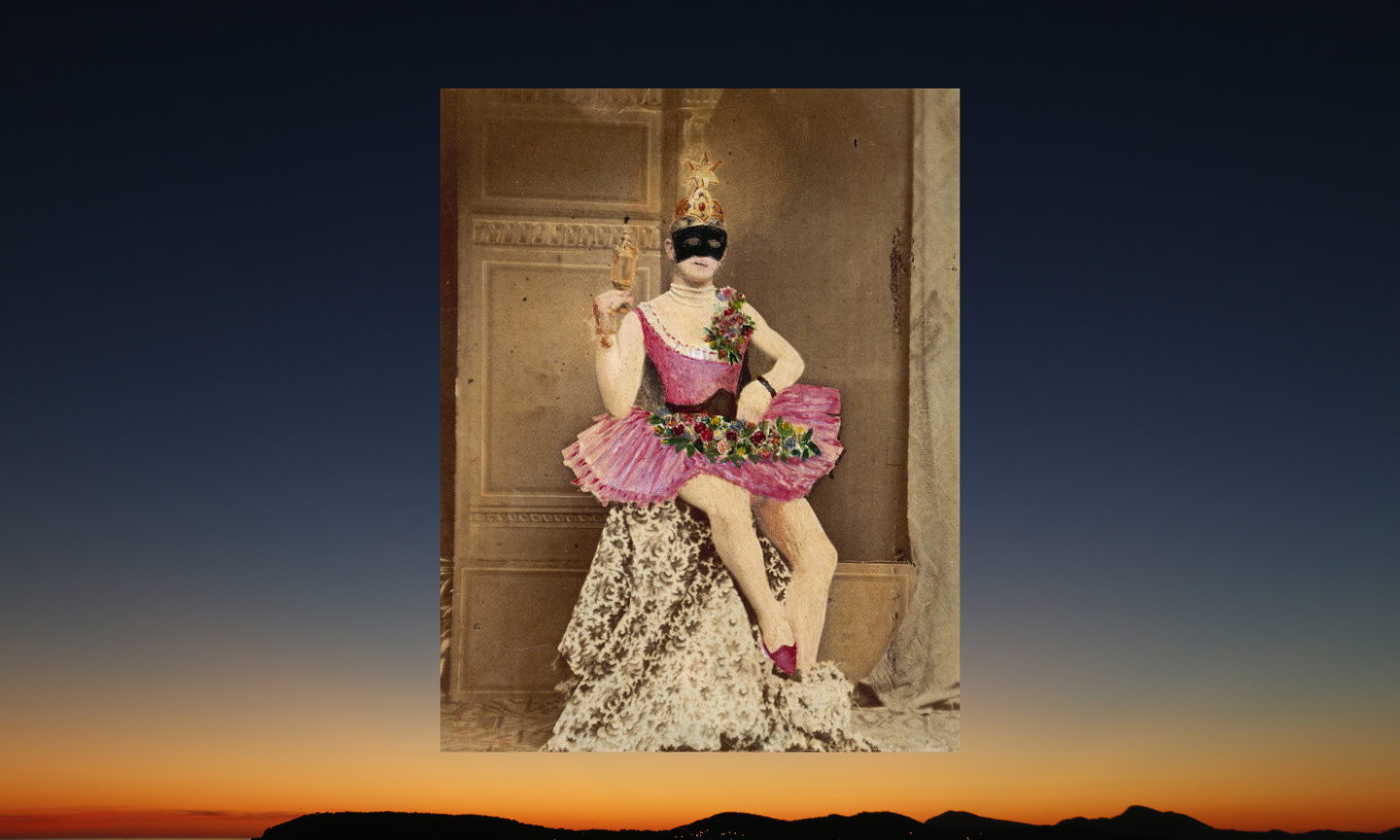
“We’ve done everything we can,” the nurse said while taking her hand, “now it´s just a matter of time.”
It seemed to her it had only been a few hours ago that she had helped her grandson manage to drink that cup of tea to the very last drop, but she could see that just over the nurse’s shoulder, the doctor was consoling her son and daughter-in law. She was grateful that this particular nurse had come to her. He was handsome and ambitious but always made time for an old lady who was, truth be told, considered a secondary relative. In her youth, nurses had been women in starched caps, presided over by a matron who could command the same authority as a room full of judges.
Left alone she closed her eyes to think about that very time. She especially tried to summon the images of high school and of the student, living only a few houses away, who had regularly walked home with her. Slowly, she was able to call him into focus, the one they had called the flower boy.
The flower boy had been a transfer student. He was tall and had curly hair and a ready smile, but what got people’s attention right away were the soft white blooms, which resembled violets, growing out of various parts of his body. He seemed to be quite well-groomed in other ways and carefully tended the little flowers and removed the weeds that sometimes sprouted behind his ears or clustered around his elbows. No one had ever seen such a thing before but they had become used to transfer students being somewhat unusual, like the kid who ate confetti or the girl who only wore poodle skirts with the poor animals’ eyes disturbingly cut out.
In due course, people at the less popular tables in the cafeteria started talking to him, but never dared to ask about his condition. Sometimes, after a particularly stressful exam or a day after coach made everyone run extra laps, the flowers would appear to wilt but perk up the next day with a stamina that is always envied of youth the world over.
The boy was also not without a sense of humor, and would sometimes weave the fronds together that appeared above his eyebrows or dangle a plastic bug from one ear. This ceased to be funny the semester he got aphids, but he’d become quite well-liked by that point and most of the students politely turned away. Even the most beautiful among them were struggling with their own imperfections: the glaring flaws that no one else noticed but always loomed so unforgivingly from any reflective surface.
It was the late winter walks that she remembered most. They would always start out as a group of five or six students, and about halfway home only the two of them would be left to continue the rest of the way. She longed to tell him how inspiring it was to see the first petals peeking out from beneath his scarf but they were at an age when silence, though not altogether comfortable, was easier than talking about school or the very few things that changed in the neighborhood. It seems funny in comparison with today and its social media but comments like “The Hewitts painted their mailbox,” or, “That’s the biggest puddle I’ve ever seen!” were just enough to sustain a special connection.
In every school, no matter how welcoming and diverse, a bully is destined to rear his ugly head and mouth-breathing troglodytes thought it funny to chase him down the hall with a spray can of pesticide or slam down a container of plant food next to his tray during lunch. A few even plucked some of the leaves from the back of his neck when he was struggling to follow Mr. Scharfer’s Algebra class and this may very well have been how things started and eventually got out of hand.
On a surprisingly mild February day, when they were able to walk home with their hoods down and jackets opened, she saw that some of the earliest buds from just the previous weeks appeared to be missing and the twigs around his wrists to have been plucked almost bare. She would have thought that, having exchanged at least a hundred words by this time, she could ask him what had happened. Not only would another infestation have been quite uncharacteristic for this time of year, but she sensed that the buds had been removed on purpose. How very much she wished she had felt close enough to ask.
Years later, she attended a silver wedding anniversary and remarked to the hostess that, in a time when divorce seemed epidemic, virtually all of the attendees had married their high-school sweethearts and still seemed to be going strong.
“It’s because of those first buds,” remember, “the ones you held between your ring and index fingers while slow dancing.” It was the first she had heard of it but the lady, whose lips had been loosened by more than a few glasses of champagne, was very keen to continue. “I always wondered why that flower boy never charged for them, he could have made a fortune, bless his heart! I guess you were too young to be dating anyone or I’m sure he would have let you in on the secret.”
If memory served her correctly, it was that time when so many were worried about getting dates for the Valentine’s dance. Perhaps it was because, like every novelty, even a boy who sprouted flowers was destined to become part of the everyday, and he felt it was time for him to take things to the next level. The flower boy was an adolescent, after all, yearning to secure his reputation as anyone would, using whatever they had.
As she looked about the garden, where a silvery cake was so prominently displayed in the center, she pondered the magic that had obviously kept all of those couples together. It was not that she would have needed the extra help as her own marriage had turned out, if not perfect, to be quite a happy one; it was just the thought that whatever closeness she’d had with the boy on their walks, had not been enough to let her in on something that so many people seemed to know about.
There had only been one Valentine’s dance of that sort in memory, because the flower boy moved away by the end of that school year. His father, sporting no foliage to speak of, had been promoted in his company and was transferred to a faraway town, whose location no one could agree on. It was said that the family would have preferred to stay but the son had been exploited by that notorious coach, who twisted his stems in gym class and forced him to take steam baths after the other students had left. It was rumored that some potent kind of mulch had been made from these encounters which, until it inevitably ran out, seemed to make the school’s teams invincible and filled the trophy case to near bursting.
On the last day they walked home together, she found herself going over every way to say goodbye and whether she might even expect a hug or a peck on the cheek. She had just started wearing her hair back and, in the end, he leaned forward, smelling slightly like a spring meadow and paid her a compliment. No doubt, she remembered it as the first meaningful one of her teenage years, which is why she did not hesitate about what to do when the little package arrived decades later.
In the shadowy little corner of the waiting room, she opened her eyes to find her family rushing towards her. The monitors in her grandson’s room were shifting towards the miraculous, they said, and the nurse she had become so fond of even swore that the color was returning to the patient’s cheeks.
In the pocket of her sweater was the envelope which had been left unstamped and without a return address in her mailbox that very morning. The envelope had contained the finest, crushed leaves, the instructions about how to brew them properly, and a message:
“Thank you for those hundred and twenty words in a time that wasn’t easy for me. See how pretty your eyes are when they’re not hidden.”
She knew, her grandson would be well again.