B

Breath Holding Contest (in Southern Lebanon)

I give up, I say
to the Palestinian boy holding his breath
beneath the ripples of a branch
of the Litani river.
I tap his shoulder
and rise to the surface early, my chest
half full of oxygen.
I could have outlasted him.

I give up, I say.
But really
I let him win.
Victorious, he grins.
without knowing

I’ve looked out
of rain-washed windows
and wept over an impossible love.
I’ve tried with others to end the brutality of wars
and find fullness in a life
that leaves us all empty handed        in one way or another.

Someone ought to triumph
in a landslide
Someone ought to smile
and gasp with delight
for a small victory almost worth dying for.

I give up, I say to the child
(though I haven’t really).
You win.
You’re it.


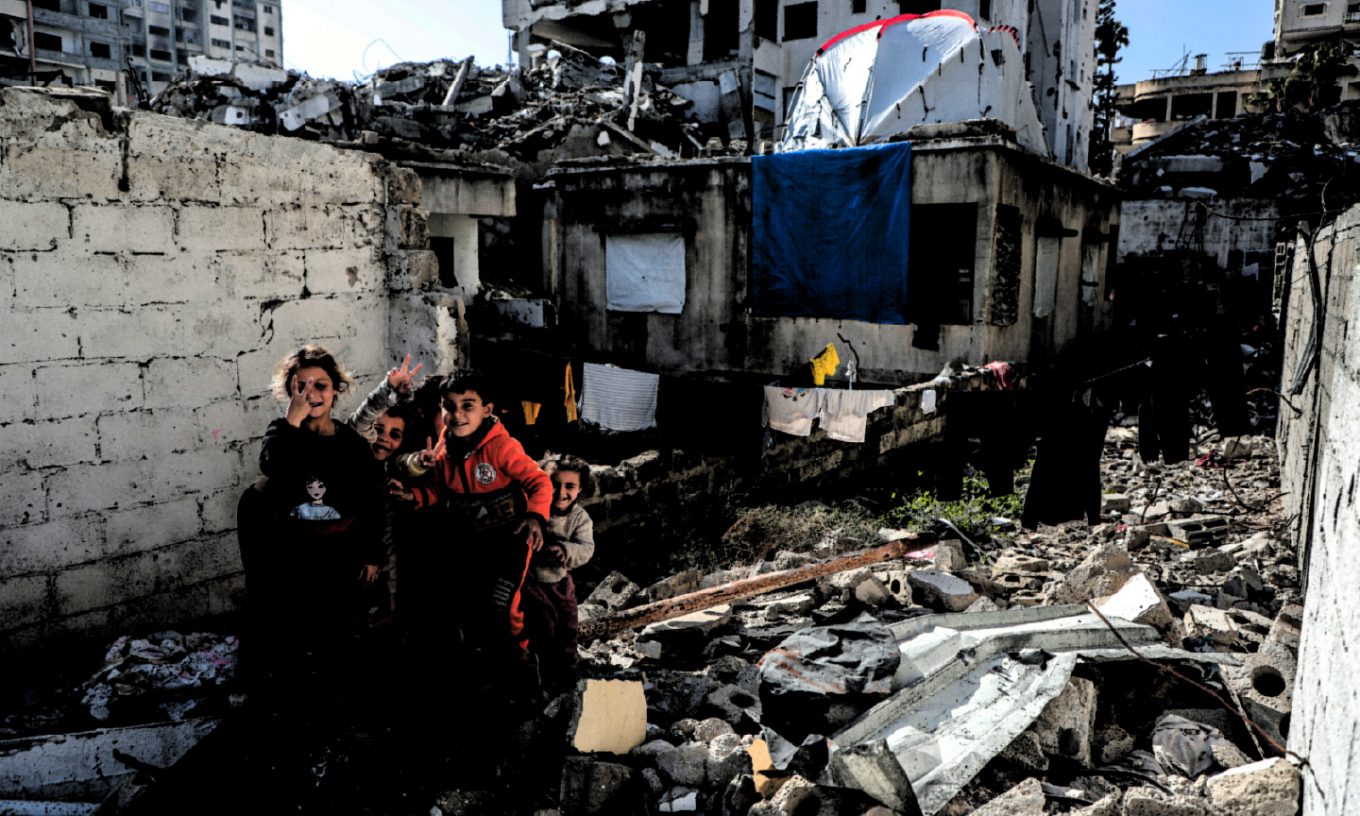
Photo by Mohammed Ibrahim on Unsplash

Kim Jensen

Kim Jensen (kimjensen.org) is a Baltimore-based author, poet, professor, and translator who has lived in California, France, and Palestine. Her books include an experimental novel, The Woman I Left Behind (finalist for Forward Magazine book of the year) and two collections of poems, Bread Alone and The Only Thing that Matters. She was a finalist for the New Millennium Writing Awards and Fordham University’s Poets Out Loud Prize, and a recent awardee for the Gulf Coast Prize in Translation. Active in transnational peace and social justice movements for decades, Kim’s work has been featured in Gulf Coast, MQR, Anthropocene, Consequence, Modern Poetry in Translation, Arkansas International, Decolonial Passage, Transition: The Magazine of Africa and the Diaspora, Anomaly, Extraordinary Rendition: Writers Speak Out on Palestine, Gaza Unsilenced, Bomb Magazine, Sukoon, Another Chicago Magazine, Electronic Intifada, Mondoweiss, Left Curve, Liberation Literature, and many others. In 2001, she won the Raymond Carver Award for short fiction. Kim is currently Professor of English and Creative Writing at the Community College of Baltimore County, where she co-founded an interdisciplinary literacy initiative that demonstrates the vital connection between classroom learning and social justice in the broader community.