
The phone rang. Anne knew it was Maggie. Whenever Maggie called, the light in the cottage greened as it did when cumulous clouds overtook the sun. Not the mermaid vibrance of sea glass green, but a mood of green, a sea sickness. With one thousand five-hundred and twenty-six miles between them, Anne felt safe from her sister’s line reeling her home. She picked up the phone.
“The marigolds are dying,” Maggie started the conversation as if they were already in the middle of a conversation. She then sucked a cigarette, her exhalation roaring into the receiver. “It’s only September.”
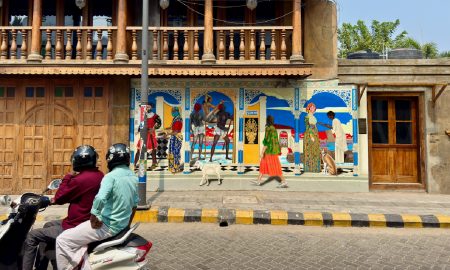
The calendar tacked to the wall near the window agreed summer was over though it did not feel that way outside. The Key West heat climbed and fell little compared to the shocking seasonal shift up north, but the tropical air did feel different this morning when Anne watched the sunrise off Higgs beach. Or perhaps her internal, ancestral New England clock informed her of change.
“Yours are thriving, I bet,” Maggie sniped, then hacked up phlegm and hawked it. She must have been surveying her dying flowers; it would be death that made her think of Anne.
A childhood spent on a flower farm, Anne wished to never dig with bare hands into the cool spring topsoil again. To never coax and encourage life from the earth. The overgrowth of button sage and a gumbo limbo pushed up paving stones and coral honeysuckle snaked up the cottage’s salt-beaten siding. She let the unruly tropical vines grow on her sliver of property as a revolt against those orderly rows of pesticide-drunken fuchsia zinnias and cream-white daylilies of memory, all bloodstained in her mind. Besides, anything she’d plant would be scratched up by the feral chickens and territorial rooster who nested beneath the pigeon plum tree in her walled yard.
Maggie would be appalled, but Maggie would never visit. Married to her family’s land, she feared that by stepping outside the white picket fence encircling her yard, the vultures of development would swoop down and consume the carcass of the two-hundred-and fifty-year-old farmhouse and Maggie’s genetically engineered pink peonies.
“Come home for harvest,” Maggie said.
Harvest of what? Anne thought. The farm had long ceased to be a farm. Forty acres had been sold to fund Anne’s fancy education a decade ago. Maggie spat the words fancy education whenever the topic came up, as if it wasn’t her own decision, as if she had not swatted the pen out of Anne’s hand before signing a student loan application. “A Rayburn owes no one!” Maggie bellowed. Anne had done wrong, again. But it was her own fault. Anne felt trapped on that failing farm as if her legs had been cut off at the knees. Like she had killed her chance of freedom when she killed their oldest brother, Aaron.
“No, I can’t come for harvest. School started two weeks ago,” Anne said.
“Early, isn’t it?”
They had the same conversation every fall since Anne took the low-paying teaching job down here. Maggie refused to believe other parts of the world operated on a different schedule than the steady north, or that her little sister had a life in Key West. Anne explained again that they started mid-August, and no, she didn’t know why. “We didn’t start school until after harvest was done. You remember.”
Anne didn’t remember. What she remembered was being unsupervised, like a barn cat called home to not be eaten by the coyotes that yipped and howled in the night during pup season. She remembered their town resembled those one-dimensional landscape prints with red barns, rolling hills, and a convenient stream running through the center of it all. The Rayburn homestead had that red barn and rolling hills, gleaming gold with sweet corn and perennials her family grew and sold. That stream was where Anne played on the day Aaron died, the minnows and sparkling schist pebbles on the stream bed more important than the garbled yells to get the doctor.
She was six, and here came Glen, older than Anne by eleven years, hollering like a lunatic. Everyone was always yelling, except Aaron. Aaron was kind and patient with Anne – that’s why all the girls were sweet on him, especially his fiancée, Claire. Glen yelled, “get the doctor!” But Aaron told her to never believe a word Glen said because he was always trying to get a rise out of her and make her cry. So, after he washed the red off his arms in the stream and ran off, she stayed put. She wasn’t falling for another one of Glen’s tricks. But she did wonder why beet juice stained the front of his shirt.
Anne’s penance was to fill the gaping hole Aaron left in their lives and devote herself to the family farm as a good daughter, a faithful sister, and someday continue the legacy as obedient wife and mother. Maggie certainly wasn’t having any children. Glen should have guarded the Rayburn name, but he disappeared on the same day as the accident. He did return eventually, and Anne’s seen him once or twice, but he never really came back.
Over time, their family of five reduced to Anne and Maggie – sisters so distant in age that people mistook them for daughter and mother. Anne never knew their mother, who died in childbirth, which wasn’t entirely uncommon in a rural town where most women gave birth at home. That was Anne’s original sin. And when Maggie’s lips became whiskey slick, she reminded Anne of the two deaths on her hands – Mama and Aaron. Glen had fired the gun into Aaron’s gut, but it was an accident, and Aaron could have survived. Maggie was certain of this, and no one challenged her, for she was a nurse, and the one that held pressure on his wound waiting for help to arrive. Help Anne never bothered to fetch.
A can cracked open on the line. It was eight a.m., and no way was Maggie drinking a Coke. The sound of the can triggered Anne’s olfactory memory of yeasty, sweet beer and she salivated with want. There was a time Anne found twisted solace in the company of her sister, so long as they were both drunk. “Early, isn’t it?”
“What?” Maggie said. Maggie’s hearing had been diminishing for months, making these conversations painfully one-sided, rose-colored reminiscing. Memories Anne would gladly forget.
Anne turned on the rapid boil kettle, silently recited her number of days sober, and made a strong cup of instant coffee. She was up to five cups a day now and promised she’d cut back but never set a deadline. She came to Key West to teach first grade, thanks to that fancy education, and to distance herself from the demon alcoholism that lurked in the Rayburn family bones. The irony that Anne’s savior was a city with a reputation for debauchery made her laugh.
For four years Anne was wound tight like a jack-in-the-box, staying low and in the dark lest she relapse. When she got the position in Key West, she burst forth from the box and cut the tethering spring. She stepped off a Greyhound bus at the Southernmost Point, where beyond the coral she swore she saw the green flash of a mermaid’s tail in the last light of sunset. A man next to her said it was good luck to see the green flash, then propositioned her for the night.
“Seeing…anyone?” Maggie sputtered. This was new. Maggie kept to weather, farming, missing her horse, Bo, and the neighbor’s overuse of Roundup. “Pick ‘em with your damn hands!” Maggie terrorized the neighborhood every summer. Anne replied honestly, with a no. She preferred the company of the chickens, but suspected Maggie was looking for a wound in which to rub salt.
Maggie was most happy when Anne lived in mutual misery, making it known that Anne killing Aaron was the reason for her spinsterhood. That she promised their dying mother she would care for Anne as if her own. Anne was Maggie’s burden, her relief, the reason for her troubles, and her reason to live.
As a child, Anne believed her actions cursed the Rayburn name. Half the crop failed to rise from the ground. Corn grew disfigured or rotted on the stalk, an unwelcome surprise when customers at their farm stand peeled back the husk. Post-harvest, the quaking of paper leaves spooked her like an army of ghosts rattling chains out her bedroom window. Anne’s school friends no longer came to climb the deer stand pretending it was a tree house. They once caught Aaron and Claire kissing from their lookout. Another time, when alone, Anne caught Maggie and Claire doing the same.
Looking back through the lens of an adult, with years of therapy under her belt, she understood it was her family’s mismanagement of the business, Dad’s belligerent yelling at the neighborhood kids, and the sale of their land to a developer that earned them the honor of most-hated family in town. For ruining the bucolic post-card scene that greeted city tourists in search of apple butter and local honey with burlap bows, the farmhouse was egged, and their name dragged through mud at town meetings. Their grief of losing Aaron forgotten with the absence of profit.
Maggie’s defense was that she magnanimously sold the land after their father died so Anne could go to college. Again, shifting blame. But Anne remembered it the other way – Maggie sold the land, then Dad died, coinciding with the appearance and disappearance of morphine in the kitchen cabinet. Maggie was a nurse after all, and Dad was in a lot of pain in the end. When Anne pointed this discrepancy out, Maggie slapped her across the face with more force than she would smack the rump of their Clydesdale, Bo, to set him galloping. Anne kept quiet, afraid Maggie would peg a third death on her.
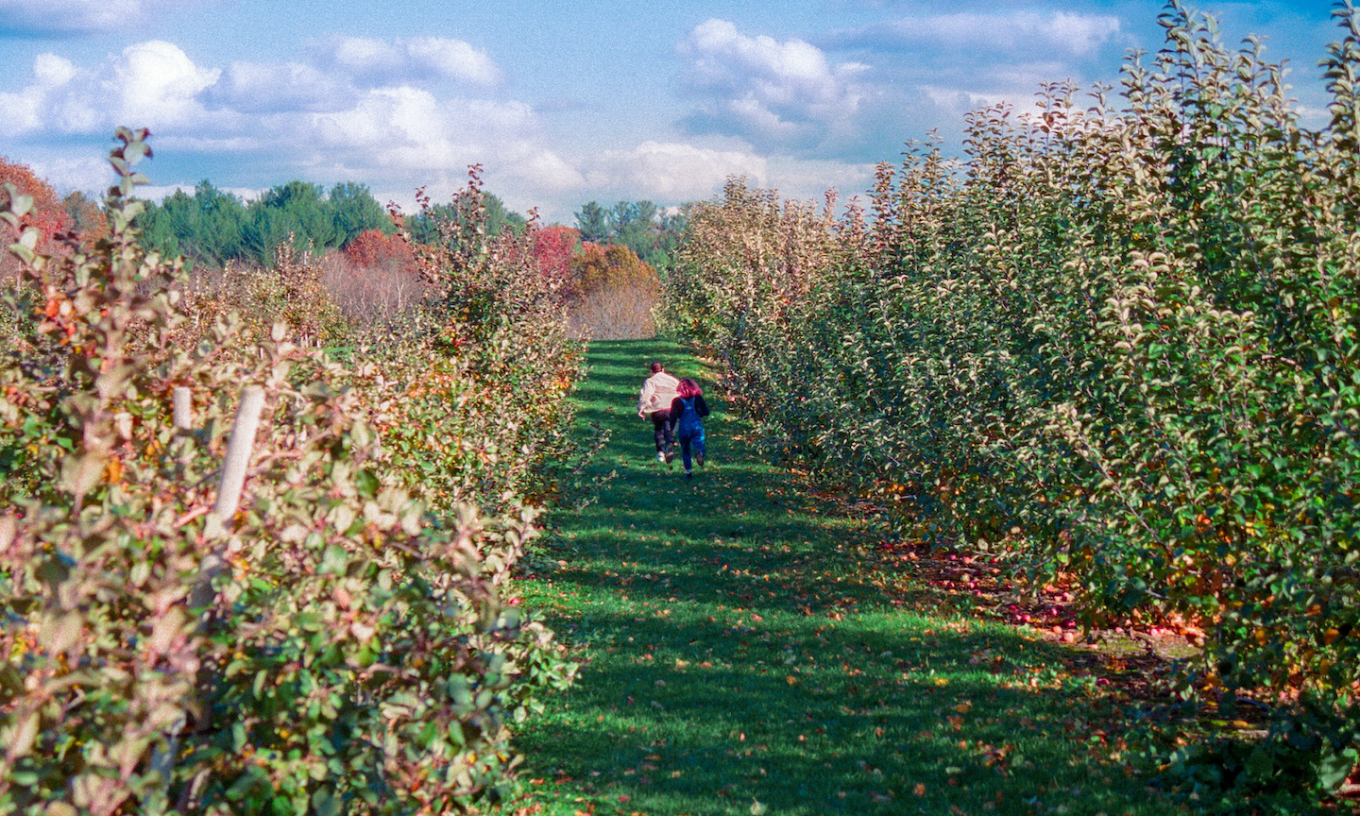
Out the window, a rival rooster had come into the yard and the ensuing tussle caused Bougainvillea petals to scatter on the cracked concrete. It reminded Anne of the fall foliage that would blanket New England in a month’s time and Maggie’s dreaded phone call complaining about the incessant leaf blowing from the neighbor’s landscaping crew. It wasn’t the noise that bothered Maggie, but that the leaves should be left to insulate the earth until spring. She would never stop thinking like a farmer.
“I have to prep for tomorrow,” Anne said. Having not yet advanced from August, she tore off the calendar page and noted a full moon tomorrow night. A full moon seemed to affect her students as it affected the island’s extreme tides and fish entranced by the grayscale glow. But she might assuage them by decorating the classroom with orange and red construction paper leaves. Some of them had never seen foliage, the annual dying of the land, or even snow. Since moving, it was as if each day was brighter than the one before, beginning with the sunrise she relished off Higgs beach.
“What are you teaching those snot-nosed brats?” Maggie snorted, and cracked a second beer.
“It’s coming to America week. We explore our backgrounds, celebrate the diversity of the class…” Anne stopped, realizing the futility of keeping Maggie’s interest.
“Aren’t they all Cuban?”
“No,” Anne sighed. “I have to go. Good luck with the…harvest.”
“Think about coming for Thanksgiving,” Maggie pressed. “I’ll buy your plane ticket. Your room is exactly as you left it. Come get those scarves I knit you your freshman year, you’ll be needing those.”
“Maggie, not this year.” She had learned to remove the hook from her mouth and that the bait on her sister’s line was not worth swallowing.
The clouds had passed and the sky unblemished but for a single contrail leading to the airport. The triumphant resident rooster fluttered onto the porch railing. He was all the colors of autumn, but with the sheen of tropical iridescence, and Anne felt she was home.
Photo by Isaac Owens on Unsplash