
Chicago, 1919
Branko was wearing his finest suit. This was an important meeting and, God knows, he was an important man.
“Your Mari won’t find a better match than my Jan, you know that. She’s not the prettiest girl in the world, and you all don’t have a pot to piss in, so what would she bring to the match? Just a cunt. Those are easy to find.”
Mari’s father Agoston knew he was right, but of course wasn’t about to give any indication of it. A low “Hmmm” rattled from behind his scowl, implying the point was noted, not conceded.
“Mari can’t do better than my boy. You know, of course, we just got this farm in Wisconsin. Rich land, not like up north in Michigan where there are only rocks, pine trees and bears. And a bigger piece of land than you’ve ever seen. Yes, my boy is a good catch for you. We could have our pick of wives, but my boy loves Mari.” His son hardly knew her.
Mari’s mother, Anna, looked at Jan as he sat glassy-eyed and smiling next to his father. “Your ‘boy’ is thirty-five years old, but he’s still a boy. Do you think we can’t see that?”
His father turned to Jan and surreptitiously kicked Jan’s ankle. “I love Mari, and I want to make her my wife. I will be a good husband,” Jan intoned.
“He has everything a woman needs in a husband,” Branko said. “A strong back, and a good piece of land.” He cast a quick glance at Agoston, seeking some indication of affirmation and ah-ha! Caught it: an almost imperceptible arch of Agoston’s eyebrow, a subtle dip of his head that unconsciously betrayed a nod. Branko winked and continued, “A man doesn’t need fancy words or books to earn his bread. Not an honest man, anyway. Not a real man. And stop thinking some banker or movie star with soft hands and a skull stuffed with shit is going to carry your daughter off to live in his palace, and then toss money to you like chicken feed,” he said, pointing at Anna, although she’d never said, much less considered, any such thing. “That’s not going to happen. We’re working people and always will be. And you know—everybody knows—you folks haven’t done well since coming to America.” Suddenly, he bolted up straight in his chair and jabbed a thumb at his puffed-out chest, “but we have. This is an opportunity. Don’t be stupid.”
Branko was right, Agoston was never very prosperous. He was a blacksmith in the old country—Slovakia, an agricultural and mining region of the Kingdom of Hungary where life for Slavs under the oppressive ruling Hungarians had become unbearable—but he found little demand for his skill when they immigrated to America and settled in the northern upper peninsula of Michigan. There the few small farmers who needed a blacksmith were all either old and dying or going bankrupt, and blacksmithing was following them into extinction. But working a smithy was all he knew. Sporadic work as an unskilled industrial laborer barely made ends meet. People said a head injury suffered while working a lime kiln in Michigan had addled him such that he couldn’t hold a job for any length of time. They also said it was the reason for his more or less permanent state of surliness punctuated by episodes of cruel violence. In any case life in northern Michigan, where there were few opportunities in the best of circumstances, had become untenable, so the family moved to Chicago and settled in the Slovak enclave in the far south side neighborhood called Roseland. It had once been a semi-rural village until it was incorporated into the city as Chicago grew in the decades after the Fire of 1871. Although a neighborhood of a major metropolis, Roseland was still semi-rural at that time, a village within the city, with small truck farms scattered between the homes and businesses.
Agoston and Anna sat quietly for a moment, then looked at each other and nodded. They had no choice but to agree: it was a good match. That is to say, a prudent match. Marrying a child into wealth meant the chance of getting some share of that wealth, even if just an occasional sliver. The decision was not made from greed, but rather the need of the family to survive.
Mari was informed of the decision and that she should be happy about it. Just seventeen years old, marriage was something she had only thought about in the abstract till then. As a looming actuality, it was daunting. Why do I have to get married? Why now? Why him? Him? This man who is almost as old as my father. This strange simpleton who doesn’t seem like a man at all. She was told to stop being childish, that this was an opportunity that few girls get and that it will never come again for her, and she should be grateful.
The courtship was brief, and as formal as an Easter morning missa solemnis. The day after the wedding, Mari, her newly minted husband and her father-in-law set out for Wisconsin—a prosperous farm could not be left unattended.
A few weeks later Mari’s letters arrived in Chicago. Then followed the urgent hushed conversations, Agoston and Anna hunched over the kitchen table; he agitated as usual, she measured and sober. And their consultations with neighbors. Heads shaking, ‘no’ or nodding, ‘yes’. Fingers wagging. All furtive, conspiratorial. They were careful not to let the kids hear but Gus Jr, who always seemed to be in the background when the adults were together, managed to pick up this much: Mari was in some trouble and needed help.
***
“Joshko!”
Joshko looked up from the drawing he had been scrawling with a stick as he squatted in the dirt. A crooked figure with a syncopated gait scampered toward him.
“Yeah, Gus.”
Gus lowered his voice as he approached. “You’re going to Wisconsin. You’re gonna live with Mari.”
“We’re gonna live with Mari?” Good news! Mari—I love her. More than Ma. Not supposed to be that way but I do—Mari loves me more than Ma does. She always took care of me, not Ma. And now she’s gone, moved away with that stupid man. Boh1, I miss her! “When we leave?” he asked excitedly.
“No, not all of us, only you. I just heard Ma and Pa talking, and Mari,” his voice halted slightly, his head lowered, “Mari’s not happy up there. She doesn’t know anybody, and she wants someone from home with her, to help out and kind of keep her safe. Bela can’t go. He’s working at the Pullman factory and can’t leave that. Ma and Pa said they’re gonna send you.”
He was confused. Keep her Safe from what? What could be dangerous in Wisconsin?
“And they said you’re good for farm work and they need help on the farm, so…”
True. For the past two years he had spent more time picking cucumbers, green beans and onions than learning to read, write and calculate. All the while the family lived in Michigan, then uprooted and moved to Chicago, he worked truck farms, handing all the coins earned to his parents. Joshko’s life as an agricultural laborer was not interrupted when they moved to Chicago.
He knit his brows and stared at the drawing in the dirt as he pondered the news. Then he looked up with a slightly panicked expression. “But you. You going too, Gussie?”
They both knew it was a ridiculous question. “You know I can’t.”
Gus, eleven years old, the second of the five sons that survived infancy, was Joshko’s older brother. Afflicted with spinal tuberculosis shortly after birth, his spine was curved like a question mark, his pelvis skewed, his step hobbled. Gus was named after his father and that was one of the world’s great ironies. While his namesake was vicious, Gus was kind and loving, smart and curious. Three years older than Joshko, he stood an inch shorter.
Gus didn’t let his own sadness and worry show, and did his best to comfort and encourage his younger brother: “This is good. You’ll be happy with Mari, you know that. And you like living in the country, right? And you’ll be getting away from Pa.”
Pa. Yeah, Pa. Joshko’s face brightened again for a moment at the thought of escaping, but then darkened: Why doesn’t Pa love me? Why only me?
Alone among Agoston’s children, Joshko was unwanted. It was the familiar pattern: The first-born boy—girls have a separate hierarchy—was the crown of creation, and as more boys followed and the younger ones were pampered, the one in the middle was lost in the shuffle when parental love was dealt out. And the unstable father’s indifference to the middle son readily shifted to annoyance and even contempt. The boy was a convenient focus of the anger and bitterness that seemed to suffuse his father’s every waking moment. Agoston had a unique penal code for Joshko. He never got as angry with the other kids as he did with Joshko, and his unloved son’s offenses were somehow always greater, the punishments swifter and harsher. When he would explode, Pa would slam his fist on a table, or kick a piece of furniture, or whack his unwanted kid—it was all the same to him.
He was now old enough and smart enough to hate his father, and so he did. Pa was selfish, unjust, and cruel; there was nothing in his being for Joshko to love or respect. And yet he never shook the feeling of guilt, the misunderstanding that was imprinted on him before he pulled on his first long pants, that he was somehow to blame for being shunned by his cruel father and preoccupied mother.
When Joshko was informed by his parents that he was moving away to live with his sister, he was told nothing more than it was because a large farm needed hands—especially unpaid ones—and Mari needed somebody from home who knew her and understood her to help her out. This was not a choice he was permitted to make; it was an obligation. But he knew it wasn’t that simple: There was trouble. Gussie had told him as much. Keep her safe, Gussie had said.
“Now you stay close to your sister and do what she says,” Anna said as she buttoned his jacket. “And remember, she’s in charge. Mari is your mamma when I’m not there.” He always knew that.
“And don’t go up there thinking you’re something special because the woman of the house is your sister,” his father snorted. “You have to pull your own weight. You’re going there to work.”
***
Two days riding two trains deep into the center of Wisconsin, then a final two-hour jolting wagon ride on a rutted dirt road, his childlike brother-in-law Jan at the reins. Jan didn’t have much to say at all, and what he did say was, well, hlupy2, Joshko thought. Just silly. Like little brother snotty-nose, shit-pants Marty who’s only five years old. He laughs at things that aren’t funny. And he smiles too much. And he doesn’t know anything, like a kid, but he’s a man, like Pa.
The mule ambled casually and as the farmhouse came into sight, the last one hundred feet were excruciatingly slow. As the wagon pulled through the front gate, Mari burst from the house and raced toward it. He leapt from the moving wagon and ran to his sister with his arms stretched wide.
“Marika!”
“Joshinko!”
They gripped each other in a desperate hug and held it tightly for a long moment, saying nothing. Then she pulled his face from her bosom and held it in her two hands, tenderly kissing his cheeks and forehead, running her fingers through his dense curly hair, pulling it off his forehead and out of his eyes. Her tears gushed, and for a brief instant her trembling face contorted into the same pained grimace a weeping infant wears, an unselfconscious display of anguish. Joshko wasn’t crying. He hadn’t cried openly—audibly, with actual tears and sobs—for the past four years, fully half his life. He looked up at her, quietly smiling. The smile evaporated when he saw that the corner of her mouth was swollen and split. His face darkened and he pointed to the wound.
“What’s that?”
She smiled and wiped her eyes with her bare forearms. “Pfft! Nothing. I’m so clumsy, I let the kitchen door hit me in the face! Come,” she put her arm around his shoulders and walked him toward the house, “I have to feed you. We still have kapushniki3 from lunch—still warm. You can eat those now, and I’m making a special supper, halupki4 and zemyakove plaski5 and…”
An older man, older than his father, had been walking from the tool shed and workshop that was between the back of the house and the barn and now approached them. It was Branko. He was futilely wiping his blackened greasy hands with a blackened greasy scrap of grain-sack burlap; he’d been working all day repairing the potato harvester. He paused, looked poker-faced at Joshko and said in Slovak, “Eat your fill, boy, and get a good night’s sleep. You’ll need it.” then continued to walk past them. He didn’t look at Mari at all, as if she didn’t exist.
Joshko and Mari said nothing and continued to the house. Jan went briskly past them on the path to the house as he carried the load of provisions he’d picked up in town before meeting Joshko at the railroad station, as well as the boy’s potato sack of earthly possessions. Without pausing, he turned his head and looked at them both, his face the same vacant, smiling mask that a contented infant wears, and he continued into the house ahead of them.
Brother and sister turned and looked at each other. Joshko gave her a quizzical look that asked silently, ‘Why?’ Mari responded with a barely perceptible tilt of her head and shrug that answered silently, “It wasn’t my choice.”
***
Joshko was given a small unfinished room just off the kitchen. The walls were thin and perforated with gaps between the clapboards, but that wouldn’t matter in the summer. When the weather turned cold, he would sleep wrapped in a blanket in front of the kitchen stove.
The work was hard, the hours long. In late summer the sun scorched him mercilessly as he worked in the field. But this was all familiar: His muscles had already known the motions when he’d arrived, his hands were already leathery, his hide already seared and toughened by the sun.
But this place, these people, they were unfamiliar: This ugly old man who insulted his sister and Joshko whenever he spoke, who would give him only gristle and scraps to eat at the table while Mari sneaked him bits of food when she could throughout the day. And Jan, the hlupak6, who would just laugh as the old man pawed Mari’s breasts whenever he passed her, or forced a rough slobbering kiss on her mouth, or pulled her into his lap when he was roaring drunk after supper—not letting her go, slapping her if she talked back. Why would Jan, her husband, let the old man do that? Why would he laugh about it?
***
Jan whistled happily as he finished harnessing the mule. He was in a good mood. The weather was pleasant and he was on his way to town to have some saws reset and sharpened, and pick up flour and sugar and a new fuel pump for the tractor. He loved going to town so he typically made more than a full day of errands, returning after sunset when he could have easily been home in the afternoon. It was the one regular task he performed dependably, and that was because he loved doing it. Of course, because the trip always included a visit to the bakery for some sweets, and a stop at the tavern for lunch and a glass of beer, but mostly because it made him feel important. He was in command and control of the mule and wagon, and being in command and control of anything at all was a rarity for him. He relished it. And he also felt important saying ‘my farm’—referring to the place for which his father was mortgaged to the gills—to whomever in town would listen. I’m buying this or that for my farm, he would say to storekeepers. Give me a beer before I go home to my farm, to the barkeeper. He tried to work the phrase into every conversation while he was in town. How could Jan not be especially happy this morning?
It was midmorning in early September, and both the sun and Joshko had been up for four hours. Joshko was walking in from the field for a drink of fresh water and hopefully a couple of boiled potatoes or a chunk of fresh bread from Mari. Jan smiled and waved as he mounted the wagon and flicked the reins against the mule’s rump, “Beautiful day, eh, Joshko?”
Joshko nodded, smiling slightly. Hlupak. Good for nothing! He’s going to waste the whole day in town while I do his work and my own.
As he continued to the house his step quickened, his mood brightened at the prospect of both food and a kind word from his sister. The sustenance for both his body and soul was in the kitchen, in the person of Mari. Her smiles and hugs and kisses alone were enough to give him strength, more so than the food.
He burst through the kitchen door shouting, “Marika! I’m hungry!”
She pulled her hands out of the bread dough she was kneading and wiped them on her apron. I have something special for you today, milatsik7,” she said as she handed him a meaty beef soup bone recently pulled from the pot and still warm. He instantly began to gnaw it ravenously, where he stood. “Tsk, tsk. Sit down and eat slowly, or you’ll get a bellyache,” she said as she placed his mug of fresh new milk with a splash of strong coffee on the kitchen table. As he always did when she said this, he obeyed in his way: He took a seat at the table, without pausing his attack on the bone, and continued to wolf down his food.
As he finished stripping the bone of meat and sucking out the marrow, she began to wrap a thick chunk of bread and two apples into a napkin. “I’m giving you something to take with you. I know you’ll be hungry when you go back to work.”
She handed him the bundle in exchange for the bone—as clean as if it had been polished—to be passed to the dog. Then she held him by the shoulders, kissed his forehead, swiveled him around, gave him a playful swat on his butt and said with mock sternness, “Now go. I’m very busy!”
“I love you, Mari,” he said, as he always did, and he walked out.
Walking toward the fields, he smiled contentedly. Hlupak Jan was right: It’s a beautiful day! The air is warm and dry, the wind is soft, the birds are singing, and I have Marika to take care of me. And I ate meat! He took one of the apples from his bundle and took a huge bite, fully one third of the apple. As he finished the apple and tossed the core aside, he approached the field he’d been working and saw the dark figure of Branko, weight on one leg, arms akimbo, glowering at him. When Joshko came closer, Branko snarled, “What are you smiling about, you lazy little pizda8?”
Joshko’s smile dropped like a curtain.
“These cucumbers have to go to market tomorrow morning. You’re staying out here as long as it takes to pick them. I don’t care if you don’t eat or sleep until then.”
Joshko found a shady spot to set his bundle of food and went to work. He worked continuously, not even the act of wiping sweat from his face interrupting the flow: It was just one of the sets of rhythmic machine-like motions he repeated. The work paused when Mari brought them sandwiches and fresh water at noon, then continued without a break until late in the afternoon.
Branko stood and stretched. “I’m going in for dinner. You stay and finish picking. I don’t want to see your ugly face before every cucumber is picked.”
Joshko nodded silently. He frowned as he watched Branko walk toward the house, then turned to the remaining harvest and shrugged: He didn’t mind so much not resting and eating even though he was tired and hungry. It was a relief to have Branko gone. He retrieved his bundle of food from the morning, devoured the remains, then went back to work.
The sun was sinking and beginning to bathe the landscape with warm color when he loaded the final basket of cucumbers into the bin and began to shuffle toward the house, tired and aching, his shoulders stooped and his arms hanging limp. Although he desperately wanted to return to the comfort of the house, he moved slowly, his strength sapped.
As he entered the yard, he heard the sounds of dishes shattering, furniture being upended, the crack of a backhanded slap, and then Mari’s scream. He stood up straight, eyes wide, and bolted to the house. When he burst through the kitchen door, he saw Branko wrestling his sister onto the kitchen table, her blouse torn to shreds and her breasts exposed, her skirt raised above her waist. The old man was holding her down with one hand clamped on her throat as he was unbuckling his belt with the other.
Joshko stood frozen, unable to move or speak. Branko turned to him and barked, “Get out of here, you little bastard!”
Branko’s grip had loosened at the interruption, and Mari squirmed, her feet reaching desperately for the floor. He tightened his grip and slammed her down on the table again. “I said get out, bastard!”
Joshko stood staring and quivering. He was powerless, and he knew it. He had been told to keep his sister safe, and he couldn’t. He couldn’t stop this large, strong man whose every whim or impulse was law in this home. He couldn’t protect the one person he loved above all others. The only person who loved and protected him now needed his protection, and he could do nothing for her.
Branko threw Mari to the floor. She laid in a heap of torn and disheveled clothing, gasping, her face swollen and bruised, blood trickling from her nostrils. He turned to Joshko and hissed, “Your mother fucked a rat,” then grabbed him by the collar and flung him like a rag doll against the wall.
Joshko was desperate. He didn’t know what to do, and he looked around frantically, as if somewhere in some corner of the kitchen he might find the answer. The old man was losing his patience. He knit his brows and sneered as he took a step toward the boy. Mari shrieked, “Jozef! Get out of here!” But he remained, staring, with his mouth hanging open.
Then, summoning the fullness of her surrogate maternal authority, she looked her stupefied little brother in the eyes and said, in a stern, calm and measured voice that could not be disobeyed, “Leave. Right now!”
He scrambled to his feet, stumbled out of the door and started to run. The sounds of violence again rang from the house. He broke into a sprint.
He raced into the middle of the cornfield and collapsed.
He laid there, his face sunk in the dirt as he salted the earth with his tears.
***
1. Boh: God
2. Hlupy: Silly
3. Kapushniki: Cabbage pies
4. Halupki: Cabbage leaves rolled and stuffed with ground pork and rice.
5. Zemyakove plaski: Potato pancakes
6. Hlupak: Silly person or fool.
7. Milatsik: Dear or darling. Mostly used to address children.
8. Pizda: Cunt. Used as an insult.
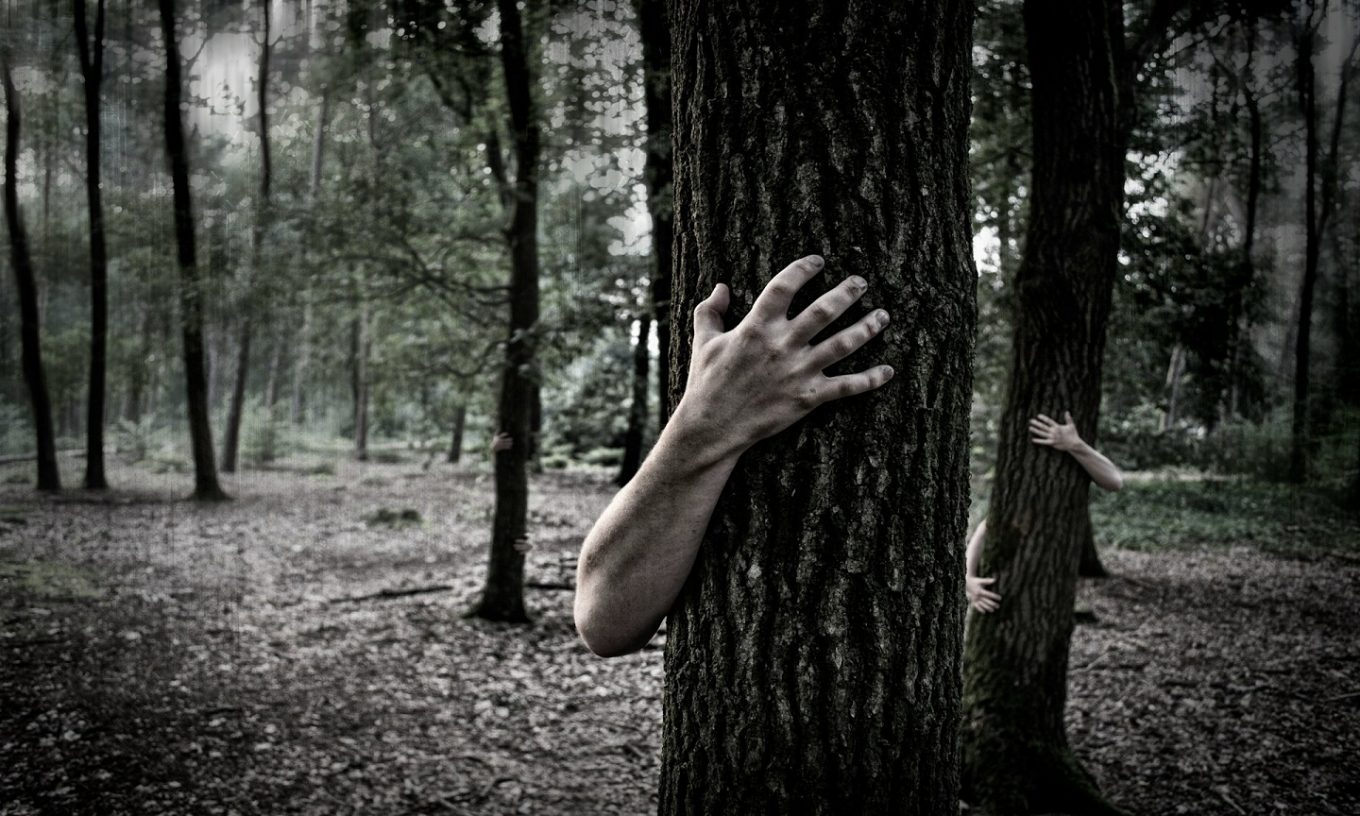
Photo by Simon Wijers on Unsplash