
It is a rainy afternoon in my city, and I am staring at the dark skies with a freshly made cup of sweet milk tea simmered with cloves, ginger and cardamom. It suits this weather perfectly. I have been moving through my rooms to the open terrace with a kind of restlessness. Have you ever had a strange hunger course through you after a full lunch? The inky clouds and the constant rainfall make me long for my Thamma’s khichuri with warm, spicy eggs loaded with green chilies that would make the nose run or with hilsa fry on special days. Rains and khichuri have always been an unbeatable combination in my family. It still continues to be. Things have a way of continuing even when one is no longer a part of it. Khichuri is seldom made in my small household. Between my partner and me, only I have a strong affinity for it. As I smile thinking of it, I feel a curious absence. I reach for a small folder from my bedside table and spread all my childhood photographs on the floor, almost as a reckoning of my own history.
My family has never been careful with retaining evidence. Bills were thrown away post-haste, photographs stacked in damp drawers inside plastic packets, the panorama camera taken out only during long trips. Birthdays and other occasions didn’t really make the special cut. We are a family with curiously few photographs. So much of our childhood has been left to memory that perhaps my siblings and I overcompensate in trying to capture every possible moment of our plain lives, documented in the cloud for some future revisitation. The photographs that lie splayed in front of me right now have been salvaged from different plastic stacks held in place with a rubber band, a curious motley of black and white and colored photographs, some yellowed, a few of them victims to mold and snipped around the edges. One was of my fair brother, the spitting image of my mother, clad in yellow silk, like young lord Krishna, for his rice-eating ceremony. A few photographs had my beautiful mother in gorgeous silks, laughing while she held me, looking quite the young girl that she was when she married. Why don’t I remember her that way? Why do I look somber in most of them?
Looking at the photographs and the women in them, I try to recall how much solitude they had, what they did with that solitude after hours and hours of kitchen work, and I felt a sudden pang for my mother’s delicate hands. She is sixty-seven years of age, she looks her age, and to me she seemed to have aged overnight one day in September 2019. I was clicking her photographs at a cousin’s marriage and I couldn’t get over how different she looked from the images taken at my brother’s wedding just a few years back. A curious tenderness garbed her features. I hugged her amidst swarming relatives. My mother, taken aback, patted my arms absent-mindedly, her eyes questioning. I am a hugger, she is not.
In fact, in many ways, I am a contradiction to my mother, just like her hands that sit incongruously on her body. They have not aged, unlike the rest of her. They don’t show veins popping out, shriveled skin like one would expect from a woman her age. They look supple, with a dull, oily sheen, the nails always cut neatly, their edges a little frayed from all the chopping every day, with just the slightest tinge of turmeric, hands always busy, moving fast to meet her own imaginary deadlines, failing most of the times. My mother is an expert cook. I am not. Although I am rather proud that my brother has inherited this penchant for cooking and he’s marvelous at it.
I belong to a family of formidable women, generous to a fault, who could rustle up meals with very limited ingredients. And they were always so tasty! I have seen my Thamma, my paternal grandmother, and I am rather partial to her I must say, put a pinch of turmeric in a kesar pulao during Durga Puja Ashtami offerings. I was always her sous chef, and she would wink at me and say, kesar is for the rich, Manu! The kesar pulao would be accompanied by prawn malai curry, mutton kosha on Nabami, fish curries of at least three types, mostly Pabda, Ilish and Tangra—unanimous favorites in our family, followed by sweet chutneys made with tomatoes, dates, raisins and aamshotto, a sun-dried, sweet mango pulp cut in perfect rectangles. I would sit on the kitchen shelf, my feet hanging awkwardly, watching the steps, sometimes sneaking a bite or two. I pestered my ever-patient Thamma for stories of all sorts, ranging from mythology, to her own childhood, her love for my Dadubhai, capers of her children, her travels. I was a sponge. I soaked it all in.
What fascinated me the most was the amount of food that was always made. Our family was a curious admixture of Ghotis and Bangals, Bengalis from both sides of the border, sons and daughters married in arranged set-ups to people with good report cards or jobs, and there flowed freely in our household, recipes of all kinds, never constant, tweaked all the year round, till the women settled on the one that pleased their families the most. There was always steamed rice and dal for instance, with diced potatoes fried in generous oil. It was ubiquitous for the children, and for some of the sons-in-law who had to have it before moving to the more special items.
There would always be bhaja—fried salad greens, brinjal, bitter gourds, pointed gourds—the women would serve the men and then sit in a circle on the floor, discussing recipes, clothes, gossiping, calling out to their men with endearing names that were almost always followed by cackles of laughter, listing the achievements of their children, before the discussion swerved inevitably, yet again to jolkhabar, that umbrella term that covered all modes of snacking. Someone would want phuluri, someone else peyaji or beguni and my father would leave at half past five in the evening to source packets of puffed rice from the corner grocery shop, while mustard oil bubbled hot in a huge iron wok in the kitchen. Onions and brinjals were sliced in perfect one-inch discs, swirled in a besan batter spiced with turmeric, carrom seeds, a hint of chili. Somehow in my memory, it would always rain and our mothers would always be screaming at us not to go outside and play.
Amidst this whirlwind of cooking, cleaning, chopping and planning for meals, I marvel now how Thamma, Didan and Ma managed time to do anything else. All three were, my mother still is, a ridiculously late eater, eating at the end, after everyone is done, their eating slow, deliberate, leisurely, quiet, in solitude. My Thamma, for instance, would bathe twice a day most of the year after she was done with preparing lunch and dinner and after each shower, she would come out smelling of well-oiled, perfumed hair and Mysore Sandal soap. Sandal has always brought back memories of her warm skin. She would sit in between meals, mostly in a white saree with red border, a red bindi gleaming on her forehead, always well-powdered, her thick glasses perched on her nose, her eyes devouring the newspaper, Desh magazine, books, whatever she could get her hands on. She would even read the paper packets in which groceries were wrapped! And she would tell me if she read anything interesting.
My Didan, on the other hand, smelled curiously of aniseed. There would be plenty of that lying around with Mishri or sugar crystals. My Didan was a paan aficionado and usually after lunch she would sit and knit patterns. All the sweaters in our childhood were hand-made. None of those store-bought, machine-made sweaters for us. We would be made to stand straight next to the wall, her skin aniseed and betel-leaf, crinkled like paper, her hands soft but steady, her voice mellow but unnervingly strict, measuring our torso for fittings. My Didan was inordinately strict. A stern Sylheti woman, I don’t remember her warmth aside from what she poured in her sweets, spurious concoctions of flour, cottage cheese, ground coconut, put in wooden frames and disciplined to appealing shapes, dunked in yellow sweet liquor, prepared during festivities, birthdays, or if any of the children fared well in their final examinations.
I was different from the other children – dark, plump, shy, watchful. And I would always feel her troubled eyes resting on me as if I was a storm about to burst someday. We never developed a close bond because I always felt so watched in her presence; her hands couldn’t tame my wiry hair; her ubtans couldn’t brighten my skin. She’s a distant dream but whenever I think of her, I recall coriander and tomatoes. She put an excess of it in every meal and the simplest of them would turn delicious. I have the same proclivity; coriander leaves and tomatoes peep from every food I make.
My mother has no habit. I have seen her go through life in a flurry of motions. My brother and I have mostly grown up with our mother, her days measured in my father’s meals, our breakfasts and lunch boxes, our evening snacks and nighttime meals. But she isn’t as fast as my grandmothers were. There is a certain reticence in her movements, the television always buzzes somewhere in the background, almost always playing old Bollywood songs, to which she would hum as if she were ashamed of her own sweet voice. My mother is a woman of strong silences. It is from observing her and her marriage that I have gleaned one truth in life. Similarity begets love, differences bring clamor.
My parents are chalk and cheese. And somewhere, as I saw my mother with her head bowed, standing for long hours in the kitchen, always anxiously gazing at the watch, I saw youth flowing out of her fast, collecting on her knees in a cold puddle that corroded her bones and weakened them to a point where, now, she always moves with a lurch, pain writ large on her face. Food is love; food is silent tyranny. But Ma has always managed to put a piping hot plate before us. A true Sylheti woman like my Didan, she has never been effusive like my Thamma. To eke a smile out of her is a real prize even now, even when she’s easier with her smiles. But what a smile she has! How it lights up the room when she allows it to reach her eyes! How seldom she has allowed it to happen.
But I remember one particular night very clearly. It had been raining torrentially the whole day and Ma had been putting off grocery shopping for way too long. I must have been in class seven or thereabouts. We took a rickshaw to the Garia market and Ma hauled a 25-kilo rice bag with the rickshaw-puller’s help. Her face was sweaty in that cold rain and I wished to be of help. So, I hugged that bag with all my strength lest it fall from the rickshaw. When we came back home, Ma heated water for me and asked me to immediately take a hot bath. She herself bothered with none of that and headed straight to the kitchen. Baba would be back home from office and take the night train to Asansol where he had been transferred.
Baba had very clear-cut boundaries for what consisted a meal. Rice or Rotis with an array of dal, vegetable sides, and fish or meat. Eggs were almost always not welcome with proper meals. I would be strictly instructed to study and not loiter in the kitchen. After dinner, Baba left for Howrah station. When he boarded the rickshaw, did I detect Ma’s chest deflate in relief? It was a very brief moment, but it was profound for me at that time. Ma quickly turned to Bhai and me and exclaimed, Chowmein for dinner? We yelled in glee. Bhai and I chopped onions and capsicums, Ma brought out prawn shreds stowed away in the refrigerator for impromptu meals like these, the tape recorder played her favorite Hemanta Mukherjee songs, and eggs fried in hot groundnut oil.
The three of us had platefuls of noodles. I saw my mother chatting away like a young girl, so beautiful and shy, but stern about our unfinished homework nonetheless, instructing me immediately after dinner to take charge of my brother’s homework and mine, the shy girl gone, the mother back where she belonged. But that shy girl would find her way back to me over the years over newly-tried cauliflower fritters, a different variation of fried rice, special aromatic fish parathas, and keema samosas – things that lost their way as we grew older, busier, nonchalant. She seemed to have lost her audience.
I think I have inherited my mother’s ambivalence towards food-making. Over the years it has become more and more a chore to her, as it has to me. But sometimes she calls me at odd hours and tells me that she has made Moccha Chingri, or a spicy jackfruit curry, or perhaps a treacle-sweet Murabba and she wishes I could have a bite, and I know it’s her love summoning me to eat together. Ma and I have always eaten together. Bhai would sometimes accompany us. We never sat at the table like the men in our house. We would always hold our plates, ladling food onto them at will, Ma always insisting on serving, and we would sit on the sofa, Ma and I, the television playing some music show on low volume, she would ask me to hum mid-song, her eyes proud of my voice, my confidence, my being bathed in this silent validation, and in the next moment she would say sternly, you’ll choke on the food. Eat. I would smile and acquiesce.
I have been living with my partner for fourteen years now and it’s a convenient marriage. I don’t need to work at it as hard as my mother does, possibly because I chose love before I chose marriage. I have this weird habit of checking with him the menu for the day. Unlike my previous generations, there’s only a certain amount of time that I can allocate out of my busy schedule to cooking, but I don’t believe in refrigerated food unless it’s absolutely essential. The image of my Thamma wrinkling her nose always comes to mind. Today when I checked with my partner if I could make such and such food item, his reply took me on a journey while I cooked—you always make the same type of food, why ask?
He is a man of few words, fewer questions. But his statement made me wonder not about myself but about my mother, and I remembered that shy girl of my childhood that peeked out sometimes, one that now eats milk with bits of roti thrown in while she serves others in the family a ‘proper’ dinner. I asked Ma, when did you last make something just for yourself? She was puzzled at the question, and for the full ten minutes that I was on the call with her, she couldn’t recall what her favorite food item was, or when she had last cooked just for herself. When I disconnected, I realized, much to my horror, that I was becoming my mother, despite a furious resolve that I wouldn’t let that happen. I couldn’t recall the last time I made something just for myself, aside from an assortment of teas and coffees.
My partner is lactose and gluten intolerant, and slowly, over the course of years, I have foregone paneer, bread, parathas, spicy food and tailored my cooking to his health, much like my mother had done to my father’s. Most times I just think back to how things used to taste back home and make it as I remember it, tweaking it to my partner’s palate. Today, as I heard him chatter merrily with his friend, making plans about all the food his wife will make once we head to their city next week, the subtext of silent judgement wasn’t lost on me. He is well-meaning, but kindness delayed is often just courtesy.
And so, from the top shelf of my refrigerator, I fetched the large slab of paneer that I sometimes chop into chunks and smuggle with guilt into my vegetable sides to maintain an accord, without harming his delicate stomach. Today I chopped it into tiny pieces along with a large tomato, a capsicum, four large green chilies because I need spice back in my life, and a large onion. I threw a generous knob of butter in the frying pan and tempered it with whole cardamom, cinnamon, cloves and a pinch of dried fenugreek leaves. I sauteed the vegetables, added some turmeric, red chili powder, salt and the paneer and moved the spatula to break the paneer till it was all a big, delicious mash. Next, I warmed butter in a pan and toasted two loaves of bread to go with that mash.
My partner sauntered into the kitchen, drawn by the smell.
What are you making?
Paneer. I’m making paneer bhurji and pav.
I looked at him and smiled.
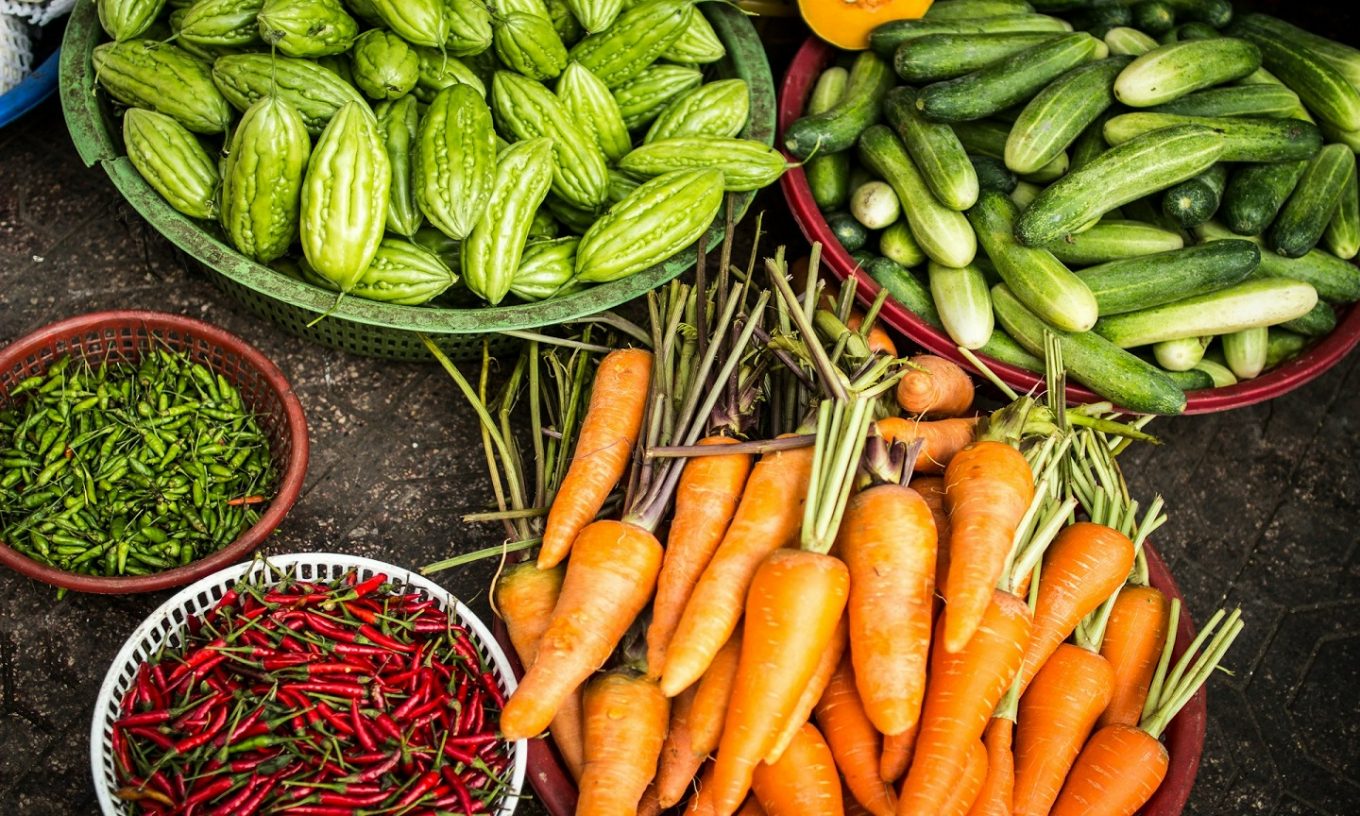
Photo by Megan Thomas on Unsplash